
Are you struggling to choose between the rustic charm of a Mason jar and the modern elegance of a hexagon jar for your honey brand? In the competitive B2B honey market, your packaging is your silent salesperson. The shape of the jar not only dictates how the honey looks on a retail shelf but also impacts filling efficiency, labeling logistics, and perceived product value. This comprehensive comparison breaks down the operational and aesthetic differences between classic Mason jars and premium hexagon glass jars to help you make the most profitable packaging decision.
- Mason jars offer a wide-mouth design that maximizes filling speed and provides a nostalgic, artisanal brand appeal.
- Hexagon glass jars feature six flat panels that tessellate perfectly on retail shelves, saving space and creating a striking visual display.
- The flat surfaces of hexagon jars allow for precise, wrinkle-free label application, while round Mason jars accommodate wrap-around designs.
- Both jar types require specific closure systems—two-piece lids for traditional Mason jars versus hermetic lug caps for hexagon jars.
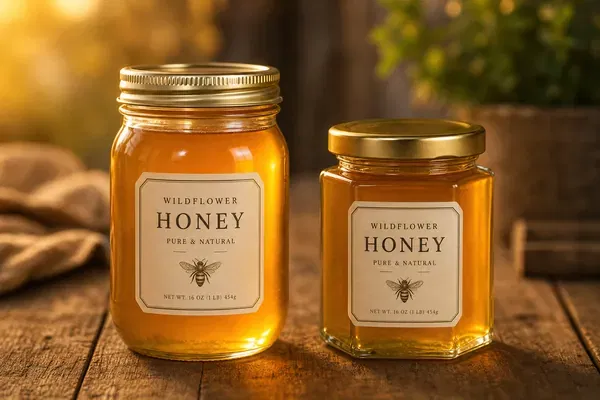
The Retail Shelf Challenge: Space vs. Presence
Hexagon jars maximize retail shelf space through perfect tessellation, while Mason jars command attention through their robust, traditional silhouette. When B2B buyers select packaging for retail distribution, shelf efficiency is a critical metric. Hexagon jars, with their six flat sides, can be packed tightly together without the “dead space” inherent to cylindrical containers. This tessellation allows retailers to display more units per linear foot, making hexagon jars highly favored by boutique grocers and premium supermarkets [1].
Conversely, the classic round shape of a Mason jar takes up slightly more space but offers a commanding physical presence. The cylindrical body reflects light evenly from all angles, showcasing the golden hues of the honey within. For brands targeting farmers’ markets, organic food stores, or a rustic “farm-to-table” aesthetic, the slightly larger footprint of the Mason jar is often offset by its strong consumer recognition and nostalgic appeal.
A Glimpse into Honey History: The Mason jar was patented in 1858 by a 26-year-old American tinsmith named John Landis Mason [2]. His invention of a machine-threaded glass jar with a matching metal screw lid revolutionized food preservation. Over 160 years later, that exact same shape remains the global symbol for homemade, authentic, and natural food products.
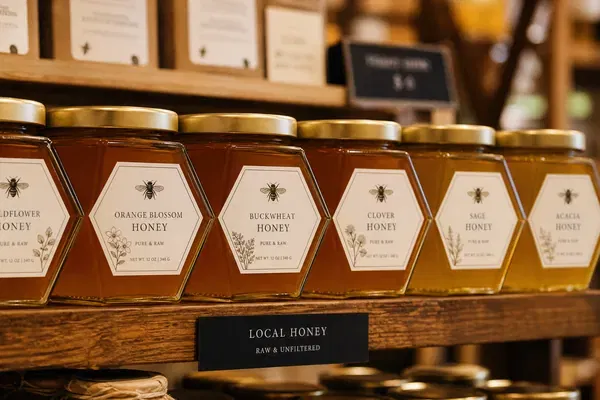
Operational Efficiency: Filling and Labeling
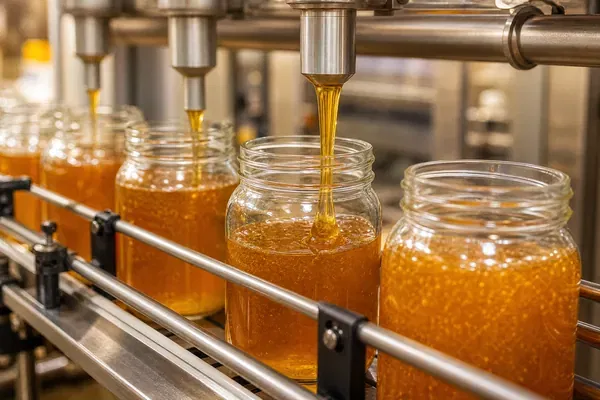
Mason jars streamline the filling process with their wide-mouth design, whereas hexagon jars offer superior flat surfaces for automated, wrinkle-free labeling. From a manufacturing perspective, the wide-mouth opening of a Mason jar is a significant operational advantage. It accommodates high-speed filling nozzles easily, reducing the risk of spillage and product waste, especially when handling highly viscous raw or crystallized honey. The wide opening also makes the jar easier to clean and sterilize before filling.
However, when the jars move down the line to the labeling station, the hexagon jar takes the lead. Applying labels to curved, cylindrical surfaces can sometimes result in skewing or bubbling if the automated labeler is slightly miscalibrated. The distinct flat panels of a hexagon jar provide a perfect canvas for front, back, or multi-panel labels [3]. This ensures a crisp, premium look every time, which is essential for high-end honey brands that rely on sophisticated label textures and gold-foil stamping to justify a premium price point.
Making the Choice: Matching Shape to Brand Identity
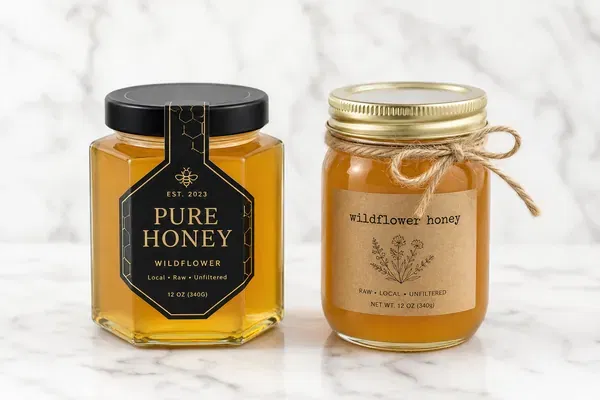
Your choice between Mason and hexagon jars should ultimately align with your target market: rustic authenticity versus modern luxury. If your honey is marketed as raw, unfiltered, locally sourced, or organic, the Mason jar visually reinforces those claims. Consumers subconsciously link the Mason jar shape with traditional beekeeping and purity. It is the perfect vessel for brands that want to communicate approachability and heritage.
On the other hand, if you are positioning your product as an artisanal, gourmet, or luxury item—perhaps infused with truffles, imported from a specific floral region, or packaged as a corporate gift—the hexagon jar is the superior choice. Its geometric lines reflect light like a cut gemstone, elevating the perceived value of the honey [4]. When paired with a sleek black or gold lug cap, the hexagon jar transitions honey from a simple pantry staple to a premium culinary gift.
| Feature | Classic Mason Jar | Hexagon Glass Jar |
|---|---|---|
| Brand Aesthetic | Rustic, traditional, farm-to-table, authentic | Modern, premium, geometric, gourmet |
| Filling Efficiency | Excellent (Wide mouth accommodates high-viscosity honey) | Good (Standard opening requires precise nozzle alignment) |
| Label Application | Wrap-around labels; requires careful alignment on curves | Flat panels ensure perfect, wrinkle-free application |
| Retail Shelf Space | Standard cylindrical footprint | Tessellates perfectly to maximize shelf density |
| Closure Type | Continuous Thread (CT) or Two-piece lid | Hermetic Metal Lug Cap (Twist-off) |
Conclusion: Elevating Your Honey Brand
Whether you choose the nostalgic reliability of the Mason jar or the sleek, space-saving elegance of the hexagon jar, both options provide the inert, non-porous protection that premium honey requires. The decision rests on optimizing your production line capabilities and aligning the physical packaging with your brand’s unique story and target demographic.
If you are ready to source high-quality glass packaging that perfectly complements your honey, we are here to help you navigate the options. Contact us today at sales@glassypack.com or visit our Contact Us page to discuss bulk pricing, request samples, and find the perfect jar for your next production run.
FAQ
Why do hexagon jars save space on retail shelves?
Hexagon jars feature six flat sides that allow them to tessellate, or fit together perfectly like a honeycomb, eliminating the empty gaps that occur when round cylindrical jars are placed next to each other.
Are Mason jars better for thick or crystallized honey?
Yes, Mason jars typically feature a wide-mouth design. This larger opening makes it significantly easier to fill the jars with highly viscous or crystallized honey during production, and easier for consumers to scoop the honey out with a spoon.
Can I use the same type of lid for both jar shapes?
Generally, no. Traditional Mason jars use a Continuous Thread (CT) screw cap or a two-piece canning lid. Hexagon jars are typically manufactured with a lug finish, requiring a twist-off metal lug cap with a plastisol liner for a hermetic seal.
Which jar shape is better for applying custom labels?
Hexagon jars are often preferred for premium labeling because their flat panels provide a perfectly smooth surface, preventing the wrinkling or bubbling that can sometimes occur when applying stiff or textured labels to the curved surface of a round Mason jar.
Does the shape of the glass jar affect the quality of the honey?
No, the shape of the jar does not affect the honey. As long as the container is made of high-quality glass and sealed with an airtight closure, both Mason and hexagon jars will perfectly preserve the honey’s flavor, aroma, and moisture content.
References
[1] Berlin Packaging APAC. (2025, December 3). 5 Secrets to Designing Glass Honey Jars That Sell Out. https://berlinpackagingapac.com/5-secrets-designing-premium-glass-honey-jars-honey-pot-jar/
[2] reCAP Mason Jars. (n.d.). The History of Mason Jars: From 1858 to Today. https://recapmasonjars.com/blogs/mason-jars/the-history-of-mason-jars-from-1858-to-today
[3] Paramount Global. (2024, November 14). Your Ultimate Guide to Honey Packaging. https://www.paramountglobal.com/knowledge/honey-packaging-guide/
[4] Roetell. (2025, September 23). The Sweet Science of Packaging: A Comprehensive Guide to Honey Jars. https://www.roetell.com/the-sweet-science-of-packaging-a-comprehensive-guide-to-honey-jars/