
Are you choosing the right closure system for your bulk food products, or are you risking spoilage and operational inefficiency? When scaling up food production for wholesale, catering, or bulk retail, the packaging decision goes far beyond aesthetics. The choice between a two-piece Mason jar and a standard lug cap jar fundamentally impacts your processing speed, shelf life, and bottom line. This article breaks down the technical differences between these two iconic glass packaging options and explains how to select the best fit for your specific food preservation needs.

The Two-Piece Mason Jar System: Built for Pressure and Precision
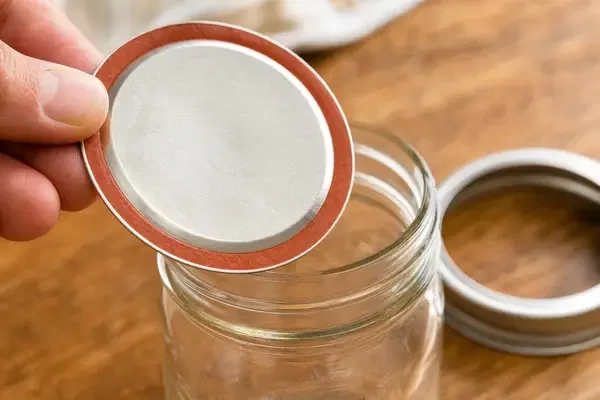
The Defining Characteristic. The traditional Mason jar is instantly recognizable by its unique two-piece closure system, consisting of a flat metal lid with a plastisol sealing ring and a separate threaded metal band. This design is not merely for vintage appeal; it is a highly engineered solution specifically created for high-heat, high-pressure processing environments. The two-piece system allows air to escape from the jar during the heating process while preventing water or external air from entering, creating a reliable, long-lasting vacuum seal once cooled.
Ideal Applications. This venting capability makes the Mason jar the gold standard for home canning and specific small-batch commercial operations that utilize water bath or pressure canning methods [1]. Products with low acidity, such as certain vegetables, meats, and complex sauces, require the intense heat and pressure processing that Mason jars are designed to withstand. The visual confirmation of a successful seal—the “ping” and downward curve of the flat lid—provides immediate quality assurance.
Operational Limitations. However, the very design that makes Mason jars exceptional for specific processing methods also creates challenges for high-volume commercial production. The two-piece lid system is notoriously difficult to automate. Applying the flat lid and then precisely torquing the threaded band requires specialized, often slower, capping machinery. For brands looking to scale into rapid, automated filling lines, the two-piece system can become a significant bottleneck.
A Glimpse into Glass History: The Mason jar was invented and patented in 1858 by John Landis Mason, a tinsmith from New Jersey. Before his invention, food preservation relied on unreliable methods like corks and wax. His revolutionary threaded zinc cap and glass jar design drastically reduced food spoilage rates and transformed how society approached long-term food storage.
Standard Lug Cap Jars: The Engine of Commercial Efficiency
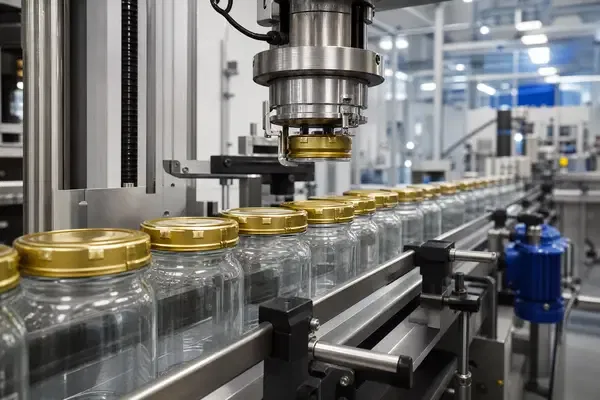
The Commercial Standard. Standard glass jars equipped with lug caps (also known as twist-off caps) are the workhorses of the modern food industry. Unlike the continuous thread of a Mason jar, a lug finish features interrupted threads—typically three, four, or six “lugs”—that interlock with corresponding tabs on the metal cap. This design requires only a quarter-turn to achieve a secure, airtight seal. The caps are lined with a plastisol compound that softens during the hot-fill process, molding perfectly to the glass rim to create a vacuum.
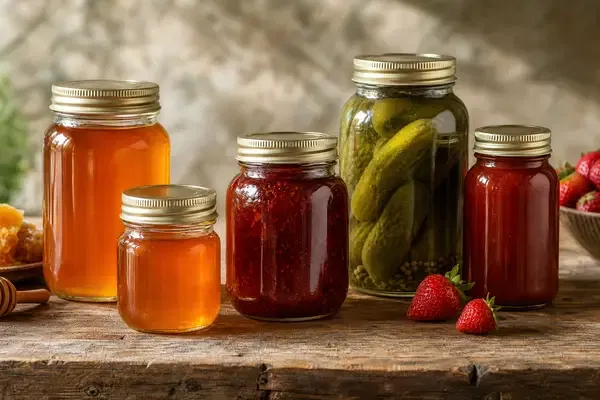
Automation and Speed. The primary advantage of the lug cap system is its seamless integration into high-speed, automated production lines. Capping machines can apply twist-off lids at incredibly high rates, significantly reducing labor costs and increasing overall throughput. This efficiency is why nearly all commercial honey and jam jars, pickle jars, and pasta sauce containers utilize the lug cap system.
Consumer Convenience. Beyond the factory floor, lug caps offer a superior user experience. The quarter-turn opening mechanism is intuitive and requires less grip strength than unscrewing a continuous thread band. Furthermore, the one-piece design is easier for consumers to reseal securely after the initial opening, maintaining product freshness in the refrigerator. The distinct “pop” upon opening serves as a universal indicator of a secure, untampered vacuum seal.
Making the Choice: Which Jar Fits Your Production Model?
Evaluating Your Process. The decision between Mason jars and lug cap jars ultimately hinges on your specific production methods and scale. If your operation relies on retort processing (pressure canning) to achieve commercial sterility, the two-piece Mason jar system may be necessary to handle the pressure differentials. However, if your products utilize hot-fill, pasteurization, or cold-fill processes, the lug cap system is almost always the superior choice.
Cost and Scalability. From a procurement perspective, standard lug cap jars are generally more cost-effective at scale. The one-piece closure simplifies inventory management, and the standardized lug finishes (such as the common TO63 or TO82) allow brands to easily source caps from multiple suppliers. When considering the total cost of ownership—factoring in packaging costs, capping speed, and labor—the lug cap system provides a clear economic advantage for bulk and commercial food packaging [2].
The Regulatory Context. Regardless of the closure system you choose, it is crucial to ensure that both the glass and the lid linings comply with current food safety regulations. With the impending EU BPA ban, brands must verify that the plastisol linings in their lug caps or Mason jar lids are 100% BPA-free to maintain market access.
| Dimension | Two-Piece Mason Jars | Standard Lug Cap Jars |
|---|---|---|
| Closure Design | Continuous thread with separate flat sealing lid | Interrupted thread (quarter-turn twist-off) |
| Best Processing Method | Pressure canning, water bath | Hot-fill, pasteurization, cold-fill |
| Automation Suitability | Low (Requires complex capping machinery) | High (Industry standard for high-speed lines) |
| Consumer Resealability | Moderate (Two pieces to manage) | Excellent (Simple twist-off) |
Conclusion: Efficiency Drives the Modern Food Supply Chain
While the Mason jar holds a nostalgic and functional place in specific preservation niches, the standard lug cap jar is the undisputed champion of commercial food packaging. For brands aiming to scale production, optimize line speeds, and deliver a convenient consumer experience, the twist-off lug system offers unmatched efficiency and reliability.
If you are a food manufacturer looking to optimize your packaging line or transition to more efficient closure systems, we would be glad to share how GlassyPack can provide tailored solutions. Contact us today at sales@glassypack.com or visit our Contact Us page to discuss your specific processing requirements and request samples of our high-quality, BPA-free glass jars.
References
[1] Wikipedia. (n.d.). Mason jar. https://en.wikipedia.org/wiki/Mason_jar
[2] Glass Packaging Institute. (n.d.). Facts About Glass. https://www.gpi.org/facts-about-glass