
Are production line bottlenecks eating into your pickle manufacturing margins? When sourcing glass packaging for pickled vegetables, B2B buyers often focus entirely on jar volume and glass clarity, overlooking the most critical dimension for manufacturing efficiency: the neck finish. The diameter of the jar opening—whether a standard 63mm or a wide-mouth 82mm—dictates how fast you can fill the product, how reliably your automated capping machines operate, and ultimately, how consumers interact with your brand. This guide compares wide-mouth and standard-opening glass pickle jars to help you optimize your automated production line.
- Wide-mouth jars (typically 82mm+) allow for high-speed, jam-free filling of whole or bulky pickled products like cucumbers and spears.
- Standard-opening jars (typically 63mm or 70mm) are highly efficient for automated liquid brine filling and diced or sliced pickled products.
- Neck finish diameter directly impacts capping machine torque requirements; wider mouths require precise, specialized lug capping equipment.
- Choosing the correct neck finish reduces production downtime, minimizes glass breakage on the line, and lowers overall packaging costs.
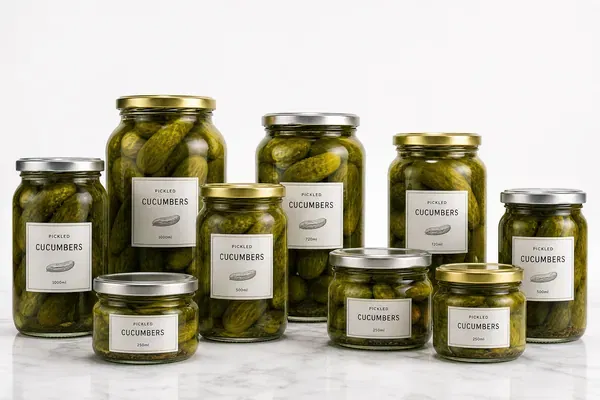
The Filling Challenge: Product Size vs. Opening Diameter
The physical dimensions of your pickled product must dictate your jar’s neck finish to prevent automated filling jams. In industrial food manufacturing, speed is profit. If you are packing whole dill pickles, large spears, or chunky mixed vegetables, a wide-mouth jar—typically featuring an 82mm or 89mm opening—is non-negotiable. The larger aperture allows multi-head volumetric fillers and robotic pick-and-place systems to drop bulky items into the pickle jars without bridging or jamming at the neck [1].
Conversely, if your product consists of pickle relish, thinly sliced bread-and-butter pickles, or liquid-heavy fermented products, a standard opening (usually 63mm or 70mm) is highly efficient. The narrower neck acts as a natural funnel, directing the flow of smaller particles and brine cleanly into the jar. This reduces splashing on the production line, ensuring the sealing surface remains clean—a critical factor for achieving a perfect hermetic vacuum seal later in the process.
A Glimpse into Pickling History: Pickling is one of the oldest food preservation methods, dating back to 2030 BC in Mesopotamia. However, the industrialization of pickles didn’t take off until the 1850s, when the invention of standardized glass jars allowed manufacturers to safely seal and transport acidic brine across long distances without the packaging corroding or leaking.

Capping Line Compatibility and Torque Dynamics
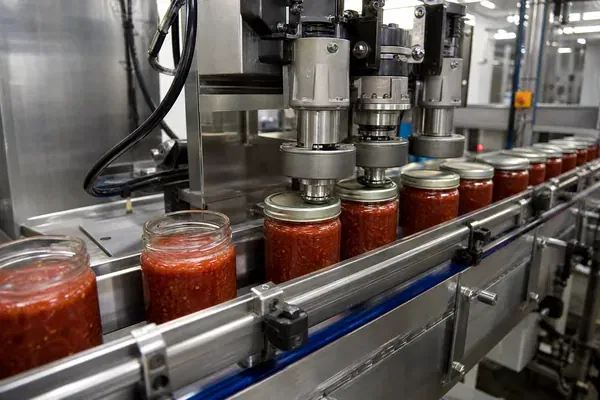
Wider jar openings require specialized capping equipment capable of delivering higher, more evenly distributed torque to achieve a secure vacuum seal. Once the jars are filled with pickles and hot brine, they move to the capping station. Almost all commercial glass pickle jars utilize a metal lug cap (twist-off) finish, which relies on short, segmented threads to interlock with the cap [2]. The diameter of the opehttps://glassypack.com/wp-content/uploads/2026/07/automated-capping-machine-glass-jar-production-line.webpning significantly alters the physics of this sealing process.
Standard 63mm or 70mm openings are universally compatible with standard automated spindle or chuck cappers. The smaller circumference means less torque is required to compress the plastisol liner and create a seal. However, an 82mm or larger wide-mouth jar requires cappers designed for high-torque applications. If the capping machine applies uneven pressure to a wide-mouth lid, it can result in “cocked” caps or incomplete vacuum seals, leading to spoilage and costly product recalls. When sourcing jars, you must verify that your existing automated capping line is rated for the specific millimeter diameter of the lug cap finish you choose.
Cost Efficiency and Consumer Experience
Standard-opening jars offer lower unit costs and cheaper freight, while wide-mouth jars command a premium retail price due to superior consumer convenience. From a pure procurement standpoint, standard-opening jars are generally more cost-effective. They require slightly less glass to manufacture, and the corresponding smaller metal lids cost less to produce [3]. Additionally, the narrower neck profile often allows for slightly denser packing on shipping pallets, reducing your overall landed cost per unit.
However, B2B sourcing decisions cannot ignore the end-consumer. Wide-mouth jars offer a vastly superior user experience. Consumers can easily reach into an 82mm jar with a fork or their fingers to retrieve a whole pickle without making a mess. This ease of use translates directly to brand loyalty. If you are positioning your pickles as a premium, artisanal, or gourmet product, the increased sourcing cost of a wide-mouth jar is easily offset by the higher retail price point it commands.
| Specification | Standard Opening (e.g., 63mm / 70mm) | Wide Mouth (e.g., 82mm / 89mm) |
|---|---|---|
| Best Suited For | Relish, sliced pickles, diced vegetables, liquid brine | Whole pickles, large spears, chunky mixed vegetables |
| Automated Filling | Excellent for liquids; prevents splashing | Excellent for solids; prevents bridging and jamming |
| Capping Requirements | Standard torque; universally compatible | High torque; requires specialized wide-head cappers |
| Procurement Cost | Lower (less glass, smaller metal lids) | Higher (more glass, larger metal lids) |
| Consumer Experience | Standard pouring/spooning access | Premium access; easy to retrieve large items |
Conclusion: Optimizing Your Packaging Strategy
Selecting the right neck finish for your glass pickle jars is a delicate balance between automated production efficiency and consumer satisfaction. Standard openings maximize line speed for sliced products and keep costs low, while wide-mouth jars prevent bottlenecks when packing whole pickles and elevate the perceived value of your brand. By aligning your jar specifications with your specific filling and capping machinery, you can eliminate downtime and protect your profit margins.
If you need expert guidance on matching the perfect glass jar neck finish to your automated production line, we are here to help. Contact us today at sales@glassypack.com or visit our Contact Us page to request technical specifications, bulk pricing, and samples.
FAQ
What is a lug cap finish on a glass pickle jar?
A lug finish uses short, segmented threads (lugs) rather than a continuous spiral thread. It is designed to interlock with a metal twist-off cap, creating a secure, hermetic vacuum seal with just a quarter turn, which is essential for hot-fill pickled foods.
Why do my automated fillers jam when packing whole pickles?
Filling jams usually occur when the jar’s neck diameter is too narrow for the physical size of the product. Upgrading to a wide-mouth jar (82mm or larger) provides the necessary clearance for whole pickles or large spears to drop into the jar without bridging.
Can I use the same capping machine for 63mm and 82mm jars?
It depends on your machine’s adjustability. While some advanced chuck or spindle cappers can be retooled for different sizes, an 82mm wide-mouth cap requires significantly more torque and a larger capping head than a 63mm cap to ensure a proper vacuum seal.
Does a wider jar opening increase the risk of seal failure?
Not inherently, provided your capping equipment is calibrated correctly. However, a wider opening means a larger sealing surface area. If your capping machine applies uneven pressure, the risk of a “cocked” cap or micro-leaks is slightly higher than with a smaller diameter lid.
Are wide-mouth glass jars more expensive to ship?
Yes, slightly. Wide-mouth jars often have a broader shoulder profile, which can reduce the total number of units that fit on a standard shipping pallet compared to narrower, standard-opening jars, marginally increasing the freight cost per unit.
References
[1] Discount Vials. (2025, June 24). Wide Mouth vs. Regular Canning Jars: What’s the Difference and Which One Should You Choose?. https://www.discountvials.com/blog/wide-mouth-vs-regular-canning-jars-whats-the-difference-and-which-one-should-you-choose/
[2] Evergreen Resources. (2025, November 10). Glass Bottle Neck Types. https://evergreenresources.com/glass-bottle-neck-finishes/
[3] Roetell. (n.d.). A Strategic B2B Guide to Mason Jar Sizes and Bulk Sourcing. https://www.roetell.com/a-strategic-b2b-guide-to-mason-jar-sizes-and-bulk-sourcing/