The ready-to-drink cocktail market is growing at a pace that few predicted five years ago — and the packaging decision sitting at the center of it all is glass versus can. For premium brands, that decision is increasingly clear.
- The global RTD cocktail market is projected to reach $40.6 billion by 2030, growing at a CAGR of 12.5%.
- Premium RTD brands choosing glass bottles report measurably higher shelf presence and consumer willingness to pay.
- Glass is the only packaging material that preserves carbonation, flavor integrity, and brand aesthetics simultaneously.
- MOQs for stock RTD glass bottles start from 5,000 units; custom mold projects typically begin at 10,000–20,000 units.
The RTD (ready-to-drink) cocktail category has moved from convenience-store novelty to a legitimate premium segment. Brands that once launched in aluminum cans are now revisiting their packaging strategy — and many are landing on glass. This article examines why, what the data says, and what procurement teams need to know before making the switch.
The RTD Cocktail Market: What the Numbers Actually Show
RTD Is No Longer a Niche Category
The RTD cocktail segment has become one of the fastest-growing categories in the global alcoholic beverage industry. According to IWSR’s 2026 forecast, RTD volumes are expected to grow 17% by 2035, outpacing every other major alcohol category including spirits, wine, and beer.[1] The Statista RTD market outlook places the global category value at over $40 billion by 2030.[2]
What’s driving this? Three forces are converging: the casualization of cocktail culture, the rise of at-home entertaining post-pandemic, and a younger consumer demographic that prioritizes convenience without sacrificing quality. The result is a market that is simultaneously growing in volume and premiumizing in positioning — a rare combination that creates real opportunity for brands willing to invest in packaging.
The Premium Tier Is Where the Margin Lives
Not all RTD growth is equal. The mass-market segment (canned hard seltzers, malt-based beverages) is experiencing saturation and margin compression. The premium tier — spirit-forward cocktails, craft mixology in a bottle, single-serve aperitifs — is where category growth is most durable and where packaging plays a decisive role in consumer perception.
Research consistently shows that consumers associate glass packaging with higher quality and are willing to pay a premium of 15–25% for a glass-packaged RTD versus an equivalent product in a can. For brands building in the $8–$18 per-unit retail price range, that perception gap translates directly into margin.
Why Glass Outperforms Cans for Premium RTD
Flavor Preservation Is Not a Marketing Claim — It’s Chemistry
Glass is chemically inert, meaning it does not interact with the beverage it contains. This matters enormously for spirit-forward RTDs, which often contain botanicals, citrus oils, and delicate flavor compounds that can react with the metallic lining of aluminum cans over time. The result in cans is a subtle but measurable “metallic” or “flat” taste that develops within weeks of production — a problem that does not exist with glass.
Additionally, glass provides a hermetic seal when combined with a crown cap or ROPP aluminum closure, maintaining carbonation levels more reliably than cans over extended shelf life. For cocktails that rely on effervescence — sparkling aperitifs, carbonated gin and tonics, spritz formats — this is a functional advantage, not just an aesthetic one.
Industry Fact: The first commercially bottled cocktail was produced in the 1860s by Jerry Thomas, the American bartender widely credited as the father of mixology. His bottled punches and slings were sold in glass — a format that remained the standard for pre-mixed drinks until the aluminum can entered the beverage market in the 1930s. The current shift back to glass among premium RTD brands is, in many ways, a return to the category’s origins.
Glass vs. Can vs. Pouch: A Packaging Decision Matrix for RTD Brands
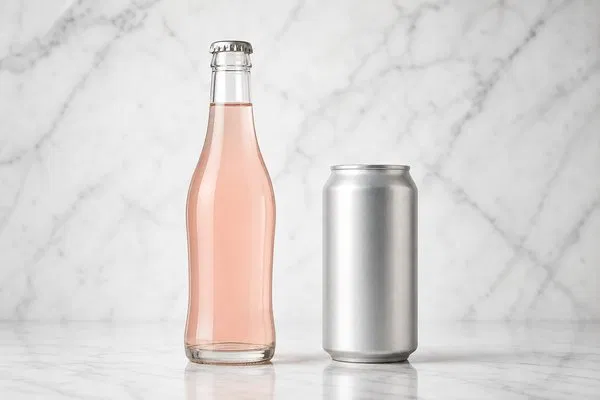
| Dimension | Glass Bottle | Aluminum Can | Flexible Pouch |
|---|---|---|---|
| Flavor integrity | Excellent (chemically inert) | Good (BPA-free lining required) | Fair (oxygen permeability) |
| Consumer price perception | Premium (+15–25% WTP) | Mid-tier | Budget / on-the-go |
| Carbonation retention | Excellent (hermetic seal) | Excellent | Poor |
| Shelf presence / visual impact | High (shape, color, embossing) | Medium (label printing only) | Low |
| Customization options | High (mold, emboss, color, cap) | Medium (print only) | Low |
| Recyclability | 100% infinitely recyclable | High (but downcycled) | Low (multi-layer) |
| Unit cost (at 50,000 pcs) | $0.35–$0.90 (stock) / $0.55–$1.20 (custom) | $0.12–$0.30 | $0.08–$0.20 |
| Weight (shipping cost impact) | Higher (offset by retail price) | Lower | Lowest |
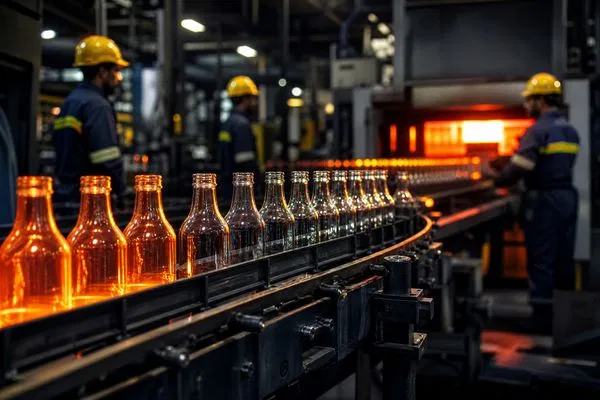
Sourcing Glass Bottles for RTD: What Procurement Teams Need to Know
Stock Bottles vs. Custom Molds: The Right Starting Point Depends on Your Stage
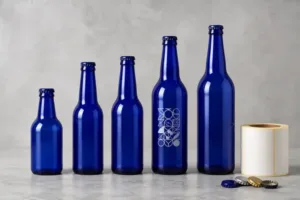
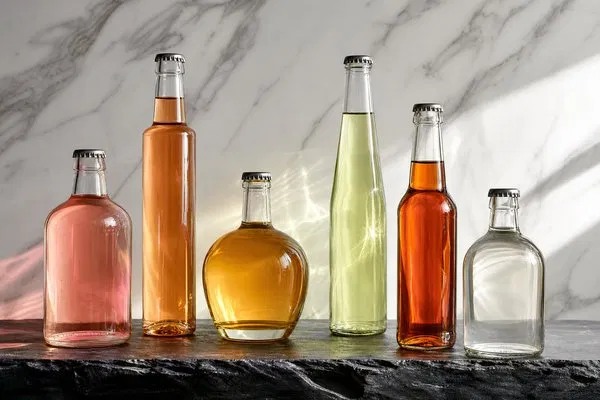
For brands in the early launch phase, stock glass bottles are the fastest and most capital-efficient path to market. Standard RTD-compatible formats include 200ml, 250ml, and 330ml bottles with crown cap necks (26mm finish) or ROPP screw-cap finishes (28mm or 30mm). Stock bottles can typically be sourced with MOQs of 3,000–5,000 units per SKU and lead times of 3–6 weeks from a Chinese manufacturer.
For brands that have validated their market and are ready to build a distinctive visual identity, custom mold development is the next step. A custom mold for an RTD bottle typically costs $1,500–$3,000 (one-time tooling fee) and requires a minimum production run of 10,000–20,000 units. The payoff is a bottle shape, embossed logo, or unique silhouette that competitors cannot replicate. For more detail on custom bottle pricing and MOQ structures, see our guide on custom liquor bottle costs and MOQ.
Glass Specifications That Matter for RTD
Not all glass is appropriate for carbonated RTD products. The key specification to verify with your supplier is the internal pressure rating of the bottle. Carbonated beverages typically require bottles rated to withstand at least 6–8 bar of internal pressure. Standard soda-lime glass bottles for still beverages are not designed for this load and can fail under carbonation pressure, creating a safety and liability issue.
Additional specifications to confirm:
- Glass type: Soda-lime glass (standard) is suitable for most RTDs. For premium clear-glass aesthetics, specify high flint or super flint grade. For more on glass clarity grades, see our comparison of super flint vs. high flint glass.
- Neck finish: Crown cap (26mm) is the most common for carbonated RTDs; ROPP (28mm, 30mm) for screw-cap formats.
- Wall thickness: Minimum 2.5mm for carbonated products; 3mm+ for premium heavy-base designs.
- Annealing quality: Confirm the manufacturer performs lehr annealing to relieve internal stress — critical for pressure-bearing bottles.
Conclusion
The RTD cocktail market’s shift toward glass is not a trend — it’s a structural repositioning of the category. As the premium tier continues to grow and consumers become more discerning about what they drink and how it’s packaged, glass will increasingly be the default choice for brands that want to compete on quality rather than price.
For procurement teams evaluating glass packaging for RTD products, the decision framework is straightforward: stock bottles for speed-to-market, custom molds for brand differentiation, and a supplier who understands the technical specifications that carbonated beverages demand.
If you’re sourcing glass bottles for an RTD cocktail line — whether you’re at the sampling stage or scaling to full production — contact GlassyPack to discuss specifications, MOQ, and lead times. We work with brands at every stage, from first prototype to container-load orders.
FAQ
What size glass bottle is most common for RTD cocktails?
The most common sizes for RTD cocktails in glass are 200ml, 250ml, and 330ml. The 200ml single-serve format is popular for premium aperitifs and spritz drinks; 330ml is standard for spirit-forward cocktails positioned alongside beer on the shelf.
Can glass bottles handle the pressure from carbonated RTD drinks?
Yes, provided the bottles are specifically rated for carbonated beverages. Always confirm with your supplier that the bottle has an internal pressure rating of at least 6–8 bar. Standard still-beverage glass bottles are not suitable for carbonated RTDs.
What is the MOQ for RTD glass bottles from China?
For stock RTD glass bottles, MOQs typically start at 3,000–5,000 units per SKU. For custom mold projects, the minimum production run is usually 10,000–20,000 units, with a one-time mold fee of $1,500–$3,000.
Is glass more expensive than cans for RTD packaging?
On a per-unit basis, glass is typically 2–4x more expensive than aluminum cans at equivalent volumes. However, glass-packaged RTDs command a 15–25% higher retail price, which more than offsets the packaging cost difference for brands operating in the premium tier.
What neck finish should I specify for a carbonated RTD in glass?
Crown cap (26mm finish) is the industry standard for carbonated RTDs in glass and provides the most reliable hermetic seal. ROPP screw caps (28mm or 30mm) are an alternative for brands that prefer a resealable format, though they are less common for highly carbonated products.
How long is the lead time for custom RTD glass bottles from China?
For stock bottles, lead time is typically 3–6 weeks from order confirmation. For custom mold projects, allow 8–14 weeks for mold development and first production run, plus shipping time of 25–35 days by sea freight to major ports in the US, EU, and Australia.
Does glass packaging affect the shelf life of RTD cocktails?
Glass is chemically inert and does not interact with the beverage, which supports longer shelf life compared to cans (which use an internal lining that can degrade over time). For spirit-forward RTDs with botanical or citrus components, glass is the preferred choice for maintaining flavor integrity over a 12–18 month shelf life.
[1] The Drinks Business. IWSR: 2035 Will Be a Vastly Different World for the Global Drinks Sector. June 2026. thedrinksbusiness.com
[2] Statista. Ready-to-Drink (RTD) — Worldwide Market Outlook. 2026. statista.com
[3] IWSR Drinks Market Analysis. RTD Category Forecast. 2026. theiwsr.com