- The new EU “Breakfast Directives” mandate that all blended honey must explicitly list every country of origin and its exact percentage on the front label.
- Opaque packaging or ambiguous “blend of EU and non-EU honeys” claims are no longer legally compliant for the European market.
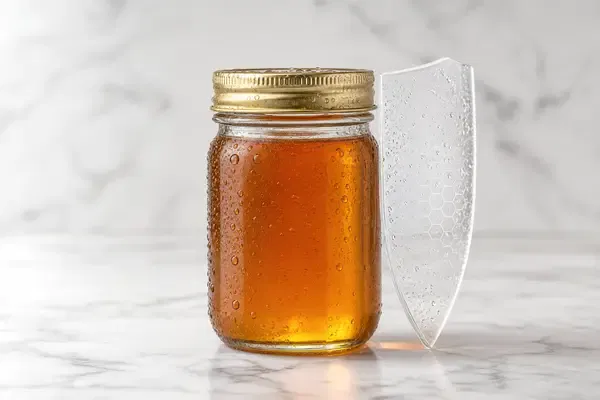
- Premium, high-clarity flint glass jars are becoming the strategic choice for brands to visually prove purity and justify higher price points.
- Coupling transparent glass with secure lug caps protects the honey from moisture absorption, preventing fermentation and preserving quality.
Is your honey packaging ready for the strictest transparency laws in European history? In mid-2026, the European Union officially implemented its revised “Breakfast Directives,” fundamentally changing how honey must be labeled and sold across member states. The era of vague origin claims is over. As regulatory pressure mounts and consumer skepticism regarding food fraud grows, brands are realizing that transparency cannot be achieved through labeling alone. This article explores how the new EU regulations are forcing a shift in packaging strategies, and why high-clarity glass honey jars have become the ultimate tool for proving authenticity and building consumer trust.
The Regulatory Shift: The End of Ambiguous Blends
The Mandate for Exact Percentages. For decades, honey packers in Europe could legally use the phrase “blend of EU and non-EU honeys” to mask the exact origins of their products. This loophole allowed cheap, heavily processed, or even adulterated syrups to be mixed with local honey and sold at a premium. The newly adopted EU regulations have decisively closed this gap. Under the revised directive, any honey sold within the EU must now display the specific countries of origin in descending order of weight, complete with the exact percentage each country contributes to the blend [1]. This information must be placed in the main field of vision on the label, making it impossible to hide.
The Impact on Procurement and Packaging. This legislative change is causing a massive ripple effect through global supply chains. Brands can no longer rely on opaque packaging (such as colored plastics or fully wrapped ceramic pots) to obscure the visual inconsistencies of lower-grade blends. Consumers, now armed with exact origin data, are demanding visual confirmation of the honey’s quality. They want to see the color, viscosity, and clarity of the product before purchasing. Consequently, brands are pivoting aggressively toward packaging materials that offer maximum visibility, making ultra-clear flint glass the undisputed material of choice for compliant, premium honey products.
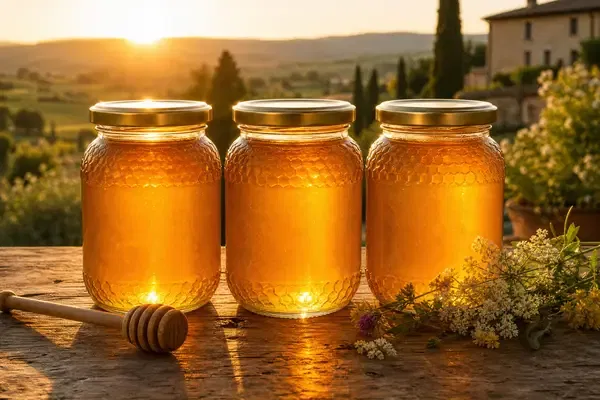
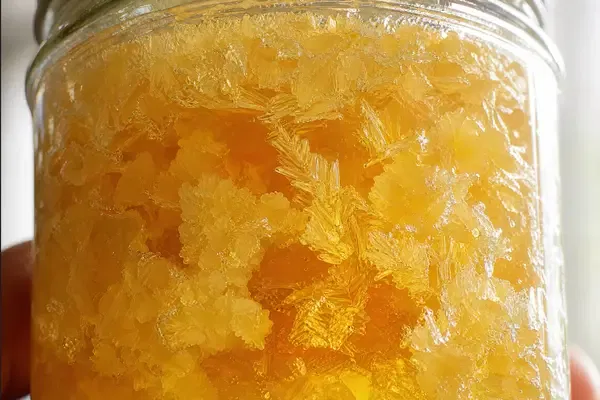
Combating Food Fraud with Visibility. Honey remains one of the most adulterated food products globally, often diluted with rice, beet, or high-fructose corn syrups [2]. The new EU rules are a direct response to this crisis. By forcing brands to declare exact origins, the EU is empowering consumers to make informed choices. However, a label only tells part of the story. High-quality glass packaging acts as a physical guarantee, allowing the natural crystallization process, color variations, and pollen traces of authentic honey to be proudly displayed on the retail shelf.
The Material Trade-off: Why Plastic Fails the Transparency Test
The Clarity Deficit of PET. While PET plastic is lightweight and shatter-resistant, it inherently lacks the optical clarity of flint glass. Over time, plastic can develop a cloudy or scratched appearance, dulling the vibrant golden hues of premium honey. Furthermore, as brands adjust their sourcing to comply with the new EU rules—often moving away from cheap, ultra-filtered syrups toward raw, single-origin, or transparently blended honeys—they need packaging that elevates the product’s perceived value. Plastic simply cannot communicate the premium nature of a product that now proudly lists its exact, high-quality origins on the front label.
Chemical Leaching and the BPA Factor. Beyond aesthetics, the chemical stability of the packaging is paramount. Honey is naturally acidic (typically pH 3.4 to 6.1) and can interact with certain plastics over extended storage periods. This concern is amplified by the impending 2026 EU ban on Bisphenol A (BPA) in food contact materials [3]. As detailed in our recent analysis of the EU BPA Ban, brands are under immense pressure to ensure their packaging is entirely free of endocrine-disrupting chemicals. Glass is universally recognized as GRAS (Generally Recognized As Safe) by global health authorities because it is completely inert and requires no chemical linings [4].
Moisture Barrier and Fermentation Risks. Honey is hygroscopic, meaning it readily absorbs moisture from the air. If the moisture content of honey exceeds 20%, naturally occurring osmophilic yeasts can trigger fermentation, ruining the product. Plastic containers, even high-density ones, are slightly permeable to gases and moisture over long periods. Glass, conversely, provides an absolute, impermeable barrier. When paired with a high-quality plastisol-lined lug cap, a glass jar ensures the honey remains at its optimal moisture level from the day it is packed until it is consumed.
A Glimpse into Glass History: The use of glass for preserving food dates back thousands of years, but it was the invention of the [5] Mason jar in 1858 that revolutionized domestic food storage. John Landis Mason’s patent for a threaded glass jar with a metal screw-on lid created the first reliable, airtight seal, a principle that still governs modern commercial honey packaging today.
The GlassyPack Solution: Premium Jars for Compliant Brands
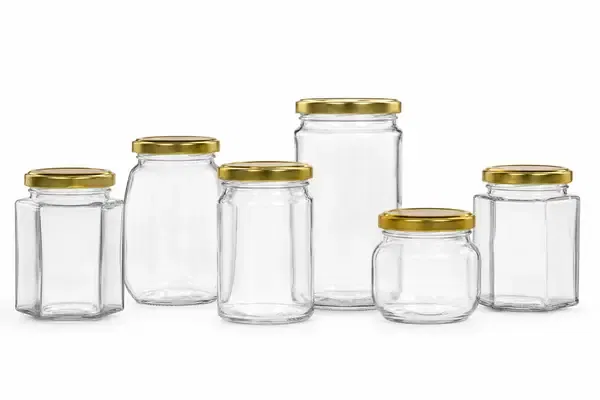
Maximizing Optical Clarity. To capitalize on the transparency mandated by the new EU labeling rules, brands need glass that is flawlessly clear. GlassyPack utilizes high-grade silica sand and advanced furnace technologies to produce “super flint” glass jars. This exceptional clarity ensures that the rich amber, dark buckwheat, or pale acacia tones of your honey are displayed without any green or blue tinting, allowing the product’s natural quality to justify its premium price point.
Optimized Geometries for Labeling. The requirement to list multiple countries of origin and their exact percentages demands more “real estate” on the label’s main field of vision. Our honey jars are engineered with smooth, straight-sided panels that provide maximum surface area for regulatory compliance without compromising the jar’s aesthetic appeal. Whether you require classic cylindrical shapes or modern hexagonal designs, our molds are optimized for high-speed, wrinkle-free automated labeling.
Secure Closure Systems. As discussed in our guide on honey packaging shelf life, the jar is only as good as its lid. We supply our glass jars with precision-engineered twist-off lug caps featuring BPA-NI (Non-Intent) plastisol liners. These closures create a perfect hermetic seal, protecting your honey from moisture ingress and ensuring full compliance with the latest European food safety regulations.
| Packaging Feature | Standard Plastic (PET) | Premium Flint Glass |
|---|---|---|
| Optical Clarity | Moderate (Prone to scratching/dulling) | Exceptional (Showcases product purity) |
| Moisture Barrier | Permeable over time (Risk of fermentation) | Absolute zero permeability |
| Chemical Inertness | Potential interaction with acidic honey | 100% inert, FDA/EU approved |
| Perceived Value | Low to Economy | Premium to Artisanal |
Conclusion: Turning Regulation into a Brand Advantage
The 2026 EU honey labeling regulations should not be viewed merely as a compliance burden, but as a strategic opportunity. By abandoning opaque packaging and embracing the absolute transparency of premium flint glass, brands can visually prove the authenticity of their origins, build unshakeable consumer trust, and command higher margins in a competitive market.
If you are upgrading your honey packaging to align with the new EU directives, we would be glad to share how GlassyPack can provide the high-clarity jars and compliant closures you need. Contact us today at sales@glassypack.com or visit our Contact Us page to request a catalog and wholesale pricing.
FAQ
What are the new EU rules for honey labeling in 2026?
The revised EU “Breakfast Directives” require that any blended honey must clearly list all countries of origin and their exact percentages by weight on the front label, banning vague terms like “blend of non-EU honeys.”
Glass offers superior optical clarity to showcase the honey’s natural color and crystallization. It is also completely impermeable to moisture, preventing fermentation, and is chemically inert, meaning it won’t leach chemicals into the acidic honey.
Does honey go bad in glass jars?
Authentic, properly processed honey does not expire. However, if exposed to moisture, it can ferment. A glass jar with an airtight, plastisol-lined metal cap provides the ultimate barrier against moisture, preserving the honey indefinitely.
Can I hot-fill honey into GlassyPack jars?
Yes, our high-quality flint glass jars are designed to withstand the thermal shock of hot-fill processes commonly used to delay crystallization during commercial honey packing.
Are your metal lids compliant with the 2026 EU BPA ban?
Yes, we supply twist-off lug caps with BPA-NI (Non-Intent) plastisol liners and lacquers, ensuring full compliance with the strictest European food contact material regulations.
References
[1] European Parliament. (2023). Parliament backs new rules on honey labelling. https://www.europarl.europa.eu/news/en/press-room/20230911IPR04918/parliament-backs-new-rules-on-honey-labelling
[2] Wikipedia. (n.d.). Honey. https://en.wikipedia.org/wiki/Honey
[3] DW. (2026). EU ban on BPA chemical in food packaging takes effect. https://www.dw.com/en/eu-ban-on-bpa-chemical-in-food-packaging-takes-effect/a-77630680
[4] U.S. Food and Drug Administration. (n.d.). Packaging & Food Contact Substances. https://www.fda.gov/food/food-ingredients-packaging
[5] Wikipedia. (n.d.). Mason jar. https://en.wikipedia.org/wiki/Mason_jar