Are you still treating refillable perfume bottles as just a “nice-to-have” marketing gimmick? If your fragrance brand sells in Europe, that mindset needs to change immediately. In August 2026, the EU Packaging and Packaging Waste Regulation (PPWR) officially takes effect, making sustainable packaging a strict legal requirement. For perfume brands, the question is no longer “Is this bottle beautiful?” but rather “Does this bottle comply with the PPWR Declaration of Conformity?” This article breaks down exactly what the 2026 EU regulations mean for your fragrance packaging and why shifting to refillable glass bottles is the only future-proof strategy.
What Is the EU PPWR and Why Does It Matter for Perfume Packaging?
The European Union’s Packaging and Packaging Waste Regulation (PPWR) is a sweeping legislative overhaul designed to tackle the mounting crisis of packaging waste. While the regulation was adopted earlier, its general application date is firmly set for August 12, 2026. This is not a distant target; it is an impending deadline that requires immediate action from brand owners.
For the cosmetics and fragrance industry, the PPWR introduces several non-negotiable mandates. First, all packaging must be recyclable by 2030. Second, it strictly limits the presence of substances of concern, such as heavy metals and PFAS, in packaging materials. Most importantly for perfume brands, the regulation mandates packaging minimization and sets ambitious targets for reusable and refillable formats. By August 2026, brands placing products on the EU market must draft and hold a Declaration of Conformity (DoC) proving their packaging meets these stringent sustainability criteria.
Interesting Fact: Glass is one of the oldest packaging materials in human history. The earliest known glass perfume bottles date back to ancient Egypt around 1500 BC, crafted from hand-blown colored glass. Today, its infinite recyclability and chemical inertness make it the ultimate “modern” material for PPWR compliance.
The Rise of Refillable: Why Brands Are Redesigning Their Fragrance Bottles
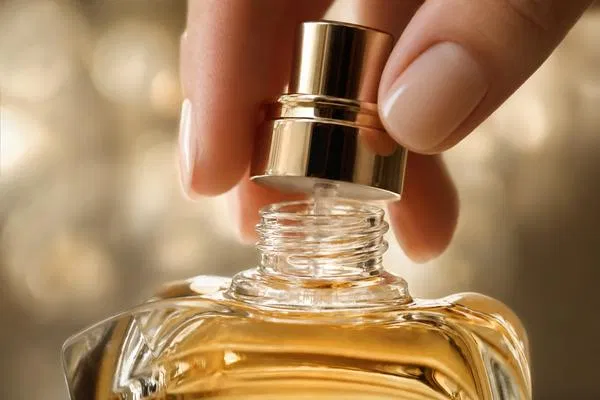
The shift toward refillable perfume bottles is being driven by a powerful trifecta: regulatory pressure (like the PPWR), shifting consumer values, and the opportunity for brand premiumization. A refillable bottle transforms a single-use container into a lasting luxury object, deepening the consumer’s relationship with the brand.
Major luxury houses like Chanel, Dior, and Mugler have already pioneered this space, redesigning their iconic flacons to feature screw-off pumps and refill stations. But this trend is no longer exclusive to heritage brands. The global refillable perfume bottle market is projected to grow at a CAGR of over 4.6% through 2033, driven heavily by indie and niche fragrance brands adopting sustainable practices.
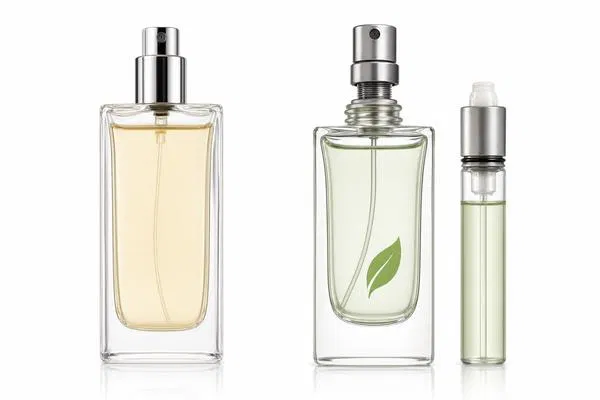
Designing a successful refillable bottle requires technical precision. The glass must be durable enough to withstand multiple uses, the neck finish (often a screw thread like GPI 15/400) must perfectly match the atomizer pump to prevent leaks, and the overall weight should be optimized to reduce shipping emissions without losing the “heavy” luxury feel.
| Feature | Traditional Crimped Bottle | Refillable Screw-Neck Bottle |
|---|---|---|
| EU PPWR Compliance | High risk (hard to separate pump from glass for recycling) | Fully compliant (easy separation and reuse) |
| Consumer Experience | Single-use, throwaway | Interactive, premium, eco-conscious |
| Long-term Brand Loyalty | Low (must repurchase full product) | High (incentivized to buy refill pouches/cartridges) |
Small Batch, Big Demand: What Fragrance Brands Are Asking Suppliers in 2026
As brands scramble to update their packaging portfolios to meet the 2026 PPWR deadline, their sourcing strategies are evolving. At recent industry events like PCD Paris, a clear trend emerged: fragrance buyers are prioritizing flexibility over sheer volume. The most common questions asked of glass bottle suppliers are no longer just about bespoke molds, but rather about Minimum Order Quantities (MOQs) and lead times.
Why the shift? Because transitioning to refillable systems requires market testing. Indie brands and even established houses are launching refillable lines in smaller batches (typically 1,000 to 3,000 units) to gauge consumer response to the new atomizer mechanisms and refill rituals before committing to massive production runs. Finding a glass manufacturer that can deliver high-quality, PPWR-compliant refillable bottles at low MOQs has become the holy grail for fragrance procurement teams in 2026.
How to Choose the Right Glass Bottle for Your Refillable Fragrance Line
When selecting a glass bottle for a refillable perfume line, the technical specifications are just as important as the aesthetics. Here is a quick checklist for brand owners:
- Neck Finish: Opt for standard screw necks (e.g., FEA 15 or GPI threads) that allow consumers to easily unscrew the pump without specialized tools.
- Glass Quality: Ensure the glass is highly chemically inert to protect the fragrance oils over a longer lifespan. Type III soda-lime glass is the industry standard.
- Decoration Durability: Since the bottle will be handled repeatedly over months or years, surface treatments like frosting, silk-screen printing, or hot stamping must be highly scratch-resistant.
- Pump Compatibility: The glass supplier must guarantee tight tolerances on the neck inner diameter to ensure the refillable pump seals perfectly, preventing evaporation and leaks.
Conclusion
The August 2026 implementation of the EU PPWR is not a hurdle; it is an opportunity. By transitioning to refillable glass perfume bottles, fragrance brands can ensure regulatory compliance, reduce their environmental footprint, and elevate their product into a lasting luxury keepsake. The brands that act now to secure reliable, flexible suppliers for their refillable packaging will dominate the European market in the years to come.
Planning a refillable fragrance line or updating your packaging for EU compliance? We work with fragrance brands from concept to production — offering high-quality screw-neck glass bottles with MOQs starting from just 2,000 units. Drop us a line at sales@glassypack.com or visit our Contact Us page to discuss your project.