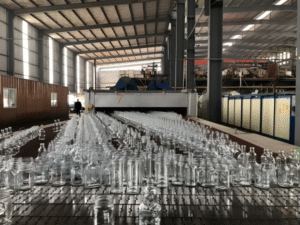
In early 2026, a combination of geopolitical shocks is quietly reshaping the global glass bottle market. The world’s largest glass container maker, O-I Glass, reported its Americas capacity is “effectively sold out” while closing three European plants. Meanwhile, the Iran war has driven Indian glass bottle prices up ~20%, and transpacific shipping rates surged nearly 30% between February and April. For buyers sourcing glass bottles internationally, the message is clear: the window for stable pricing and reliable supply is narrowing.
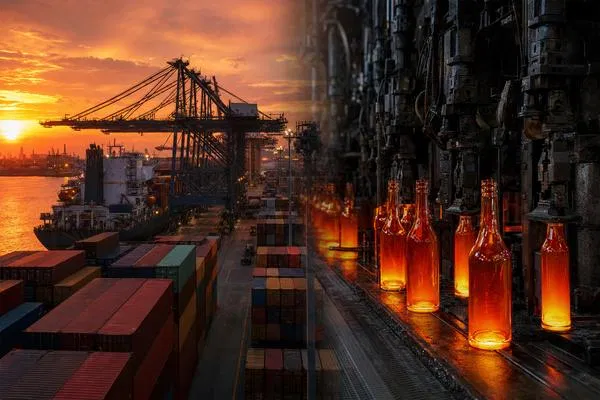
The Supply Signal No One Expected: O-I Glass Q1 2026 Earnings
The first quarter of 2026 brought unexpected news from the top of the glass manufacturing industry. O-I Glass, a bellwether for the global market, reported net sales of $1.54 billion, a slight 1.7% decrease year-over-year. However, the real story lies beneath the top-line numbers. During their earnings call, CEO Gordon Hardie described the quarter as “a story of two hemispheres.”
In the Americas, O-I’s capacity and demand are so tightly aligned that the region is “effectively sold out.” Conversely, in Europe, the company is accelerating its restructuring program, which includes the closure of three plants by mid-2026. This tightening of capacity in the West is compounded by inflated energy costs stemming from the conflict in the Middle East, which impacts natural gas, electricity, and logistics. Consequently, O-I has lowered its full-year earnings outlook to between $1.125 billion and $1.225 billion EBITDA, down from an earlier range of $1.25–$1.3 billion.
Founded in 1929, O-I Glass operates over 70 plants in 23 countries. When a company of this scale reports that a major region is “sold out” and cites energy inflation as a primary headwind, it serves as a critical early warning system for global glass packaging prices. (Source: Packaging Dive, April 29, 2026)
The Iran War Effect: How a Regional Conflict Is Hitting Your Glass Bottle Costs
The ongoing conflict involving Iran is sending shockwaves far beyond the Middle East, directly impacting the cost of goods sold for beverage and food brands worldwide. Glass manufacturing is an energy-intensive process, heavily reliant on natural gas. The war has disrupted energy supplies, particularly affecting regions dependent on imported Liquefied Natural Gas (LNG).
In India, LNG imports dropped to their lowest level since January 2025. This energy crunch has severely constrained domestic glass manufacturing capacity. The Brewers Association of India recently revealed that glass bottle prices have surged by approximately 20%. The situation is so acute that the Federation of European Business in India — representing giants like Pernod Ricard, AB InBev, Heineken, and Carlsberg — formally urged the Indian government to waive the 10% import duty on glass bottles to prevent widespread shortages. (Source: The Drinks Business, April 10, 2026)
Furthermore, the geopolitical instability has disrupted key shipping routes, including the Strait of Hormuz. This has led to a broader logistics crisis, with transpacific shipping rates rising nearly 30% between late February and early April 2026. Packaging manufacturers are now facing a dual threat: skyrocketing energy costs to produce the bottles and surging freight costs to deliver them. As Jason Wong, CEO of packaging manufacturer Paking Duck, put it: “These black swan events keep coming at us. We just don’t have time to prepare.” (Source: Packaging Dive, April 9, 2026)
What This Means for Beer, Wine, and Spirits Buyers Right Now
For procurement managers in the beverage sector, these overlapping crises require immediate strategic adjustments. The alcohol industry, which relies heavily on glass for brand positioning and product integrity, is particularly vulnerable to these supply shocks. O-I itself noted that alcohol — including wine — has been its softest market segment in Q1 2026, reflecting the broader pressure on the category.
The traditional approach of relying on a single, localized supplier is becoming increasingly risky. Brands must shift from a “single-source” mindset to building supplier redundancy. The lessons from the global glass shortages of 2020–2021 are highly relevant today: those who waited for the market to stabilize often found themselves without packaging when they needed it most. Tom Hammann, owner of CPG consulting firm WTH Solutions, put it plainly: “One big event like this… and you just unwound all the cost savings you thought you had by going to one supplier.”
| Sourcing Strategy | Advantages | Risks |
|---|---|---|
| Lock in contracts now | Secures inventory; protects against further price hikes | Requires upfront capital commitment |
| Wait for market stability | Potential savings if tensions ease quickly | High risk of stockouts and severe price spikes if disruptions continue |
| Diversify suppliers internationally | Mitigates regional risk; ensures continuous supply | Requires vetting new partners and managing longer supply chains |
Why China-Sourced Glass Bottles Remain a Viable Option
As capacity tightens in the Americas and Europe, and costs spike in South Asia, sourcing glass bottles from China remains a highly strategic option for global brands. Chinese glass manufacturers are relatively insulated from the specific energy shocks caused by the Iran conflict, thanks to diversified domestic energy policies and robust industrial infrastructure.
Moreover, Chinese suppliers continue to offer significant advantages in terms of scale and flexibility. They maintain ample production capacity, offer extensive customization options for bespoke bottle designs — from wine and spirits bottles to perfume and cosmetic containers — and generally provide more flexible Minimum Order Quantities (MOQs) compared to their Western counterparts. In a volatile market, having a reliable manufacturing partner in a stable production region is not just a cost decision; it is a supply chain resilience decision.

Conclusion
The convergence of O-I Glass’s capacity constraints, the energy crisis sparked by the Iran war, and surging global freight rates indicates that the glass bottle market will remain under pressure throughout 2026. Beverage and food brands that act proactively — diversifying their sourcing strategies and building supplier redundancy — will be far better positioned than those waiting for the dust to settle.
The global glass bottle market is tightening. If you are planning orders for Q3 or Q4 2026, now is a good time to confirm lead times and pricing with your suppliers. We are happy to share our current availability and discuss how we can support your packaging needs during this volatile period. Reach out to us at sales@glassypack.com or visit our Contact Us page — we ship samples worldwide.