Quick Answer: Most non-alcoholic spirits brands use the same glass bottles as traditional spirits: 700ml or 750ml flint bottles with a heavy base and a bar-top cork, so the product sits naturally next to gin, tequila and whisky. Stock bottles with a printed or sprayed logo start from 2,000 pieces; a custom mold typically needs 10,000 to 30,000 pieces.
- Non-alcoholic spirits were the fastest-growing segment in NielsenIQ’s US spirits report for the four weeks to 7 November 2026, with sales up 26.0% and volume up 30.6%.
- 700ml is the standard spirits size in the EU and UK, and 750ml in the US; 375ml and 500ml work for trial sizes and gift sets.
- Without alcohol to preserve them, NA spirits rely on preservatives or pasteurisation, so the bottle and closure need to suit the process.
- Bar-top corks, synthetic corks, screw caps and ROPP aluminium caps are all common; the right choice depends on filling and how long the bottle stays open.
If your drink contains no alcohol, should it still look like a spirit? For most non-alcoholic brands the answer is yes. Shoppers find NA gin, tequila and whisky alternatives on the same shelf and behind the same bar as the real thing, and the bottle is often the first signal that the product is a premium spirit alternative rather than a soft drink. This guide explains which glass bottles, sizes and closures NA spirits brands use, what changes when there is no alcohol in the bottle, and what it costs to brand a stock bottle or develop your own.
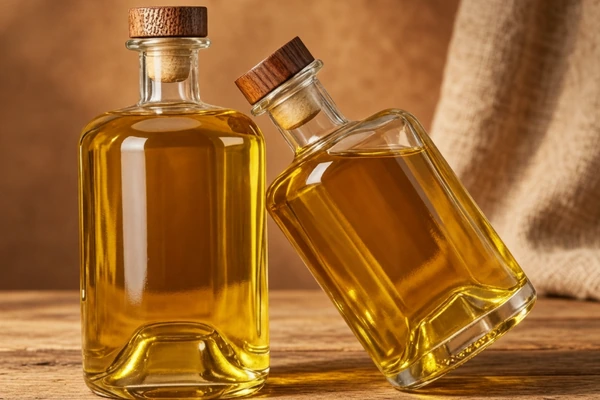
Why are non-alcoholic spirits brands growing so fast?
Non-alcoholic spirits are growing while the wider spirits market shrinks. According to NielsenIQ data reported by Vinetur, US spirits dollar sales fell 1.9% in the four weeks ending 7 November 2026, while non-alcoholic spirits posted the fastest growth in the report, with value up 26.0% and volume up 30.6%[1].
This is not a one-month spike. Earlier in the year, NielsenIQ reported non-alcoholic spirits dollar sales up 25.7% and volume up 29.5% in the four weeks ending 1 August[2]. With Dry January coming, many NA brands plan new launches and restocks in the first quarter, which means packaging decisions are made in the last weeks of the year.
NA spirits brands choose premium glass bottles because they compete with full-strength spirits on shelf, on price and in the bar. A non-alcoholic gin is often priced close to a craft gin, so a heavy flint bottle with a cork stopper helps justify that price in a way a plastic bottle or can does not.
Glass also suits the product itself. NA spirits are built from botanical distillates and extracts that are sensitive to flavour loss, and glass is inert, so it does not absorb or add aromas. A clear, high-flint bottle shows the colour of the liquid, while a sprayed or frosted finish can hide natural colour variation between batches.
For brand owners, the practical advantage is that the whole supply chain for spirit bottles already exists: standard sizes, standard necks and a wide choice of stock shapes. Our own liquor and spirit bottles range is used for vodka, gin, tequila and whisky, and the same stock bottles work for their non-alcoholic alternatives.
What size bottle should a non-alcoholic spirit use?
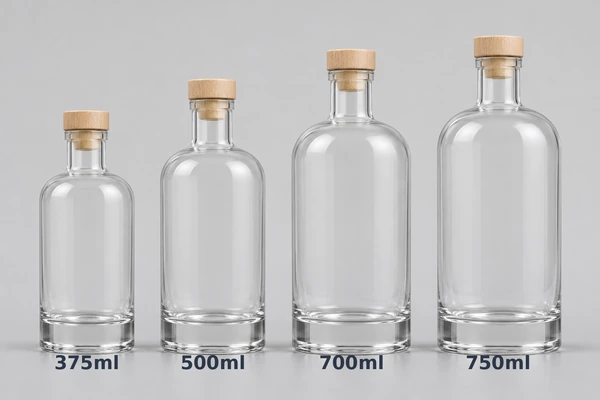
Most NA spirits use the same sizes as the category they replace: 700ml in the EU and UK and 750ml in the US. Smaller 375ml and 500ml bottles are useful for trial sizes, gift sets and bars that want to test a new product.
| Size | Where it is used | Why NA brands choose it |
|---|---|---|
| 700ml | EU, UK and many export markets | Matches gin, rum and whisky on European shelves |
| 750ml | United States | Matches the standard US spirits bottle and bar rails |
| 500ml | Premium and direct-to-consumer brands | Lower shelf price for a first purchase |
| 375ml | Trial sizes, gift sets, sampling | Lets buyers try a new flavour at low cost |
There is one regulatory difference worth knowing for the US. Products with less than 0.5% alcohol by volume are not regulated as distilled spirits under the Federal Alcohol Administration Act[3], so the size rules written for spirits do not automatically apply to them. Other federal and state rules still do, so always check labelling and size requirements for your market with a regulatory adviser. For the full background on spirits sizes, see our guide to liquor bottle sizes and 700ml vs 750ml.
How does having no alcohol change bottle and closure choices?
Alcohol is a natural preservative, so taking it out changes how the drink has to be protected. Research body Campden BRI notes that non-alcoholic cocktails present additional microbiological challenges, and that pasteurisation can work well, although the best equipment is expensive to install[4]. In practice, NA spirits brands use preservatives, pasteurisation or both.
This has two consequences for packaging:
- The bottle must suit your process. If you pasteurise, tell your supplier before you choose a bottle. Our liquor bottles can be used with pasteurisation, and we confirm the specific bottle with each customer before production.
- The closure matters more after opening. A full-strength spirit can stand open for months, while an NA spirit is more sensitive once air gets in. A closure that reseals tightly every time protects the flavour for longer.
Which closure works best for non-alcoholic spirits?
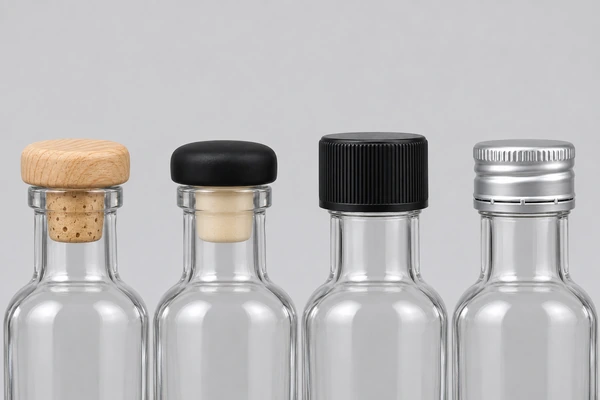
The best closure depends on how premium the brand is, how it is filled and how the bottle is used after opening. We can supply all four of the common options below.
| Closure | Strengths | Watch out for |
|---|---|---|
| Bar-top natural cork | Classic premium look, easy to reopen | Natural variation; check the seal fit on every bottle size |
| Synthetic cork | Premium look with more consistent sealing | Choose a head design that matches your brand |
| Screw cap | Tight reseal, simple capping | Less traditional look for a premium spirit |
| ROPP aluminium cap | Tamper evidence, suits automated lines | Needs a matching neck and capping head |
Bottles and closures are shipped separately, ready for your filling and capping line. For more detail on neck finishes and sealing, see our guide on how to stop liquor bottle leakage.
Which stock bottles work for NA gin, tequila and whisky alternatives?
Most NA brands start with a stock spirit bottle and make it their own through decoration. Shapes that work well include:
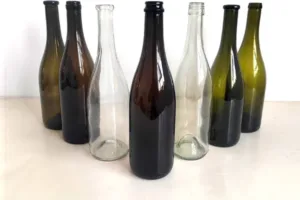
- Thick-bottom super flint bottles for gin and vodka alternatives, such as our 700ml super flint cylindrical thick-bottom bottle and 700ml square thick-bottom bottle.
- Cork-finish bottles for whisky and tequila alternatives, such as our vodka bottle with cork closure and premium whiskey and tequila bottle.
- Smaller bottles for trial sizes and gift sets, such as our 375ml and 500ml liquor bottles.
Our spirit bottles are inspected one by one by hand under light for cracks, bubbles, stones and other visible defects before packing.
How much does it cost to brand or customise a spirit bottle?
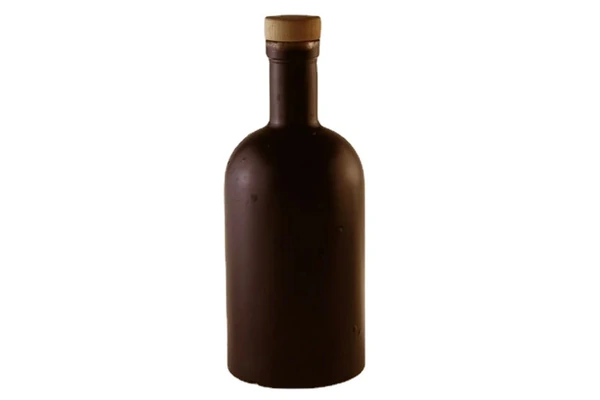
Branding a stock bottle costs far less than a custom mold, and for most new NA brands it is the right first step. Decoration such as screen printing, colour spraying and frosting can be added to stock bottles, while a custom mold makes sense once volumes are stable.
| Stock bottle with decoration | Custom mold | |
|---|---|---|
| Minimum order | 2,000 pieces | 10,000 to 30,000 pieces, depending on bottle size |
| Sampling time | 15 to 25 days | 25 to 40 days |
| Production time | 35 to 45 days | 35 to 45 days |
| Mold cost | None | Typically about $1,500 to $3,000 |
Decoration options and their minimum orders:
- Screen printing: up to 6 colours; up to 4 colours from 2,000 pieces, 5 to 6 colours from 10,000 pieces.
- Colour spraying and frosting: from 2,000 pieces. Frosting can be applied to any of our bottles.
- Decals, hot stamping and electroplating: from 6,000 pieces. Decals can reproduce a logo in an exact Pantone colour.
For a full breakdown of what drives custom bottle prices, see our custom liquor bottle pricing and MOQ guide.
What have spirits and low-alcohol brands ordered from us?
Two recent projects show how brands in this space customise their bottles.
A tequila brand from Mexico ordered 10,000 customised bottles with a sprayed colour finish and their own logo. The order was completed, and the same approach, a sprayed colour with a printed logo, works just as well for a non-alcoholic tequila alternative that wants to stand next to the real thing.
A lightly sparkling wine brand pasteurises its product in custom bottles we made. For this customer we also applied their logo as a decal in their own Pantone colour, and the customer was very satisfied with the result. For NA brands that pasteurise and care about exact brand colours, this combination of a process-suited bottle and colour-matched decoration is a good model.
When should NA spirits brands order bottles for Dry January and spring?
Order early, because the end of the year is also the run-up to Chinese New Year. Glass furnaces in China run all year, but printing, packaging and logistics slow down from about 20 days before the holiday. For stock bottles with decoration, plan your order at least 10 weeks before the holiday starts. Our guide to Chinese New Year factory closures explains the timeline for each year.
Conclusion
Non-alcoholic spirits brands are growing fast, and most of them package their drinks like the spirits they replace: 700ml or 750ml flint glass, a heavy base and a cork or tamper-evident cap. Start with a stock bottle and decoration from 2,000 pieces, confirm that the bottle suits your preservation process, and move to a custom mold when volumes justify it. If you are launching or relaunching an NA spirit, send us your target market, bottle size, closure and quantity through our contact page, and we will suggest bottles that fit.
FAQ
What bottles do non-alcoholic spirits come in?
Most non-alcoholic spirits come in the same glass bottles as traditional spirits: 700ml or 750ml flint bottles with a heavy base and a cork or screw cap, so they sit naturally next to gin, tequila and whisky.
Should a non-alcoholic spirit use a 700ml or 750ml bottle?
Use 700ml for the EU, UK and many export markets, and 750ml for the United States. Many brands that sell in both regions use two sizes of the same bottle design.
Can glass spirit bottles be pasteurised?
Yes. Our liquor bottles can be used with pasteurisation, and we confirm the specific bottle with each customer before production.
What closure is best for non-alcoholic spirits?
Bar-top corks give the most premium look, synthetic corks seal more consistently, screw caps reseal tightly, and ROPP aluminium caps add tamper evidence on automated lines. Because NA spirits are more sensitive after opening, a closure that reseals well is important.
What is the minimum order for custom non-alcoholic spirits bottles?
Stock bottles with screen printing, colour spraying or frosting start from 2,000 pieces. A custom mold typically needs 10,000 to 30,000 pieces, depending on bottle size.
Can you match my logo to a Pantone colour?
Yes. Decals can reproduce a logo in an exact Pantone colour, from 6,000 pieces.
References:
[1] Vinetur. “U.S. spirits sales fell 1.9% in early November.” 18 November 2026. https://www.vinetur.com/en/20261118111399/us-spirits-sales-fell-19-in-early-november.html
[2] Vinetur. “U.S. spirits sales fell 3.8% in the four weeks ending Aug. 1.” 12 August 2026. https://www.vinetur.com/en/20260812105533/us-spirits-sales-fell-38-in-the-four-weeks-ending-aug-1.html
[3] Packaging Digest. “Modernized Alcoholic Beverage Regulations Spur Label Updates.” https://www.packagingdigest.com/labeling/modernized-alcoholic-beverage-regulations-spur-label-updates
[4] Campden BRI. “Producing shelf-stable cocktails.” https://campdenbri.co.uk/news/shelf-stable-cocktails.php