Quick Answer: The most common liquor bottle sizes are 50ml, 200ml, 375ml, 700ml, 750ml, 1 liter and 1.75 liters. The US uses 750ml as its standard bottle, while the EU does not allow 750ml for spirits and uses 700ml instead. A brand selling in both markets therefore needs a 750ml version for the US and a 700ml version for Europe.
- 750ml is the standard US spirit bottle, but it is not an approved spirit size in the European Union.
- The EU allows nine spirit sizes, from 100ml to 2 liters, with 700ml as the main retail format.
- The US authorized 700ml for spirits in 2020 and now allows 25 sizes in total.
- Choosing a stock size and shape keeps the minimum order at 2,000 pieces instead of 10,000 or more.
Which bottle size should your spirit launch in, and will that size be legal in every market you plan to sell to? Most size guides are written for shoppers deciding how much vodka to buy for a party. For a brand owner, the question is different: the capacity you choose decides which countries you can ship to, which stock molds are available, how many bottles fit on a pallet, and whether one closure can serve your whole range. This guide covers the standard sizes, the difference between US and EU rules, which sizes suit each spirit category, and how size affects cost and minimum order quantity.
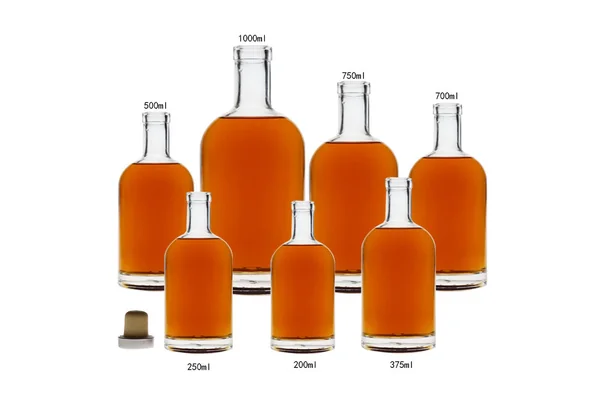
What are the standard liquor bottle sizes and how many shots does each hold?
Spirit bottle sizes are set by law in most markets, so brands choose from a fixed list rather than any capacity they like. The table below shows the sizes buyers ask us about most often, with their US fluid ounce equivalent and the approximate number of 1.5 oz (44ml) servings, the standard US shot. Several of these sizes also have trade nicknames, which you will see on distributor price lists and in retail buying conversations.
| Size | US fl oz | 1.5 oz servings | Common name | Typical use |
|---|---|---|---|---|
| 50ml | 1.7 | 1 | Miniature, nip | Airlines, hotel minibars, samples, gift sets |
| 200ml | 6.8 | 4.5 | Half pint | Liqueurs, trial sizes, convenience retail |
| 350ml | 11.8 | 8 | Half bottle (EU) | European half-size format for premium spirits |
| 375ml | 12.7 | 8.5 | Pint, half bottle (US) | US half-size, tequila and craft spirit trial size |
| 500ml | 16.9 | 11 | — | Craft gin, liqueurs, Asian markets |
| 700ml | 23.7 | 16 | Standard (EU, UK) | Main retail size in Europe and many export markets |
| 750ml | 25.4 | 17 | Fifth | Main retail size in the US |
| 1L | 33.8 | 22.5 | Liter | Duty free, bars, back-bar pouring |
| 1.75L | 59.2 | 39 | Handle | Value vodka and rum, US bulk retail |
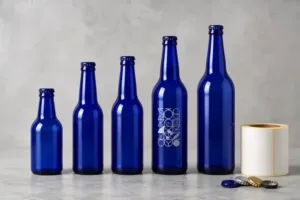
Exact bottle height and diameter vary by shape, so two 750ml bottles can look very different on the shelf. A tall, slim vodka bottle and a short, heavy whisky decanter can hold the same volume. When you compare suppliers, ask for the drawing of each bottle, which shows height, body diameter, neck finish, glass weight and brimful capacity.
Why do the US and EU use different liquor bottle sizes?
The US and EU each publish their own list of permitted spirit sizes, and 750ml is on the US list but not on the EU list. Under US federal rules administered by the Alcohol and Tobacco Tax and Trade Bureau (TTB), spirits can be sold in 25 authorized sizes, from 50ml up to 3.75 liters[1]. The EU list for spirit drinks is much shorter: 100ml, 200ml, 350ml, 500ml, 700ml, 1 liter, 1.5 liters, 1.75 liters and 2 liters[2]. 750ml appears in the EU rules only for wine.
What this means for exporters. A 750ml bottle of whisky cannot go on an EU shelf, and for decades a 700ml bottle could not go on a US shelf either. That changed at the end of 2020, when the TTB added 700ml, 720ml, 900ml and 1.8 liters to the US list of spirit sizes[3], and a further rule in January 2025 added more sizes, including 500ml and 355ml. Today a 700ml bottle is legal in both markets, while a 750ml bottle is still legal only in the US. A brand planning a single global SKU can now standardize on 700ml, although US retail buyers still expect 750ml as the default size on the shelf.
Other markets. Many countries outside the US and EU follow one of these two systems, but rules vary, and some markets allow sizes neither list includes. Always confirm the permitted capacities with your importer or distributor before you approve a bottle drawing, because the capacity is fixed by the mold and cannot be changed after production.
Where "the fifth" comes from: Before the US moved to metric spirit sizes in 1980, the standard bottle held one fifth of a US gallon, about 25.6 fluid ounces. Its metric replacement, 750ml, holds 25.4 ounces, close enough that American drinkers and retailers kept calling it a "fifth". The nickname has outlived the measurement it was based on by more than four decades.
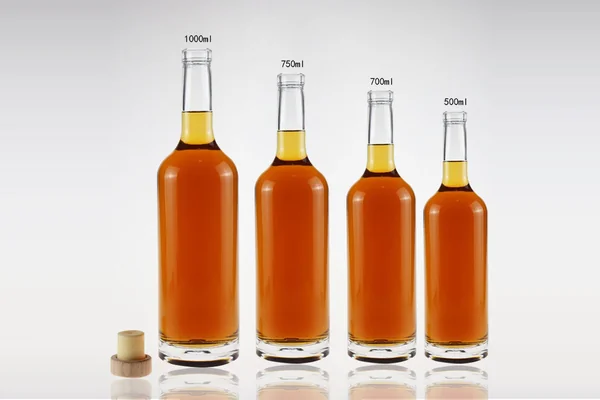
Which bottle size is best for whisky, vodka, gin, tequila and liqueurs?
Most spirit brands launch with one main retail size, 700ml or 750ml depending on the market, and add a small format later for sampling and gifting. Beyond that, each category has its own habits, shaped by price point, drinking occasion and where the product is sold.
| Spirit | Main sizes | Typical bottle style | Why |
|---|---|---|---|
| Whisky / bourbon | 700ml, 750ml, 1L | Heavy base, square or round shoulders, bar top cork | Glass weight signals age and value |
| Vodka | 700ml, 750ml, 1L, 1.75L | Tall, slim, super flint glass, screw cap | Clarity shows purity; large formats sell on value |
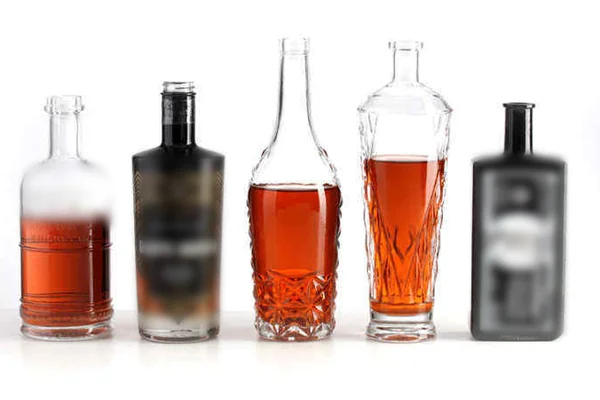
| Gin | 500ml, 700ml, 750ml | Short, wide or apothecary style, often decorated | Craft gin relies on shelf standout |
| Tequila / mezcal | 375ml, 700ml, 750ml | Distinctive shapes, thick base, glass or wood stopper | Premium brands compete on bottle design |
| Rum | 700ml, 750ml, 1L, 1.75L | Round body, screw cap or cork | Split between value and premium aged ranges |
| Liqueurs | 50ml, 200ml, 500ml, 700ml | Smaller, decorative, often colored or sprayed | Lower consumption per bottle; strong gifting market |
Small formats work best as a second SKU. A 50ml or 200ml bottle lets consumers try a new brand at low cost, and it gives you a product for gift sets, hotel and airline listings, and trade samples. Because small bottles use less glass, their unit price is low, but their packing and decoration costs per milliliter are high, so they rarely make sense as a brand's only size.
How does bottle size affect cost, MOQ and shipping?
Bottle size affects your cost mainly through three things: the glass weight, whether a stock mold already exists, and how many bottles fit in a carton and a container. Capacity on its own matters less than most buyers expect.
Stock size versus custom mold. 700ml and 750ml are the capacities with the widest choice of stock molds, so a brand can usually find a suitable shape at a 2,000-piece minimum and add its identity through decoration and a branded closure. A custom mold for a unique shape typically requires 10,000 to 30,000 pieces, depending on capacity and glass, plus mold cost and a longer lead time. Our custom liquor bottle pricing and MOQ guide breaks down these costs in detail.
Glass weight drives unit price more than capacity. A 700ml bottle with a heavy base can weigh far more than a standard 750ml bottle, and glass is priced largely by weight. Heavy glass also raises freight cost per bottle. If you want a premium feel, decide how much of your budget goes into glass weight and how much into decoration, which often creates more shelf impact for less money.
Larger bottles cost more to ship per liter of product. Large formats such as 1.75 liters need stronger cartons and take up more space on a pallet, so freight and packaging add a larger share of the landed cost. Small formats have the opposite problem: many units per carton, but more handling and more closures per liter of product.
Can one bottle design work for both the US and EU markets?
One bottle design can serve both markets, but it needs two capacities and therefore two molds: 750ml for the US and 700ml for the EU, or 700ml alone if your US buyers accept it. Most stock bottle families come in both sizes, with the same shape and the same neck finish, so the two versions look almost identical on the shelf.
Keep the neck finish the same across sizes. When the 700ml and 750ml versions share a neck finish, one cork or cap specification covers both SKUs. That means one closure order, one set of closure minimums and one decoration setup for the cap. It also reduces the risk of a closure that fits one bottle but leaks on the other. Our guide to liquor bottle closures and neck finishes explains how to match the finish and closure to avoid leakage.
Check the label panel on both sizes. The 750ml version is usually slightly taller or wider than the 700ml version, so the label area is not always identical. Ask for both drawings before you finalize artwork, and if you screen print the bottle, confirm the printing position on each size at the sampling stage.
Conclusion: Choose the Size for Your Market First, Then the Shape
The right liquor bottle size starts with where you plan to sell. Choose 750ml for the US, 700ml for the EU, or 700ml for both if your US buyers accept it. Add a small format for sampling and gifting once the main size is selling, and keep the neck finish the same across sizes so one closure serves your whole range. A stock shape keeps your minimum order and lead time low, while a custom mold makes sense once volumes justify it. You can browse our range of wholesale liquor bottles in 200ml to 1000ml to see which shapes are available in each size.
If you are planning a new spirit launch or adding a size to an existing range, we would be glad to send drawings and samples of stock bottles in the capacities you need. Contact us at sales@glassypack.com or visit our Contact Us page to tell us your target markets and volumes.
FAQ
What is the most common liquor bottle size?
750ml is the most common spirit bottle size in the US, and 700ml is the most common size in the EU and UK. Both hold roughly 16–17 standard 1.5 oz servings.
Can I sell a 750ml bottle of spirits in Europe?
No. 750ml is not on the EU list of permitted sizes for spirit drinks, which includes 100ml, 200ml, 350ml, 500ml, 700ml, 1 liter, 1.5 liters, 1.75 liters and 2 liters. Spirits for the EU market are normally bottled in 700ml.
Is a 700ml bottle legal in the United States?
Yes. The TTB added 700ml to the list of authorized US spirit sizes in December 2020. It is now legal in both the US and EU, although 750ml remains the size most US retailers expect.
Why is a 750ml bottle called a fifth?
Before the US adopted metric spirit sizes, the standard bottle held one fifth of a US gallon, about 25.6 ounces. The 750ml bottle that replaced it holds 25.4 ounces, so the name stayed.
How many shots are in a 750ml bottle?
A 750ml bottle holds about 17 servings of 1.5 oz (44ml), the standard US shot. A 700ml bottle holds about 16, and a 1.75 liter handle holds about 39.
What is the minimum order for liquor bottles in a standard size?
For stock bottles in standard sizes such as 700ml and 750ml, our minimum order is 2,000 pieces, including bottles decorated with your logo. A custom mold usually starts at 10,000–30,000 pieces depending on capacity and glass.
Do 700ml and 750ml bottles use the same cork or cap?
They can, if both bottles share the same neck finish. Many stock bottle families are made in both capacities with the same finish, so one closure specification covers both sizes.
References
[1] Alcohol and Tobacco Tax and Trade Bureau (TTB). Distilled Spirits Net Contents: Authorized Standards of Fill. https://www.ttb.gov/regulated-commodities/beverage-alcohol/distilled-spirits/ds-labeling-home/ds-net-contents
[2] Alcohol and Tobacco Tax and Trade Bureau (TTB). EU Standards of Fill. https://www.ttb.gov/itd/eu-standards-of-fill
[3] Alcohol and Tobacco Tax and Trade Bureau (TTB). (2020, December 29). Standards of Fill Final Rule Published. https://www.ttb.gov/news/standards-of-fill-final-rule-published