Quick Answer: For perfume decants and travel sizes, most brands and resellers choose 10ml glass spray bottles, which hold roughly 80 to 120 sprays. Roll-on bottles suit perfume oils, dual-head bottles give buyers both options, and 30ml to 100ml travel sprays work for larger minis. Choose a screw-neck sprayer if the bottle will be filled by hand or refilled.
- Mini sizes now account for 38% of prestige fragrances sold in the US, so decant and travel bottles are a core product, not an extra.
- A 10ml glass spray bottle holds roughly 80 to 120 sprays, enough for one to two weeks of daily wear.
- Spray bottles suit alcohol-based perfume; roll-on bottles suit perfume oils and attars.
- Screw-neck sprayers can be filled by hand and refilled; crimp-neck sprayers are sealed permanently on a crimping machine.
Is your decant or travel range losing sales because of the bottle, not the scent? Small perfume bottles are judged harder than full sizes: buyers notice a weak spray, a leaking neck or a cheap-feeling cap straight away. At the same time, the market for small sizes keeps growing. This guide explains which decant bottle types and sizes work best, how sprayers and necks affect filling, and what to check before ordering in bulk.
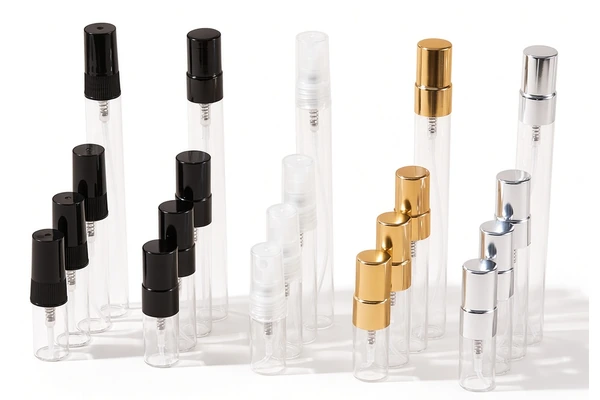
Why are perfume decant and travel bottles in demand?
Perfume decant and travel bottles are in demand because many shoppers now discover fragrance through small sizes before buying a full bottle. According to Circana data reported by Cosmetics Business, mini sizes now account for 38% of all prestige fragrances sold in the US, and search growth for “mini perfume” across Google and TikTok rose by 123% in 2025[1].
Trade press also notes that discovery sets and travel sizes are no longer just sampling tools but how many consumers take part in fragrance, while brands are moving toward fewer, more relevant samples[2]. That shift favours a well-made 10ml bottle that customers keep and use, over a throwaway plastic vial.
Three groups of buyers order decant bottles: perfume brands building travel sizes and discovery sets, decant and sample shops that split full bottles into smaller ones, and hotels, gift and subscription businesses that need small branded bottles in volume.
Which decant bottle type should you choose: spray, roll-on or dual-head?
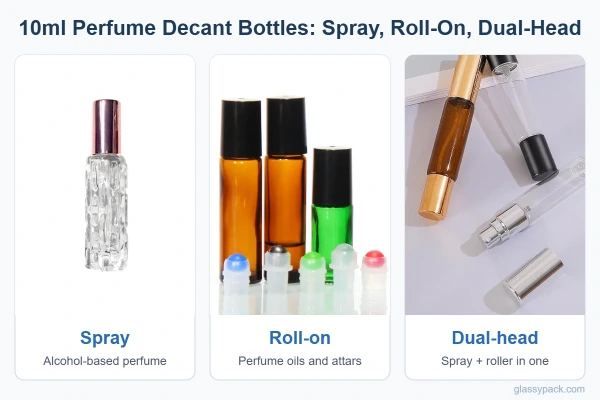
The right decant bottle type depends on the formula and how the customer will use it. Spray bottles are the default for alcohol-based perfume, roll-on bottles are best for perfume oils, and dual-head bottles give the customer both options in one bottle.
| Type | Best for | Advantages | Watch out for |
|---|---|---|---|
| Spray (atomizer) | Eau de parfum, eau de toilette, cologne | Same experience as a full bottle, even mist, low waste | Sprayer quality decides the mist and leak resistance |
| Roll-on | Perfume oils, attars, essential oil blends | Precise application, no evaporation from spraying, very portable | Not ideal for thin alcohol-based perfume, which can run |
| Dual-head (spray + roller) | Gift sets, travel retail, multi-use blends | Two application methods in one bottle, strong shelf appeal | Each end holds part of the formula, so check fill volume |
| Travel spray 30ml to 100ml | Large minis, travel-size retail | Looks and works like a full-size bottle | Usually crimp-neck, so filled on a machine |
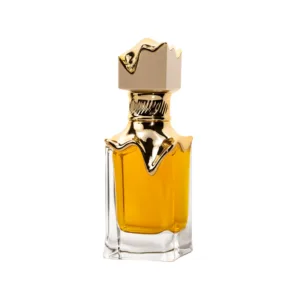
Our small perfume bottles, including 2ml, 5ml and 10ml sizes, are available from stock. The range includes a 10ml glass perfume spray bottle with a rose gold, silver or black aluminium sprayer, a 10ml dual-head spray and roll-on vial, 10ml roll-on bottles, and 30ml, 50ml and 100ml travel spray bottles. You can see many of them in our perfume and cologne bottles category, and we can send details of sizes not listed online.
What size decant bottle is best: 2ml, 5ml, 10ml or larger?
The best decant size depends on whether the bottle is a sample or a product the customer will use for weeks. Small vials of 2ml to 5ml are sampling tools, while 10ml is the most popular size for a decant that customers buy, carry and use daily.
A typical perfume spray delivers around 0.1ml, which is why a 100ml bottle gives roughly 800 to 1,200 sprays, as we explain in our guide to how many sprays are in a 100ml perfume bottle. On the same basis, sizes compare like this:
| Size | Approximate sprays | Typical use |
|---|---|---|
| 2ml | 16 to 24 | Free samples, discovery set vials |
| 5ml | 40 to 60 | Trial size, a few days of wear |
| 10ml | 80 to 120 | Paid decants, purse sprays, travel |
| 30ml | 240 to 360 | Travel-size retail, gift minis |
| 100ml | 800 to 1,200 | Full size, the maximum for cabin baggage liquids |
Air travel also shapes sizes. Most airports limit liquids in cabin baggage to containers of 100ml or less, so 100ml is the natural ceiling for any bottle marketed as a travel size.
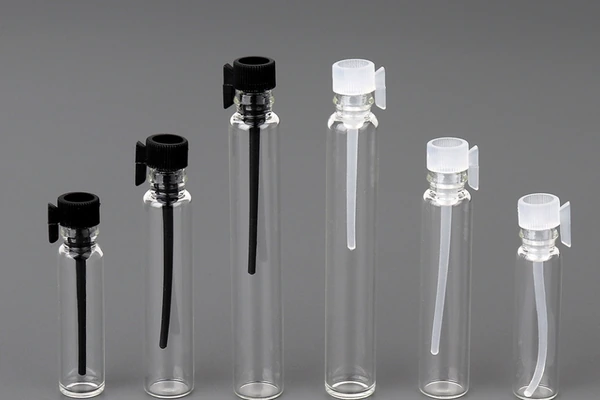
The smallest sample vials often skip the sprayer altogether. A small glass vial with a plug and a dab-on applicator keeps the cost per sample low, which suits free samples and sample cards.
Screw neck or crimp neck: which sprayer works for decanting?
For decanting and refilling, choose a screw-neck sprayer; for factory-filled travel sizes, a crimp-neck sprayer is the standard. The difference is how the sprayer is fixed to the bottle.
- Screw neck: the sprayer screws onto a threaded neck. It can be filled by hand with a pipette or funnel, opened again, and refilled. This suits decant shops, small batches and refillable travel sprays.
- Crimp neck: the sprayer’s metal collar is pressed permanently onto the neck by a crimping tool or machine. It gives a clean look and a tight seal, but it cannot be opened without damaging the sprayer. This suits brands filling on a line.
Before you order, tell your supplier how you will fill the bottles. A decant shop that fills by hand needs a different neck and sprayer from a brand that fills thousands of travel sprays on a machine. For more on matching sprayers and bottles, see our guide on how to choose the right perfume sprayer.
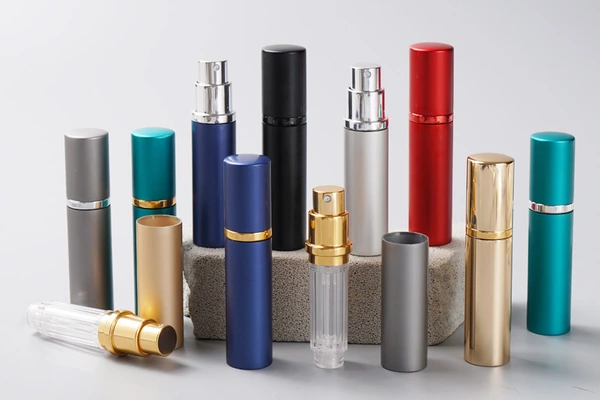
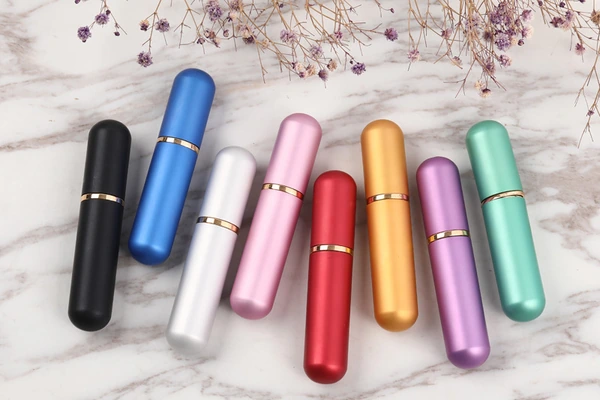
Refillable travel atomizers are a common example of the screw-neck approach: a small glass bottle with a screw-on sprayer sits inside an aluminium sleeve, so the customer can unscrew it and refill it from a full-size bottle.
How do you stop small perfume bottles from leaking?
Most leaks in small perfume bottles come from three causes: a sprayer that does not match the neck, overfilling, and air pressure changes during shipping or flights.
- Match the sprayer to the neck. Always order bottles and sprayers as a matched set, and test the fit with your own filling method before bulk orders.
- Leave headspace. Fill a 10ml bottle to its stated fill volume, not to the brim, so the dip tube and sprayer have room and the liquid can expand.
- Use an overcap or travel lock. A cap over the sprayer prevents accidental spraying in a bag and adds protection for shipping.
- Test before you launch. Fill sample bottles with your actual perfume, store them upside down for a few days, and ship a few to yourself to check for leaks and smell loss.
How can you brand decant bottles without a custom mold?
You can brand stock decant bottles with screen printing, frosting, colour spraying and custom sprayer or cap colours, without paying for a custom mold. On a 10ml bottle, the print area is small, so a simple logo or wordmark usually works better than detailed artwork.
Small bottles also often go into a box or pouch, so the outer packaging carries much of the branding. Many brands keep the glass simple, clear glass with a printed logo, and use the sprayer finish and box to signal the brand. Another option is a coloured aluminium sleeve over the bottle, which gives a travel atomizer a finished look in your brand colours. Because the bottles are small, stock small perfume bottles start from 3,000 pieces, and a printed logo sample takes 7 to 15 days, followed by 15 to 25 days for production.
What should you check before ordering decant bottles in bulk?
Before a bulk order, confirm five points with your supplier and test them with samples.
- Fill volume: the actual fill volume at your fill line, not only the brim capacity.
- Neck and sprayer: screw or crimp, matched to your filling method.
- Spray quality: mist pattern and output per spray with your own perfume.
- Compatibility: no reaction between your formula and the sprayer or roller parts; see our article on whether perfume reacts with metal sprayers.
- Packing: dividers or trays that protect small bottles in transit.
Conclusion
For most perfume decants and travel sizes, a 10ml glass spray bottle with a screw-neck sprayer is the safest starting point, with roll-on bottles for perfume oils and dual-head bottles for gift and travel sets. Larger 30ml to 100ml travel sprays suit brands filling on a line. If you are planning a decant range or discovery set, send us your formula type, bottle size, filling method and quantity through our contact page, and we will suggest bottles and sprayers that fit.
FAQ
What size bottle is best for perfume decants?
10ml is the most popular size for paid perfume decants. It holds roughly 80 to 120 sprays and fits easily in a bag. Smaller 2ml to 5ml vials are usually used as free samples.
How many sprays are in a 10ml perfume bottle?
A 10ml perfume bottle gives roughly 80 to 120 sprays, based on a typical spray of around 0.1ml. The exact number depends on the sprayer.
Can you refill a crimp-neck perfume bottle?
Not easily. A crimp-neck sprayer is pressed permanently onto the bottle, so it cannot be removed without damage. Choose a screw-neck bottle if you need to refill.
Are glass or plastic decant bottles better?
Glass is preferred for perfume because it does not react with fragrance oils and alcohol, keeps the scent stable, and feels more premium in the hand.
Should I use a roll-on or spray bottle for perfume oil?
Use a roll-on bottle for perfume oils and attars. Oils are thicker and do not atomise well, while a roller applies them precisely.
Can I take a 10ml perfume decant on a plane?
Yes. Most airports allow liquids in cabin baggage in containers of 100ml or less, so a 10ml decant is well within the limit.
References:
[1] Cosmetics Business. “Scent stacking: How minis and discovery sets are driving fragrance layering.” 20 May 2026. https://cosmeticsbusiness.com/scent-stacking-how-minis-and-discovery-sets-are
[2] Beauty Independent. “What’s Next For Fragrance In 2026, And What’s Fading Out.” https://beautyindependent.com/what-next-fragrance-2026