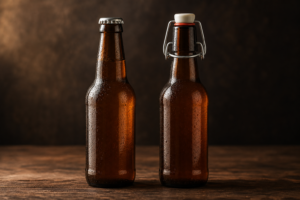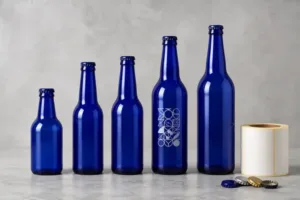
Quick Answer: To hot fill glass juice bottles without breakage, you must use bottles with a thermal shock resistance rating of ≥42°C. Maintain a filling temperature between 85°C and 92°C, ensure the bottle temperature before filling is above 25°C to minimize the temperature differential (ΔT), and use compatible closures like Lug or Twist-Off caps designed for vacuum sealing during the cooling phase.
- Glass containers for commercial hot-fill applications must be engineered with uniform wall thickness and proper annealing to achieve a thermal shock resistance of ≥42°C.
- The temperature differential (ΔT) between the hot liquid and the glass surface is the primary cause of breakage; pre-warming bottles to at least 25°C significantly reduces this risk.
- Hot filling naturally sterilizes the container interior, allowing acidic juices (pH < 4.5) to achieve a 6 to 12-month shelf life without artificial preservatives.
- Lug caps and Twist-Off closures are the industry standard for hot-fill juices, as they accommodate the vacuum created during the cooling process and ensure a secure, leak-proof seal.
Are you losing product and profits to bottle breakage on your hot-fill juice line? The hot-fill process is essential for extending the shelf life of natural juices without preservatives, but it places immense stress on glass packaging. Understanding the exact temperature specifications, thermal shock resistance, and correct neck finishes is critical to running a safe, efficient, and profitable beverage operation.
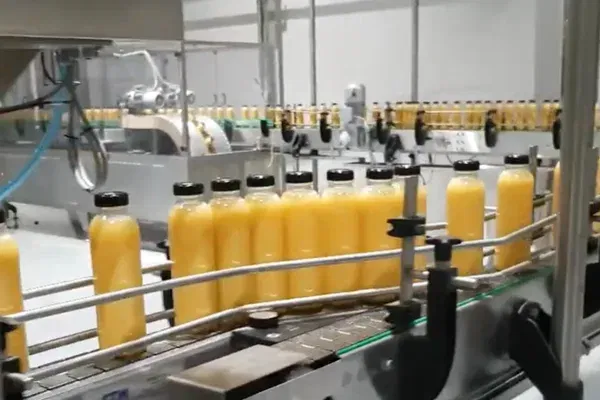
Why Do Glass Bottles Break During the Hot Fill Process?
Glass bottle breakage during hot filling is primarily caused by thermal shock, which occurs when a sudden, significant temperature difference (ΔT) stresses the glass structure. When hot juice—typically heated to between 85°C and 95°C[1]—is rapidly poured into a room-temperature or cold glass bottle, the inner surface of the glass expands faster than the outer surface. This uneven expansion creates tension. If the stress exceeds the tensile strength of the glass, the bottle will crack or shatter, often at the base or shoulder where thickness variations are most common.
Interesting Fact: The concept of thermal shock in glass has been studied for over a century. The standard test method used today to determine the thermal shock resistance of commercial bottles and jars is ASTM C149, which involves rapidly transferring containers from a hot water bath to a cold water bath to simulate extreme processing conditions.
To prevent this, commercial glass juice bottles must be specifically engineered for hot-fill applications. This involves precise control during the manufacturing process, particularly in the annealing lehr, to relieve internal stresses and ensure uniform wall thickness. A standard flint glass bottle might only withstand a ΔT of 35°C to 38°C, whereas a hot-fill grade bottle is designed to resist a ΔT of 42°C or higher[2].
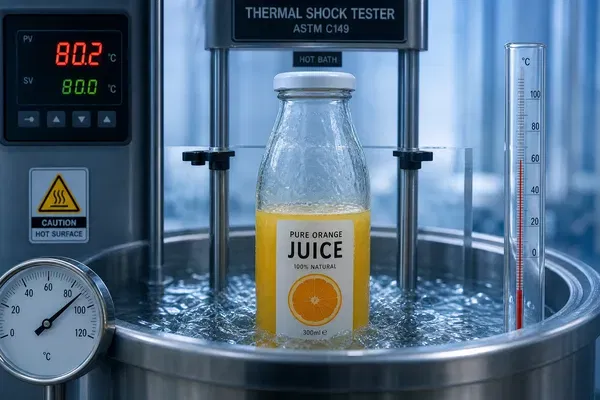
What Are the Critical Temperature Specifications for Hot Filling Juice?
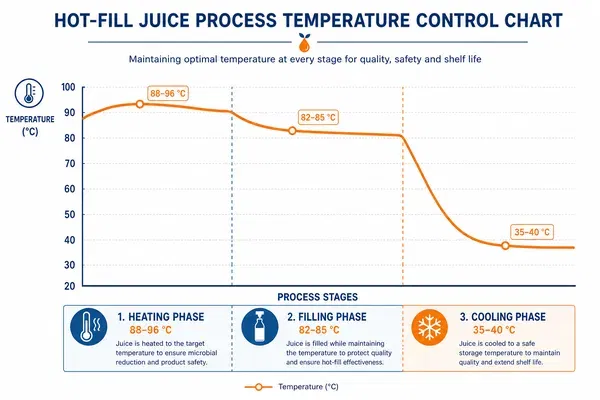
The success of a hot-fill operation relies on maintaining strict temperature controls across three critical phases: heating, filling, and cooling. The juice is typically heated to 88°C–96°C to eliminate pathogens and spoilage microorganisms. However, the actual filling temperature is usually maintained between 82°C and 85°C (180°F–185°F)[1]. This temperature is high enough to sterilize the inner walls and cap of the beverage bottle upon contact, but controlled enough to manage thermal stress.
To minimize the ΔT and prevent thermal shock, the glass bottles themselves must not be cold. It is an industry best practice to ensure bottles are stored in a temperature-controlled environment and are at least 25°C before filling. Filling bottles that are below 10°C drastically increases the risk of catastrophic breakage[2].
After filling and capping, the cooling phase is equally critical. Bottles must not be subjected to a sudden blast of cold air or water, which would cause reverse thermal shock. Instead, they are passed through a multi-stage cooling tunnel that gradually reduces the temperature to around 35°C–40°C. This controlled cooling creates the necessary vacuum seal that preserves the juice.
Which Neck Finishes and Closures Are Best for Hot-Filled Juices?
For hot-fill juice applications, Lug (Twist-Off) caps are the most reliable and widely used closure system. When the hot juice cools, it contracts, creating a strong vacuum inside the bottle. Lug caps, which feature metal lugs that grip the glass threads, are specifically designed to accommodate this vacuum. They pull down tightly against the glass finish, creating an airtight, hermetic seal that prevents oxidation and contamination.
Standard Continuous Thread (CT) plastic caps or simple screw caps are generally not recommended for hot filling unless they are specifically engineered with heat-resistant materials and specialized liners. Standard plastics can deform under high temperatures (85°C+), compromising the seal and leading to spoilage.
| Closure Type | Neck Finish Compatibility | Hot-Fill Suitability | Key Advantage |
|---|---|---|---|
| Lug Cap (Twist-Off) | 38mm, 43mm, 48mm Lug | Excellent | Handles vacuum pressure perfectly; provides a secure hermetic seal. |
| ROPP (Roll-On Pilfer-Proof) | Standard ROPP finishes | Good (with proper liner) | Offers excellent tamper evidence; requires specific capping machinery. |
| Standard CT Plastic Cap | GPI Threaded finishes | Poor (unless specialized) | Prone to deformation at 85°C; vacuum can compromise the seal. |
In early 2025, we worked with a regional organic juice producer in Southeast Asia who was experiencing a 4% breakage rate on their new hot-fill line, resulting in significant product loss and downtime. They were using standard flint bottles sourced locally. After reviewing their filling temperatures (88°C) and ambient warehouse conditions, we supplied a custom 500ml hot-fill grade bottle engineered with a thicker, more uniform base and an optimized annealing process. We also transitioned them to a 38mm Lug finish. Following the switch, their breakage rate dropped to below 0.1% across a 150,000-unit production run, stabilizing their operations and improving their profit margins.
Conclusion: Securing Your Hot-Fill Production Line
Mastering the hot-fill process requires more than just high-quality juice; it demands packaging engineered to survive extreme thermal dynamics. By specifying glass bottles with a thermal shock resistance of ≥42°C, strictly managing your ΔT during filling, and selecting the appropriate Lug closures, you can eliminate costly breakage and ensure your product reaches the consumer exactly as intended. Partnering with a manufacturer who understands these technical specifications is the first step toward a flawless production run.
If you are scaling up your hot-fill beverage production and need reliable, thermally resistant glass packaging, our engineering team can help you select the right bottle and closure combination. Contact us today or email sales@glassypack.com to discuss your specifications and request samples.
FAQ
The ideal filling temperature for most juices is between 82°C and 85°C (180°F–185°F). This temperature is sufficient to sterilize the container interior while minimizing the risk of severe thermal shock.
To prevent breakage, use hot-fill grade bottles with a thermal shock resistance of ≥42°C. Ensure the bottles are stored in a warm environment (above 25°C) before filling to reduce the temperature differential, and use a multi-stage cooling tunnel afterward.
Lug caps are preferred because they are designed to handle the strong vacuum created when the hot juice cools and contracts. Standard plastic caps can deform under the high heat and fail to maintain a hermetic seal under vacuum pressure.
Thermal shock resistance, often denoted as ΔT, is the maximum sudden temperature difference a glass bottle can withstand without cracking or shattering. For commercial hot filling, a ΔT of 42°C or higher is recommended.
Standard flint glass bottles typically have a thermal shock resistance of only 35°C–38°C, making them risky for hot-fill lines. It is highly recommended to use bottles specifically engineered and annealed for hot-fill applications.
References:
[1] Ace-Filling. “What is Hot Fill Technology and When is it Used for Juice Filling?” 2025. Available at: https://www.acefilling.com/blog/what-is-hot-fill-technology-and-when-is-it-used-for-juice-filling
[2] Infinita Lab. “Thermal Shock Resistance Testing for Glass Containers.” 2026. Available at: https://infinitalab.com/blog/thermal-shock-resistance-glass-containers-guide/