Are you losing wholesale accounts because your honey packaging sizes don’t match channel requirements? In the global honey market, selecting the right jar capacity is just as critical as the honey itself. Different sales channels—from high-end retail shelves to hotel breakfast buffets—demand specific packaging volumes to optimize cost, convenience, and perceived value. This article breaks down the best-selling glass honey jar sizes across three major channels and explains how capacity choices directly impact your bottom line.
- The 500g (16.9 oz) and 250g (8.5 oz) glass jars dominate the retail sector, balancing consumer purchase frequency with premium shelf presence.
- Single-serve glass jars (30ml to 50ml) are the fastest-growing segment in the hospitality and foodservice industries.
- Gift sets perform best when combining three to four smaller jars (50ml to 150ml) to offer consumers a diverse tasting experience.
- Glass packaging captures approximately 57% of the organic honey retail volume, predominating in premium SKUs.
Retail Market Standards: The Dominance of 250ml and 500ml
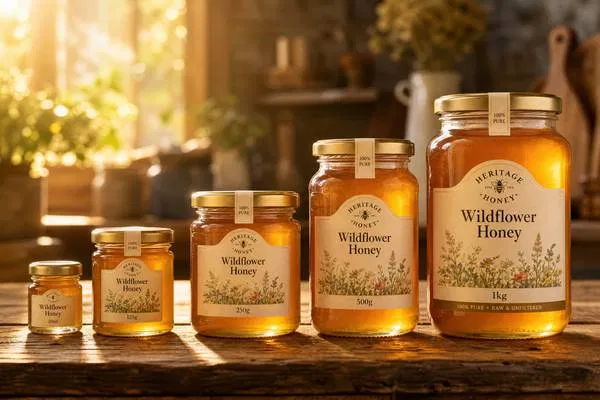
The 500g (approximately 375ml) and 250g (approximately 190ml) glass jars are the undisputed standards in the retail honey market. For brands targeting supermarkets and specialty grocers, these capacities perfectly align with the average household’s consumption rate. A 500g jar provides enough volume for regular users without risking crystallization before the product is finished. Furthermore, the 500g size is considered a retail standard because it perfectly balances material properties with consumer psychology, simulating actual purchasing scenarios while providing a substantial canvas for branding [1].
In the premium organic segment, glass packaging captures about 57% of the retail volume by unit, primarily driven by these standard sizes [2]. The transparency of glass allows consumers to visually inspect the honey’s color and purity, which are critical indicators of floral source and quality. When sourcing honey and jam jars for retail, ensuring a consistent supply of these core sizes is essential for maintaining shelf presence and meeting distributor expectations.
Foodservice and Hospitality: The Rise of Single-Serve Mini Jars
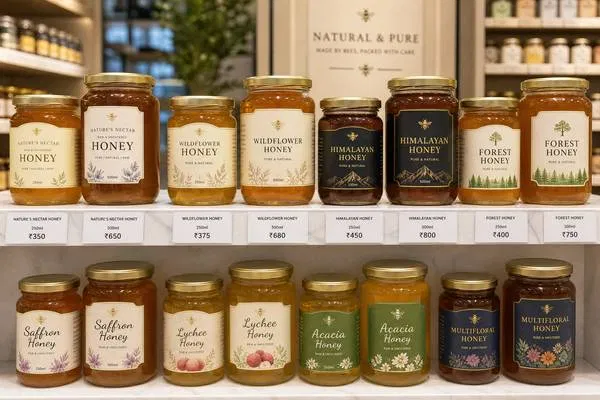
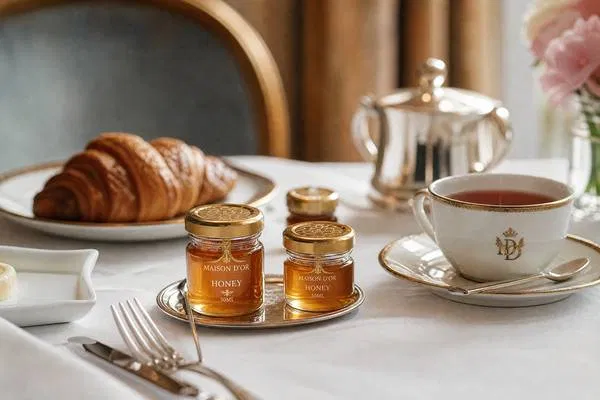
Miniature glass jars ranging from 30ml to 50ml are rapidly becoming the preferred choice for high-end hotels, airlines, and premium catering services. In the foodservice industry, portion control and hygiene are paramount. Single-serve packaging ensures that each guest receives a fresh, untouched portion of honey, significantly reducing the risk of cross-contamination compared to communal honey pots or bulk dispensers.
A Glimpse into Honey History: The concept of single-serve honey is a modern solution to an ancient problem. In ancient Rome, honey was stored in massive terracotta amphorae, making portioning a messy and imprecise task. Today’s 30ml glass jars offer the exact opposite: precision, cleanliness, and a touch of luxury.
While plastic sachets are common in fast-food settings, luxury hospitality brands increasingly opt for tiny glass jars. These miniature containers elevate the dining experience, transforming a simple condiment into a premium amenity. For B2B buyers supplying the hospitality sector, stocking 30ml (1 oz) and 45ml (1.5 oz) glass jars with secure lug caps is a highly profitable strategy. Proper sealing is crucial here; understanding how closure choices protect shelf life is vital when dealing with small volumes that may sit in hotel storage for months.
Gift Sets and Tasting Flights: The 50ml to 150ml Sweet Spot
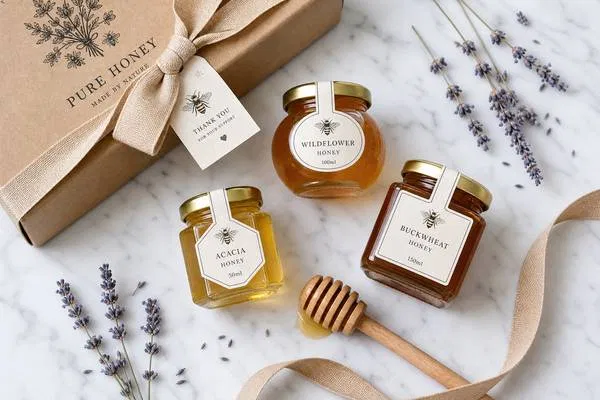
Capacities between 50ml and 150ml are the optimal sizes for curated honey gift sets and tasting flights. The global gift packaging market is expanding rapidly, projected to grow at a CAGR of 4.79% from 2025 to 2034 [3]. Within this sector, honey tasting sets—featuring different floral varieties like acacia, manuka, and buckwheat—are highly popular for holidays and corporate gifting.
Using smaller jars allows brands to package three to four distinct flavors in a single box without making the final product prohibitively expensive or excessively heavy. The 100ml hexagonal glass jar is particularly favored for gift sets due to its unique shape, which catches the light beautifully and stacks efficiently within presentation boxes. When designing these sets, it is also important to consider the filling process; selecting jars with appropriate neck finishes ensures compatibility with hot-fill food production lines, maintaining efficiency even with smaller containers.
| Target Channel | Recommended Capacity | Primary Advantage | Typical Cap Style |
|---|---|---|---|
| Supermarket Retail | 250ml – 500ml | Matches average household consumption | Standard Lug Cap / Twist-off |
| Hotel & Foodservice | 30ml – 50ml | Hygiene and precise portion control | Small Twist-off |
| Gift Sets & Tasting | 50ml – 150ml | Allows flavor variety at an accessible price | Lug Cap / Cork with Seal |
| Industrial / Bulk | 1000ml (1kg) + | Lowest packaging cost per ounce | Metal Lug Cap |
Conclusion: Aligning Size with Strategy
Selecting the right glass honey jar size is a strategic decision that directly influences your brand’s market positioning. By offering 500ml jars for retail dominance, 30ml jars for hospitality elegance, and 100ml jars for curated gift sets, you can effectively penetrate multiple sales channels and maximize revenue.
If you are a honey producer or distributor looking to optimize your packaging portfolio, we would be glad to share how GlassyPack’s comprehensive range of high-quality glass jars can meet your specific channel requirements. Contact us today at sales@glassypack.com or visit our Contact Us page to request a custom quote and samples.
FAQ
Why is the 500g jar considered the standard for retail honey?
The 500g (approx. 375ml) jar perfectly balances the average household’s consumption rate with a manageable price point. It provides enough volume for regular use without the honey crystallizing before it is finished, and offers a substantial surface area for brand labeling.
What size glass jar is best for hotel breakfast buffets?
For high-end hospitality and foodservice, 30ml to 50ml single-serve glass jars are ideal. They ensure hygiene, provide precise portion control, and offer a premium aesthetic that plastic sachets cannot match.
Can I use the same jar size for both retail and gift sets?
While possible, it is not recommended. Retail sizes (250ml+) are usually too large and heavy to package three or four flavors together economically. Smaller jars (50ml to 150ml) are much better suited for tasting flights and gift boxes.
How does jar size affect shipping costs?
Larger jars have a better product-to-packaging weight ratio, making them more cost-effective to ship in bulk. However, miniature jars (30ml) require more protective packaging per ounce of honey, slightly increasing logistics costs but offering higher profit margins per unit.
Do different jar sizes require different filling equipment?
Yes, significantly different sizes may require adjustments to your filling lines. Single-serve 30ml jars need highly precise dosing nozzles, while 500ml jars require faster, high-volume flow rates. Ensure your jars’ neck finishes are compatible with your existing capping machinery.
References
[1] HonestBee. (n.d.). Why is the 500g glass jar a retail standard for honey? Key Benefits of Packaging for Consumer Trust. https://honestbeeltd.com/faqs/why-is-the-500g-glass-jar-considered-a-standard-packaging-specification-in-the-honey-retail-market
[2] 360 Research Reports. (2025, November 13). Organic Honey Market Trends, Size, Share & Growth Forecast. https://www.360researchreports.com/market-reports/organic-honey-market-202892
[3] GlobeNewswire. (2025, November 21). Gift Packaging Market Size, Segments Data, Value Chain & Trade Analysis 2025-2034. https://www.globenewswire.com/news-release/2025/11/21/3192891/0/en/gift-packaging-market-size-segments-data-value-chain-trade-analysis-2025-2034.html