Are your glass jars truly engineered to survive a 95°C hot-fill process, or are you risking catastrophic failure on the production line? Hot-fill processing is the gold standard for achieving a 6-to-12-month shelf life for sauces, juices, and preserves without artificial preservatives. However, subjecting packaging to extreme temperature differentials requires precise material engineering. This article breaks down the technical requirements for hot-fill glass packaging, explains the critical role of thermal shock resistance, and reveals the rigorous quality control parameters necessary to prevent costly production line breakages.
The Science of Hot-Fill Processing
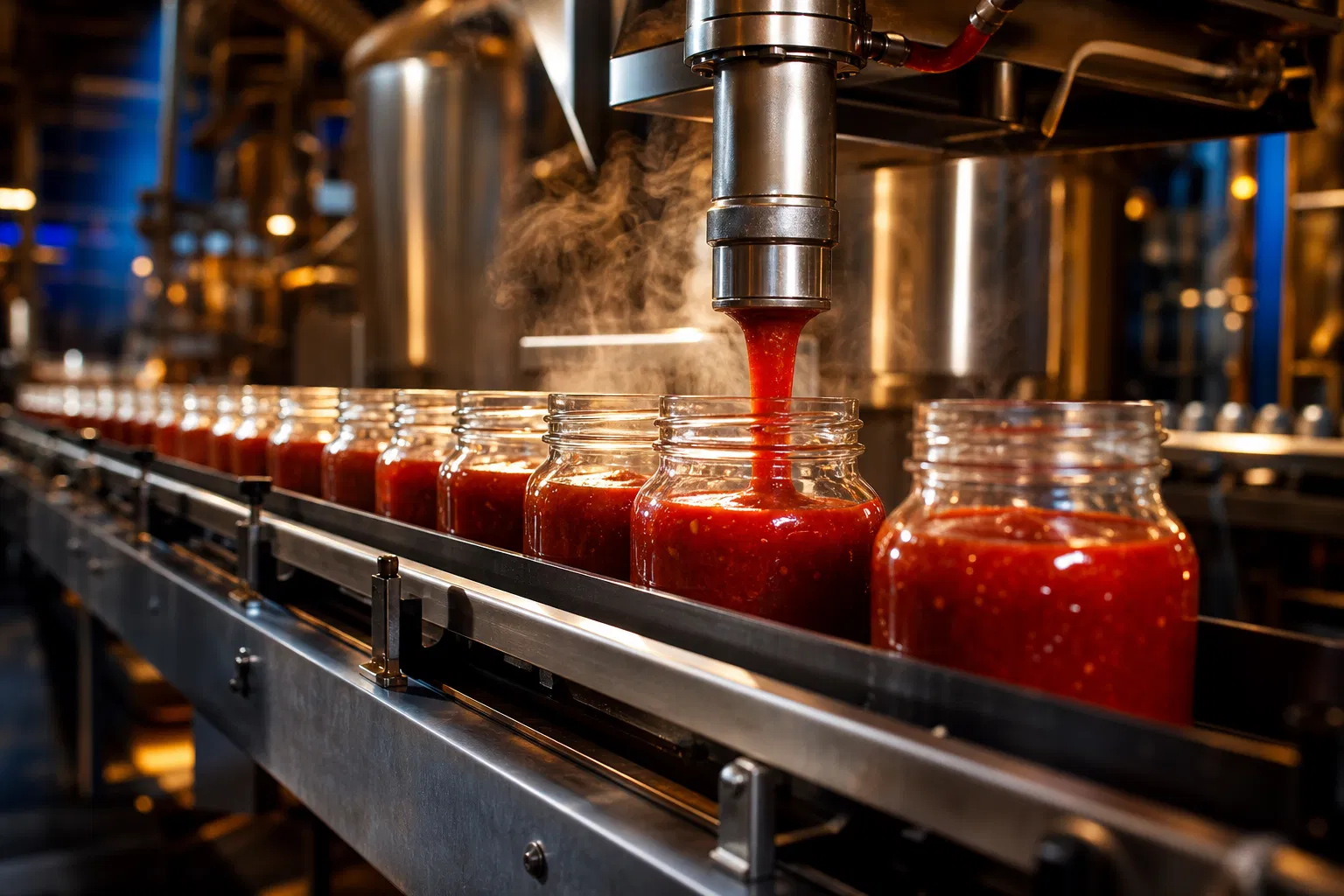
Why heat is the ultimate natural preservative. Hot-fill processing involves heating a liquid product—such as salsa, pasta sauce, or fruit juice—to temperatures typically between 82°C and 95°C (180°F to 203°F) before filling it into containers [1]. This high heat effectively eliminates harmful microorganisms and creates a commercially sterile environment. Once the container is capped and begins to cool, the product contracts, creating a vacuum seal that prevents oxygen ingress and contamination. This method allows artisan food brands to achieve long ambient shelf stability while maintaining a clean, preservative-free label.
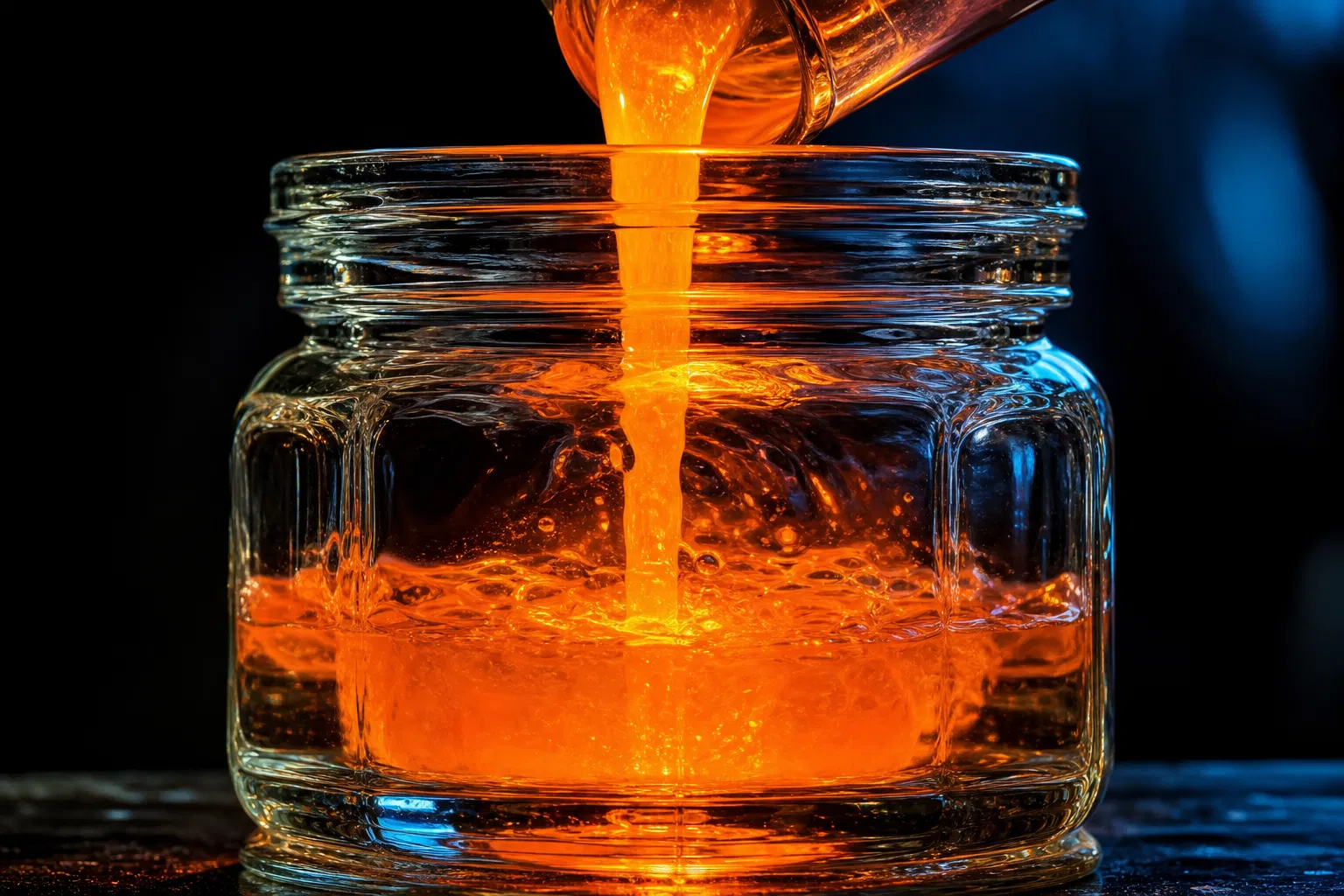
The thermal shock challenge. While the benefits for food safety are immense, the process places immense stress on the packaging material. When a room-temperature glass jar is suddenly filled with boiling liquid, the inner surface expands rapidly while the outer surface remains cool. This differential thermal expansion creates severe tensile stress. If the glass lacks sufficient thermal shock resistance, or if there are microscopic defects in the container walls, this stress will cause immediate fracture—a phenomenon known as thermal shock [2]. Understanding and mitigating this risk is the primary concern when sourcing glass for hot-fill applications.
Glass vs. Plastic in High-Heat Environments
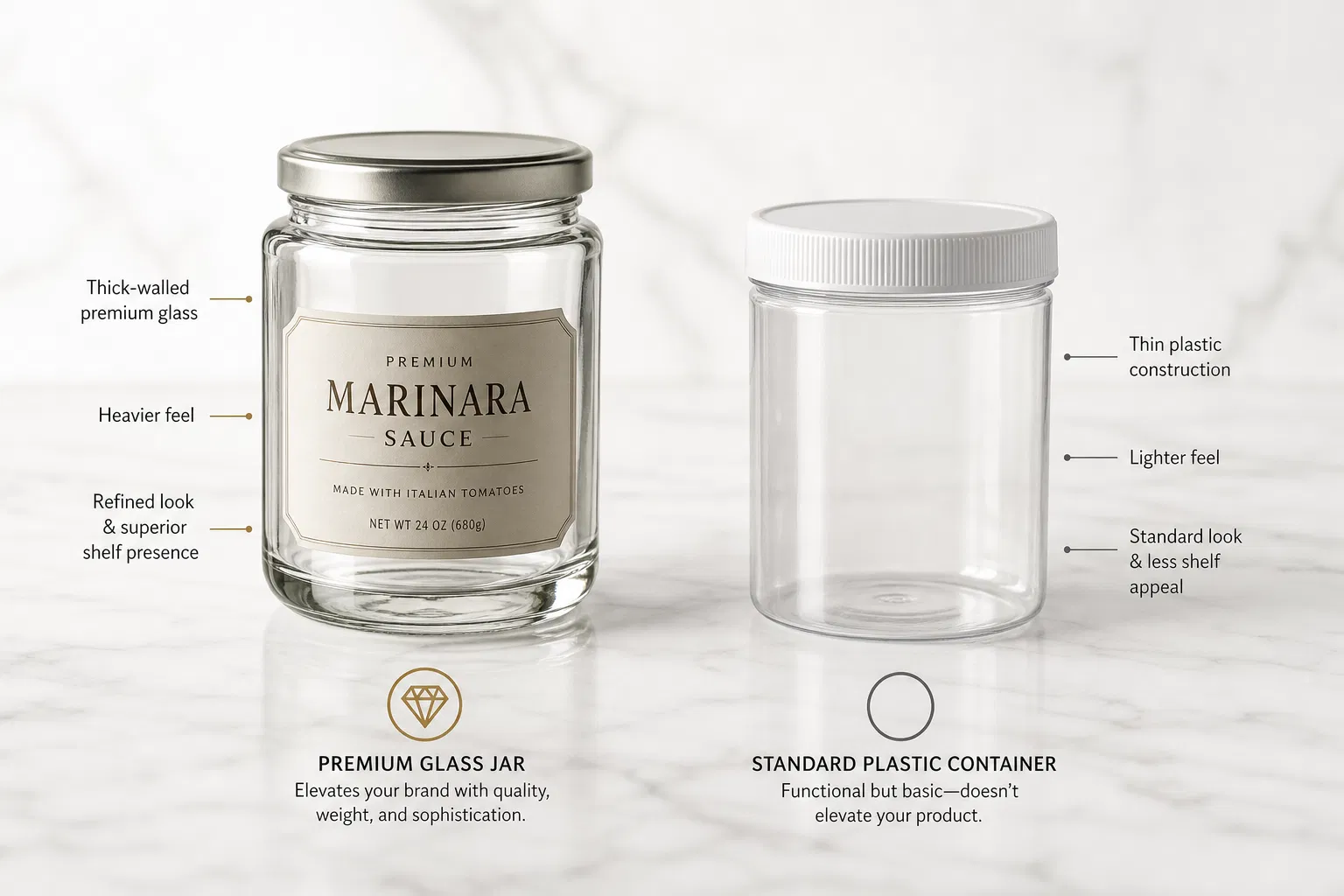
The structural integrity advantage. When evaluating packaging for hot-fill processes, the choice often comes down to glass or specialized plastics. Standard PET plastic cannot withstand hot-fill temperatures; it requires an expensive heat-setting treatment to handle temperatures up to 85°C [3]. Polypropylene (PP) can handle moderate heat but lacks the premium aesthetic and oxygen barrier properties required for high-end foods. Glass, on the other hand, is inherently heat-resistant. Standard soda-lime glass can easily handle the temperature differentials required for hot-filling (typically around 40°C to 42°C differential without failure), and it will never warp, melt, or leach chemicals into the food, regardless of the temperature [4].
A Glimpse into Glass Testing: The industry standard for evaluating how well glass can handle sudden temperature changes is ASTM C149. In this rigorous test, glass containers are submerged in hot water and then immediately plunged into a cold bath. The temperature difference is progressively increased until the glass fractures. Passing this test ensures that a jar won’t shatter when hot sauce hits cold glass on your factory floor.
Preserving flavor and brand equity. Beyond structural survival, glass offers unmatched chemical inertness. It provides an absolute barrier against oxygen and moisture, which is critical for preserving the delicate flavor profiles of hot-filled sauces and juices over a long shelf life. Furthermore, consumer perception strongly favors glass. In the UK market, for example, 72% of shoppers automatically associate glass packaging with premium quality, allowing brands to command significant price premiums that offset the higher initial packaging and shipping costs.
Rigorous Quality Control for Hot-Fill Jars
Manufacturing precision is non-negotiable. A glass jar’s ability to survive thermal shock is not just about the material; it is heavily dependent on manufacturing precision. Uneven wall thickness, microscopic air bubbles (blisters), or mold seam defects act as stress concentrators where thermal fractures originate. Therefore, sourcing hot-fill glass requires partnering with a manufacturer that implements stringent, multi-stage quality control. At GlassyPack, our production process control encompasses strict parameters across capacity, shape, thickness, transparency, sealing, and finishing.
From raw materials to final inspection. The foundation of thermal resistance begins with raw material purity. We conduct precise iron content measurements and trace element analysis on our silica sand to ensure consistent glass chemistry. During production, temperature management is monitored every two hours, and automated full-inspection machines check for dimensional accuracy, neck alignment, and the absence of cracks or foreign objects. Finally, our laboratory testing includes polarizing stress testers, impact resistance testers, and pressure-resistance testers to guarantee that every batch meets the demands of commercial hot-fill lines.
| Quality Control Stage | Key Parameters Monitored | Impact on Hot-Fill Performance |
|---|---|---|
| Raw Material Inspection | Moisture, Iron Content, Trace Elements | Ensures consistent thermal expansion coefficient across the glass batch. |
| In-Production Monitoring | Melting Temp, Glass Flow, Mold Wear | Prevents uneven wall thickness and internal stress points that cause thermal shock. |
| Automated Inspection | Height, Neck Alignment, Inner Diameter | Guarantees a perfect vacuum seal when the hot product cools and contracts. |
| Final Product Testing | Polarizing Stress, Impact & Pressure | Validates the jar’s ability to survive the sudden temperature spikes of the filling line. |
Conclusion: Securing Your Supply Chain
Choosing the right packaging for hot-fill food products is a critical engineering decision that directly impacts production efficiency and food safety. While glass is inherently superior to plastic in high-heat environments, not all glass jars are manufactured to the exacting standards required to prevent thermal shock. By understanding the science behind the process and demanding rigorous quality control from your supplier, you can confidently scale your hot-fill production while delivering the premium, preservative-free products that today’s consumers demand.
If you are formulating a new hot-fill sauce, juice, or preserve and need reliable packaging that won’t fail on the line, we would be glad to share how GlassyPack’s stringent quality control ensures perfect performance. Contact us today at sales@glassypack.com or visit our Contact Us page to request samples and testing documentation.
References
[1] TricorBraun. (n.d.). Hot Fill Packaging: A Comprehensive Guide to Process and Choices. https://www.tricorbraun.com/blog/hot-fill-packaging-a-comprehensive-guide-to-process-and-choices.html
[2] Infinita Lab. (2026, May 7). ASTM C149: Thermal Shock Resistance of Glass — Method & Guide. https://infinitalab.com/blog/astm-c149-thermal-shock-resistance-glass-testing-services/
[3] Jars and Bottles. (n.d.). Hot Fill Glass Packaging for UK Health-Conscious Food Brands. https://www.jarsandbottles.co.uk/blog/hot-fill-packaging-glass-uk/
[4] C.L. Smith. (2024, November 15). Why Glass Bottles Are the Ideal Choice for Hot Fill Applications. https://www.clsmith.com/sustainable-packaging/why-glass-bottles-are-the-ideal-choice-for-hot-fill-applications/