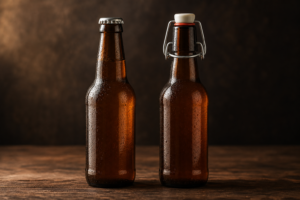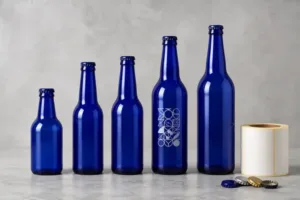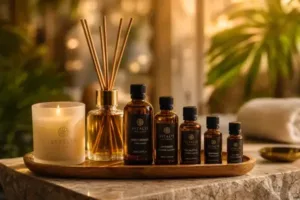
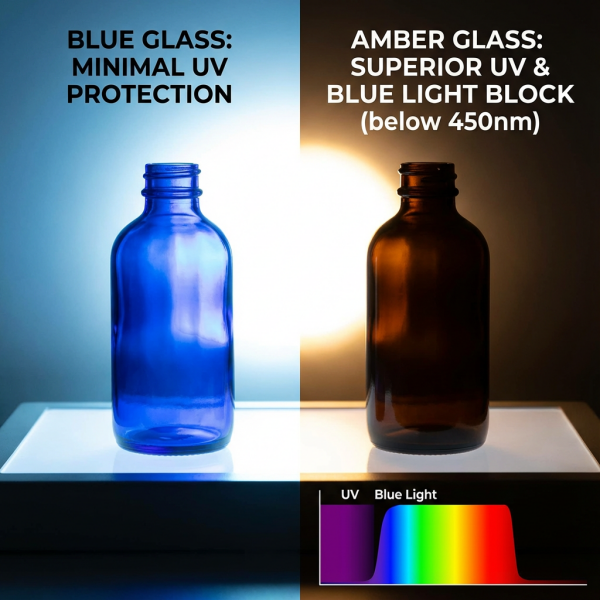
Amber glass offers superior light protection. It blocks nearly all UV radiation and blue light wavelengths below 450 nanometers. Blue glass provides a beautiful aesthetic but offers minimal defense against the most damaging UV light, making it unsuitable for sensitive products.
As a global supplier of glass packaging, this is one of the most common questions I get from brand owners. They’re drawn to the vibrant look of cobalt blue but need to be sure it will protect their formula. The truth is, this choice is more than just branding—it’s a critical decision that directly impacts your product’s integrity and shelf life. Let’s break down the science so you can package your product with confidence.
Why is amber glass the superior choice for UV protection?
You need the best protection for your light-sensitive ingredients, but you’re not sure why amber is the industry standard. Is it just tradition, or is there real science backing it up?
Amber glass is superior because it contains iron, sulfur, and carbon. These elements act as a filter, absorbing virtually all light radiation below 450 nanometers, which includes the entire damaging UV spectrum.
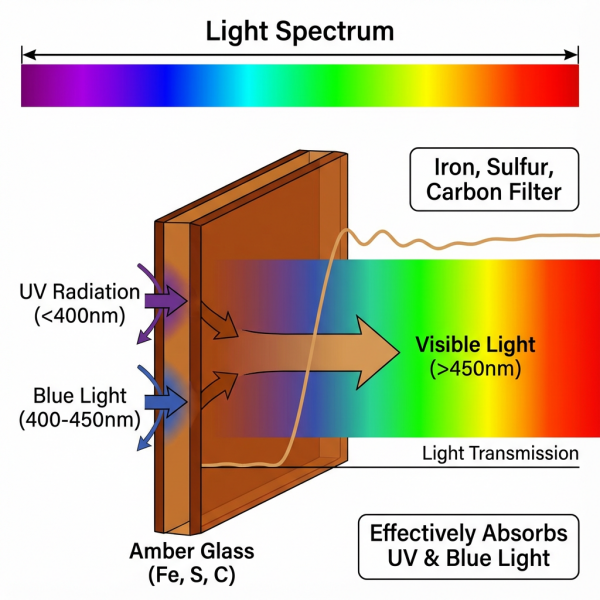
The enemy of a sensitive product is something called photodegradation[1]. This happens when high-energy light, particularly ultraviolet (UV ) light[2], hits your product and triggers unwanted chemical reactions. It can make essential oils less potent, spoil beer, and reduce the efficacy of pharmaceuticals. Amber glass provides the ultimate defense. During manufacturing, we add specific minerals to the molten glass that act as a powerful filter. This composition allows amber glass to absorb the most destructive light waves—UV-A, UV-B, and high-energy blue light. This is why it has been the non-negotiable standard for pharmaceuticals, essential oils, and quality beer for decades. It’s not about looks; it’s about pure, scientific preservation.
Glass Color Light Filtration Comparison
| Glass Color | Wavelengths Blocked (nm) | UV Protection (<400nm) | Best For |
|---|---|---|---|
| Clear | Almost none | Very Poor | General goods, food not sensitive to light |
| Blue (Cobalt) | Some visible light (450-500nm) | Poor | Aesthetics, non-light-sensitive products |
| Amber | Below 450 nm | Excellent | Essential oils, pharmaceuticals, beer, serums |
Is blue glass ever a good choice for packaging?
Blue glass looks beautiful and can make your product stand out on the shelf. You want to use it for your brand, but you’re worried about compromising the quality of your formula.
Yes, blue glass is an excellent choice for products that are not sensitive to light. Its main benefit is aesthetic appeal and brand differentiation. However, it should never be used for products requiring UV protection.
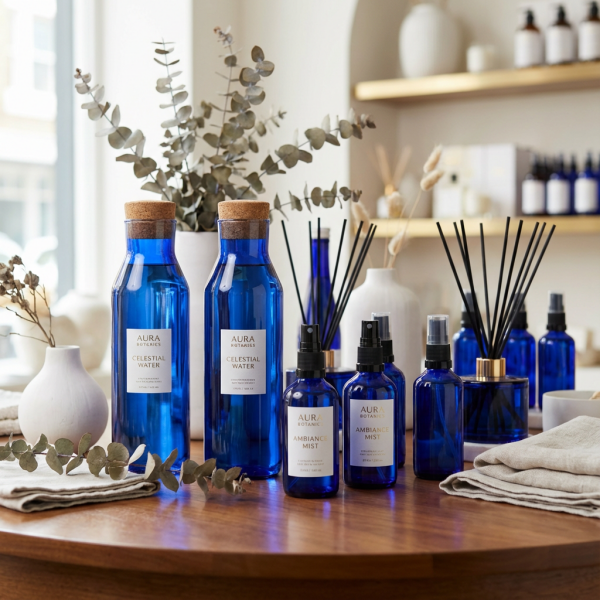
Let’s be clear: cobalt blue glass is stunning. It conveys a sense of luxury, purity, and calm that can be perfect for certain brands. From a technical standpoint, it does filter some light, but it’s in the less harmful yellow and red parts of the visible spectrum. Its critical failure is that it allows most of the high-energy UV radiation to pass right through. So, when is it a good choice? I recommend blue glass to clients whose products are not affected by light. Think mineral water, certain cleaning solutions, room sprays, or decorative items. In these cases, you can leverage its powerful visual appeal to capture customer attention without risking the product’s stability. The choice is a balance between form and function, and you must understand this trade-off.
How do you choose the right color for your product?
You understand the science, but now you need to make a final decision for your product line. How do you apply this knowledge to avoid making a costly packaging mistake?
Choose based on your product’s ingredients. If it contains light-sensitive compounds like essential oils, active botanicals, or certain vitamins, you must use amber. For stable products, you can choose based on aesthetics.
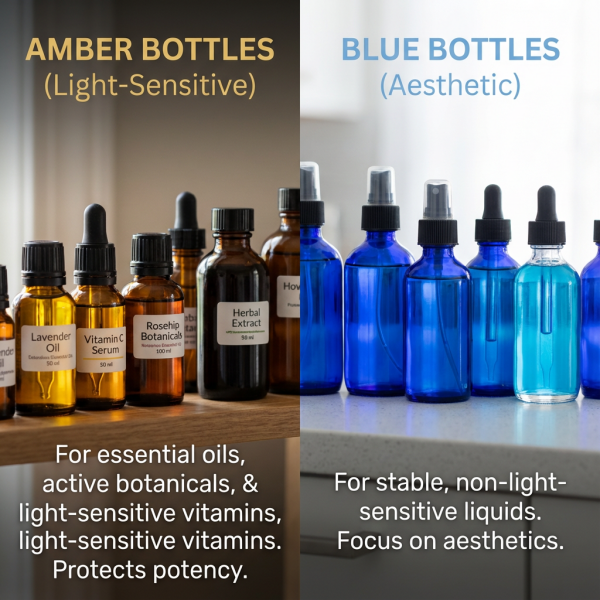
When a client comes to me, my first question is always, “What’s in the bottle?” The formula dictates the packaging, never the other way around. Here’s a simple guide to follow:
Use Amber Glass For:
- Essential Oils & Tinctures: These are highly volatile and can degrade quickly when exposed to UV light.
- Pharmaceuticals & Serums: Active ingredients must be protected to maintain their exact potency and efficacy.
- Craft Beer: UV light reacts with hops to create a “skunky” flavor, a process known as lightstrike[3]. Amber is the only reliable defense.
Use Blue Glass For:
- Mineral Water: Water is not sensitive to light, and blue glass creates a premium, fresh look.
- Room & Linen Sprays: The formulas are typically stable and not affected by light exposure.
- Decorative Items: Perfect for items where the container’s look is its primary purpose.
By putting the needs of your product first, you ensure you’re making the right investment in its protection and longevity.
Conclusion
In the debate between blue and amber glass for light protection, amber is the undisputed scientific winner. Prioritize your product’s stability by choosing the packaging that best preserves its integrity.