Quick Answer: Most non-alcoholic wine brands use the same glass bottles as traditional wine: a 750ml Bordeaux or Burgundy bottle for still wine, and a thicker sparkling wine bottle for alcohol-free bubbly. Because there is no alcohol to protect the wine, the bottle must also suit pasteurisation or sterile filling. Stock wine bottles start from 2,000 pieces.
- NielsenIQ data shows US non-alcoholic wine sales grew 17% in 2026 to $132 million, faster than non-alcoholic beer.
- Still NA wines use Bordeaux or Burgundy bottles; sparkling NA wines need thicker bottles made for pressure.
- Without alcohol, NA wine relies on sterile filtration, pasteurisation or preservatives, so bottle and closure must suit the process.
- Stock wine bottles start from 2,000 pieces; a custom wine bottle mold starts from 200,000 pieces.
If your wine has no alcohol, does it still need a wine bottle? For almost every brand the answer is yes. Shoppers look for alcohol-free wine on the same shelf as the real thing, and a heavy glass wine bottle with a cork or a sparkling-style finish tells them, before they read the label, that this is a wine and not a juice. This guide explains which bottles still and sparkling NA wine brands use, which sizes sell, what changes when alcohol is removed, and what it costs to start with stock bottles or develop your own.
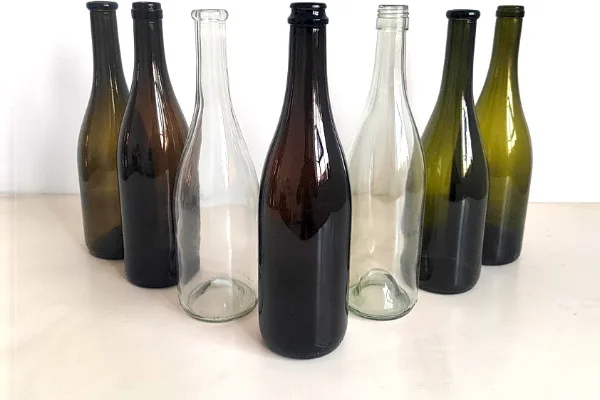
How fast is the non-alcoholic wine market growing?
Non-alcoholic wine is one of the fastest-growing parts of the US drinks market. According to NielsenIQ, NA wine sales grew 17% year-over-year in 2026 to reach $132 million[1]. Non-alcoholic beer is still much bigger, at about 80% of the segment, but wine is growing faster.
The growth is continuing into the end of the year. In the four weeks ended 31 October 2026, NielsenIQ data showed non-alcoholic wine value up 19.3% and volume up 15.3%, while beer, wine and spirits all declined[2]. With Dry January coming, many wineries are preparing alcohol-free launches and restocks now, which means bottle orders are placed in the last weeks of the year.
Why do non-alcoholic wine brands choose glass wine bottles?
NA wine brands choose glass wine bottles because their product is sold, priced and served as a wine. An alcohol-free red in a Bordeaux bottle sits naturally next to full-strength reds on shelf and on a restaurant wine list, and it justifies a wine price in a way that a can or a juice bottle does not.
Glass also protects the wine itself. Glass is inert, so it does not absorb or add flavours, and dark glass such as antique green and amber filters more light than clear glass. That matters for NA wine, because removing the alcohol can also reduce aroma, so there is less to spare.
The practical advantage for brand owners is that wine bottles are a mature supply chain: standard sizes, standard neck finishes and a wide choice of stock shapes and colours. The same stock bottles in our glass wine bottles range are used for both traditional and alcohol-free wines.
Which bottle should a still non-alcoholic wine use?
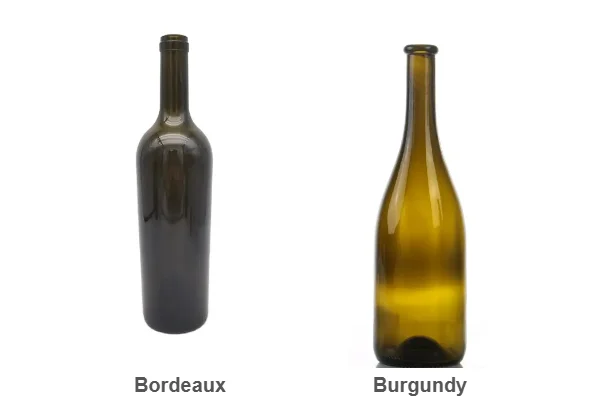
A still NA wine should use the same bottle shape as the grape or style it represents. Most brands follow the traditional rules, because buyers already recognise them.
| Bottle shape | Typical NA wine styles | Common glass colours |
|---|---|---|
| Bordeaux | Cabernet Sauvignon, Merlot, red blends, Sauvignon Blanc | Antique green for red, clear for white and rosé |
| Burgundy | Pinot Noir, Chardonnay | Antique green or amber |
| Hock | Riesling and aromatic whites | Clear, green or amber |
| Sparkling | Alcohol-free sparkling wine, “zero” prosecco-style wines | Antique green or clear |
Clear glass is popular for alcohol-free rosé and white wines, because the colour of the wine is part of the appeal. For reds, antique green is the usual choice, because it looks like a classic red wine bottle and filters more light.
What is different about bottles for sparkling non-alcoholic wine?
Sparkling NA wine needs a bottle made for pressure, not a still wine bottle. Carbon dioxide in the wine pushes on the glass, so sparkling bottles have thicker walls, a deep punt in the base and a neck finish designed for sparkling closures. Our sparkling wine bottles handle 5 bar of pressure.
If your sparkling NA wine is also pasteurised in the bottle, the glass has to handle heat on top of pressure. If you plan to carbonate and pasteurise, tell your supplier both before choosing a bottle, so the bottle can be checked for your process. We can then match the neck finish to the closure you plan to use.
How does removing the alcohol change bottling?
Removing alcohol removes the wine’s natural protection against spoilage. As filtration experts writing in Wine Industry Advisor explain, alcohol is an essential protective factor against yeasts and bacteria, so alcohol-free wine is susceptible to these microorganisms, and filtration plays a key role in keeping it microbiologically stable until bottling[3].
In practice, NA wine producers use one or more of three methods:
- Sterile filtration and sterile filling: keeps flavour fresh, but needs a clean filling line and clean bottles.
- Pasteurisation: heats the filled bottle or the wine to kill microorganisms. The bottle must handle the temperature change.
- Preservatives: used alone or with the methods above, depending on market rules.
For the bottle, this means two things. First, confirm with your supplier that the bottle suits your process, especially for tunnel pasteurisation. Second, choose a closure that reseals well, because an opened NA wine spoils faster than a normal wine.
What sizes do non-alcoholic wines come in?
Most non-alcoholic wines use the standard 750ml wine bottle. Smaller sizes are growing, because many NA wine buyers drink one or two glasses at a time.
| Size | Best for |
|---|---|
| 187ml | Single-serve bottles, hotel minibars, events and tasting packs |
| 375ml | Half bottles for one or two people, restaurant lists and gift sets |
| 750ml | The standard size for retail and restaurants |
| 1.5L | Magnums for events and celebrations |
A 187ml or 375ml bottle is a low-risk way for a new NA wine to get into hotels, airlines and restaurants, where buyers do not want to open a full bottle of a product guests may not finish.
Which closure works best for non-alcoholic wine?
The best closure for NA wine is one that seals consistently and reseals well after opening. We make wine bottles with both cork finishes and screw cap finishes, and the right choice depends on your brand and your filling line.
- Screw cap: reseals tightly, which suits NA wine that will be opened and kept in the fridge.
- Cork: the traditional premium look for still wines.
- Sparkling closures: for alcohol-free sparkling wine, the bottle neck must match the sparkling closure you choose.
Tell us which closure you plan to use before you order, so we can match the neck finish to your closure and bottling line.
How much does it cost to brand or customise a wine bottle?
The lowest-cost route is a stock wine bottle with a label. If you want your brand on the glass, stock bottles can be screen printed, decal printed, sprayed or frosted. A custom mold is only worth it at high volume.
| Stock bottle | Custom mold | |
|---|---|---|
| Minimum order | 2,000 pieces | 200,000 pieces, in clear or coloured glass |
| Sampling time | 7–15 days (with your logo) | 45–55 days |
| Production time | 15–25 days (with your logo) | 50–60 days |
| Best for | New NA wine brands, trial launches, private label | Established brands needing an exclusive shape, colour or weight |
For a new NA wine, we recommend starting with a stock Bordeaux, Burgundy or sparkling bottle and a label or printed logo, then moving to a custom bottle once sales are proven.
What have low-alcohol wine brands ordered from us?
A lightly sparkling wine brand pasteurises its product in custom bottles we made for them. Because the wine is carbonated and pasteurised, the bottle had to suit both pressure and heat. We also applied the customer’s logo as a decal in their own Pantone colour, and the customer was very satisfied with the result.
For a non-alcoholic sparkling wine, the same approach works: a bottle checked for your pasteurisation process, a neck finish matched to your closure, and decoration that reproduces your exact brand colour.
When should NA wine brands order bottles for Dry January and spring?
Order as early as you can, because the end of the year is also the run-up to Chinese New Year. Glass furnaces in China run all year, but printing, packaging and logistics slow down from about 20 days before the holiday. For stock bottles with decoration, plan your order at least 10 weeks before the holiday starts. If you are also considering spirits alternatives, our guide to bottles for non-alcoholic spirits covers sizes and bar-top corks, and our guide to Chinese New Year factory closures explains the timeline.
Conclusion
Non-alcoholic wine is growing faster than the rest of the wine market, and most brands package it like the wine it replaces: a 750ml Bordeaux or Burgundy bottle for still wine, and a pressure-rated sparkling bottle for alcohol-free bubbly. Because there is no alcohol to protect the wine, choose a bottle that suits your filtration or pasteurisation process and a closure that reseals well. Start with stock bottles from 2,000 pieces, and move to a custom mold when your volumes justify it. Send us your wine style, bottle size, closure and quantity through our contact page or email sales@glassypack.com, and we will suggest bottles that fit.
FAQ
What bottles do non-alcoholic wines come in?
Most non-alcoholic wines come in the same glass bottles as traditional wine: 750ml Bordeaux or Burgundy bottles for still wine and thicker sparkling wine bottles for alcohol-free bubbly.
Can I use a normal wine bottle for sparkling non-alcoholic wine?
No. Sparkling wine needs a bottle made for pressure, with thicker walls and a deep punt. Our sparkling wine bottles handle 5 bar of pressure.
Can glass wine bottles be pasteurised?
Yes, but confirm the specific bottle with your supplier before production. We have made custom bottles for a lightly sparkling wine brand that pasteurises its product in the bottle.
What size bottle is best for non-alcoholic wine?
750ml is the standard size for retail and restaurants. 187ml and 375ml bottles suit single servings, hotels, airlines and trial launches.
Is a screw cap or cork better for non-alcoholic wine?
A screw cap reseals tightly, which suits NA wine that is opened and kept in the fridge. A cork gives a more traditional look. We make wine bottles with both finishes.
What is the minimum order for non-alcoholic wine bottles?
Stock wine bottles start from 2,000 pieces, including bottles printed with your logo. A custom wine bottle mold starts from 200,000 pieces.
References:
[1] FoodNavigator. “Non-alcoholic beverage growth slows as category moves mainstream, pushing brands to consider next steps.” 19 November 2026. https://www.foodnavigator.com/Article/2026/11/19/non-alcoholic-beverage-sales-growth-slows-in-2026/
[2] Vinetur. “Prepared cocktails were the only major U.S. alcohol category to post dollar growth.” 12 November 2026. https://www.vinetur.com/en/20261111110904/prepared-cocktails-were-the-only-major-us-alcohol-category-to-post-dollar-growth.html
[3] Wine Industry Advisor. “Expert Editorial: Alcohol-Free Wine Presents Challenges in Filtration and Quality Assurance.” 15 June 2022. https://wineindustryadvisor.com/2022/06/15/expert-editorial-alcohol-free-wine-presents-challenges-in-filtration-and-quality-assurance/