
You’ve invested in premium glass, a striking label, and a carefully crafted spirit — so why is your bottle leaking in transit? Leakage is one of the most costly and reputation-damaging problems in spirits packaging. Yet in most cases, the root cause is not the bottle itself — it is a mismatch between the closure system and the neck finish. This guide breaks down the main closure types used for liquor bottles, explains the neck finish standards that determine compatibility, and gives procurement teams a clear framework for making the right choice the first time.
- Most liquor bottle leaks are caused by a mismatch between the closure type and the neck finish — not a defect in the glass itself.
- ROPP (Roll-On Pilfer-Proof) aluminum caps are the most widely used closure for spirits, offering a tamper-evident seal and compatibility with standard 18.5mm and 21.5mm neck finishes.
- Cork closures require a specific neck bore diameter (typically 18–19mm) and are sensitive to humidity — improper storage causes cork shrinkage and leakage.
- Specifying the correct neck finish (GPI/BVS standard) at the sourcing stage eliminates 90% of closure compatibility issues before production begins.

Why Liquor Bottles Leak: The Real Cause
The Bottle Is Rarely the Problem
A leaking liquor bottle almost always points to a closure-neck finish mismatch, not a glass defect. Glass bottles for spirits are manufactured to tight dimensional tolerances — typically ±0.5mm on the neck outer diameter — and undergo pressure testing before leaving the factory. When leakage occurs in the field, the investigation should start with the closure: its material, thread profile, liner compound, and whether it was applied at the correct torque. A cork that has dried out, an aluminum cap applied at insufficient torque, or a synthetic stopper with the wrong bore diameter will all cause leakage regardless of how well the glass was made.
The Three Failure Modes
Leakage in spirits packaging falls into three categories. Seal failure occurs when the closure does not form an airtight contact with the sealing surface of the neck finish — this is the most common cause and is usually a torque or liner issue. Thread stripping happens when the closure thread does not match the neck thread profile, causing the cap to cross-thread or fail to seat properly. Cork shrinkage is specific to natural and agglomerated cork closures: when stored in low-humidity environments below 50% RH, cork loses moisture and contracts, breaking the seal. Understanding which failure mode is occurring is the first step toward selecting the correct closure system.

Closure Types for Liquor Bottles: A Technical Comparison
ROPP Aluminum Caps: The Industry Standard
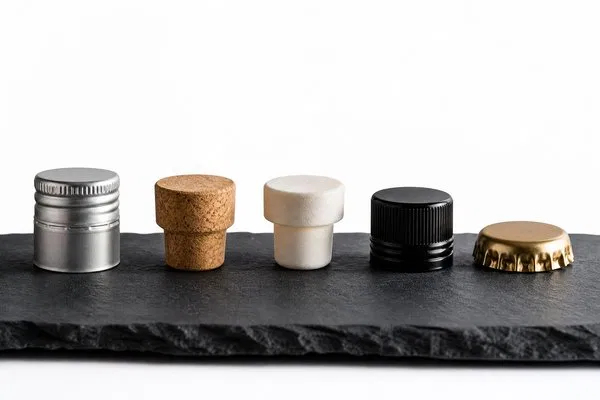
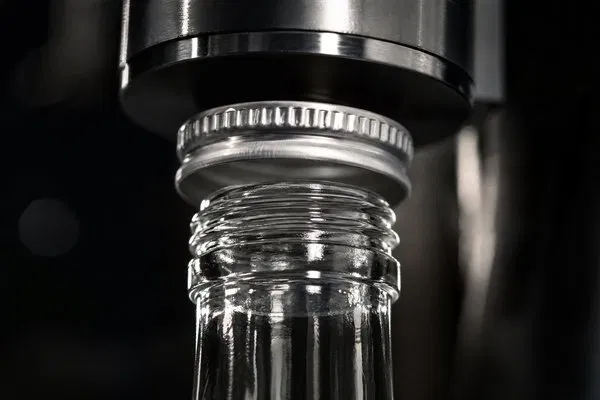
ROPP (Roll-On Pilfer-Proof) caps are the dominant closure for spirits globally, used by the vast majority of whisky, vodka, gin, and rum brands. [1] The cap is applied as a plain aluminum shell and then rolled onto the neck thread by a capping machine, forming a custom thread that matches the bottle’s neck profile exactly. This process creates a tamper-evident breakaway band and a reliable hermetic seal. Standard ROPP neck finishes for spirits include 18.5mm (common for 500ml and 700ml bottles) and 21.5mm (common for 1L bottles). The liner inside the cap — typically a PE foam or PVDC compound — is what creates the actual seal against the sealing surface. Choosing the wrong liner compound for high-alcohol spirits (above 40% ABV) can cause liner degradation and leakage over time; always specify a liner rated for alcohol contact.
Cork Closures: Premium Positioning With Specific Requirements
Cork remains the closure of choice for premium and ultra-premium spirits, particularly Scotch whisky, Cognac, and aged rum, because of its association with craftsmanship and its oxygen micro-transmission properties. [2] Cork closures require a T-cork neck finish — a straight, unthreaded bore with a specific internal diameter (typically 18–19mm for standard 750ml spirit bottles). The cork is compressed and inserted into the bore, where it expands to form a friction seal. The critical procurement specification here is the bore diameter tolerance: if the bore is too wide (over +0.5mm from nominal), the cork will not hold; if too narrow, it cannot be inserted without damage. Natural cork also requires that finished bottles be stored horizontally or in humidity-controlled environments to prevent drying and shrinkage.
Synthetic Stoppers and Screw Caps
Synthetic stoppers (made from expanded polyethylene or polyurethane foam) replicate the T-cork form factor while eliminating the risk of cork taint (TCA contamination) and humidity sensitivity. They are widely used for mid-range spirits and flavored liqueurs. Screw caps (Stelvin-style, with a continuous thread) are increasingly adopted for spirits that do not benefit from oxygen contact — particularly vodka, gin, and white rum — offering consistent torque application, easy reclosing, and zero cork taint risk. Screw cap neck finishes follow the GPI standard thread profiles (GPI 28-400, 28-410, etc.) and are fully interchangeable across compliant bottles from different manufacturers.
A Note from Packaging History: The ROPP cap was first patented in the 1920s as a solution to the widespread problem of counterfeit spirits — the pilfer-proof breakaway band made it immediately visible if a bottle had been opened and refilled. Today, the same tamper-evidence function is required by spirits regulations in over 40 countries, including the EU and the United States.
Neck Finish Standards: The Specification That Determines Compatibility
GPI/BVS Standards and Why They Matter
The neck finish is the most important specification on a glass bottle drawing — it determines which closures are physically compatible. The Glass Packaging Institute (GPI) publishes standardized neck finish profiles that define the thread count, thread pitch, outer diameter, sealing surface geometry, and bore diameter for every major closure type. [3] When a brand specifies a bottle using a GPI-standard neck finish (e.g., GPI 28-400 for screw caps, or BVS 30×60 for Champagne-style closures), any compliant closure from any manufacturer will fit correctly. Problems arise when custom neck finishes are designed without reference to a standard, or when a buyer sources bottles from one factory and closures from another without cross-checking the dimensional specifications.
The Closure Compatibility Matrix
| Closure Type | Neck Finish Required | Key Dimension | Tamper Evidence | Best For |
|---|---|---|---|---|
| ROPP Aluminum Cap | ROPP thread finish (18.5mm / 21.5mm) | Neck OD ±0.3mm | ✅ Breakaway band | Whisky, vodka, gin, rum |
| Natural Cork (T-cork) | Straight bore (T-cork finish) | Bore ID 18–19mm ±0.5mm | ❌ No band | Premium Scotch, Cognac, aged rum |
| Synthetic Stopper | Straight bore (same as T-cork) | Bore ID 18–19mm ±0.5mm | ❌ No band | Flavored liqueurs, mid-range spirits |
| Screw Cap (Stelvin) | GPI continuous thread (28-400, 28-410) | Thread profile per GPI standard | ✅ Breakaway band | Vodka, gin, white rum, RTD |
| Crown Cap | Crown finish (26mm OD) | Neck OD 26mm ±0.2mm | ✅ Crimp seal | RTD cocktails, beer-style spirit bottles |
| BVS Closure | BVS 30×60 thread finish | Thread OD 30mm, pitch 60° | ✅ Breakaway band | Sparkling wine, Champagne-style spirits |
How to Specify Correctly at the Sourcing Stage
The most effective way to prevent closure-related leakage is to specify the neck finish standard in the initial bottle inquiry — before any sample is made. When requesting a custom bottle or selecting from a stock range, always provide: (1) the closure type and supplier, (2) the closure’s required neck finish standard (e.g., “ROPP 21.5mm per GPI specification”), and (3) the fill volume and alcohol content, which affects liner selection. If you are sourcing bottles and closures from different suppliers, request dimensional drawings from both parties and verify that the neck OD, thread profile, and sealing surface geometry match before committing to tooling. This one step eliminates the vast majority of leakage complaints before production begins. For brands working with GlassyPack, our technical team provides neck finish drawings with every custom bottle project and can cross-check compatibility with your closure supplier’s specifications — see our liquor bottle range for standard neck finish options, or our earlier guide on custom liquor bottle pricing and MOQ for a full overview of the custom development process.
Conclusion: Specify First, Troubleshoot Never
Leakage in spirits packaging is almost always preventable. The combination of a correctly specified neck finish, a compatible closure, and a liner compound rated for the product’s alcohol content will eliminate the vast majority of seal failures before they reach your customer. The key is to treat the bottle and the closure as a system — not two separate purchases — and to align their dimensional specifications at the sourcing stage rather than after production has begun.
If you are developing a new spirit brand or reformatting an existing product line and want to ensure your bottle and closure specifications are fully aligned, the GlassyPack technical team is happy to review your requirements. Reach us at sales@glassypack.com or visit our Contact Us page to share your project details.
FAQ
What is the most common cause of liquor bottle leakage?
The most common cause is a mismatch between the closure type and the bottle’s neck finish — either a dimensional incompatibility or an incorrect liner compound. Glass defects are rarely the root cause, as bottles are pressure-tested before leaving the factory.
What neck finish is standard for ROPP caps on spirit bottles?
The most common ROPP neck finishes for spirits are 18.5mm (for 500ml and 700ml bottles) and 21.5mm (for 1L bottles), measured as the neck outer diameter. Both follow GPI dimensional standards and are compatible with ROPP caps from any compliant closure supplier.
Why do cork-sealed bottles sometimes leak after storage?
Natural and agglomerated cork closures absorb and release moisture. When stored in low-humidity environments (below 50% RH), cork dries out and contracts, breaking the friction seal with the bottle bore. Storing cork-sealed bottles horizontally or in humidity-controlled conditions prevents this.
Can I use a screw cap on a bottle designed for a cork?
No. Cork closures require a straight, unthreaded bore (T-cork neck finish), while screw caps require a threaded neck finish (GPI continuous thread). These two neck profiles are physically incompatible — you cannot interchange closures without changing the bottle specification.
What liner compound should I specify for high-ABV spirits?
For spirits above 40% ABV, specify a PVDC (polyvinylidene chloride) or expanded PE liner rated for alcohol contact. Standard PE foam liners used in water or juice closures can degrade when in prolonged contact with high-alcohol liquids, causing seal failure and off-flavors.
How do I verify that my bottle and closure are compatible before ordering?
Request dimensional drawings from both your bottle supplier and your closure supplier. Compare the neck outer diameter, thread profile (pitch, count, and start position), sealing surface geometry, and bore diameter. Any discrepancy greater than ±0.3mm in the critical dimensions should be resolved before tooling is committed.
What is a BVS closure and when is it used for spirits?
BVS (Bague à Vis Standard) is a screw-thread closure standard developed for Champagne and sparkling wine, featuring a 30mm outer diameter and 60° thread pitch. It is increasingly used for premium sparkling spirits and Champagne-style liqueurs where a secure, re-sealable closure with a premium aesthetic is required.
References
[1] Wikipedia. Bottle cap — Roll-on pilfer-proof (ROPP). https://en.wikipedia.org/wiki/Bottle_cap
[2] Wikipedia. Cork (material) — Properties and use in closures. https://en.wikipedia.org/wiki/Cork_(material)
[3] ISO. ISO 9058:1987 — Glass containers: Tolerances for bottles. https://www.iso.org/standard/16537.html