Custom Screen Printing and Decoration for Glass Bottles
Quick Answer: GlassyPack decorates glass bottles and jars with screen printing, color spray, frosting, decal, hot stamping, and electroplating. Screen printing, color spray, and frosting start at a 2,000-piece minimum; decal, hot stamping, and electroplating start at 6,000 pieces. Screen printing supports up to 6 colors. Sampling takes 7–10 days and production runs 15–20 days after artwork approval.
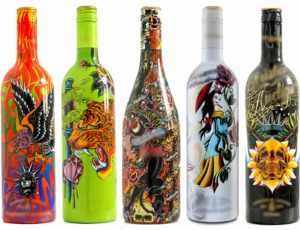
Decoration is where a stock bottle becomes your bottle. It is also the fastest route to a branded product: rather than committing to a custom mold, most brands apply their own artwork to an existing bottle shape and reach the shelf in weeks instead of months.
Decoration Methods Compared
| Method | Best For | Minimum Order | Sampling | Production |
|---|---|---|---|---|
| Screen printing | Logos, text and line artwork, up to 6 colors | 2,000 pcs (up to 4 colors) 10,000 pcs (5–6 colors) | 7–10 days | 15–20 days |
| Color spray | Full-body color on clear glass | 2,000 pcs | 7–10 days | 15–20 days |
| Frosting | Matte, soft-touch surface | 2,000 pcs | 7–10 days | 15–20 days |
| Decal | Photographic or multi-color artwork | 6,000 pcs | 7–10 days | 15–20 days |
| Hot stamping | Metallic gold or silver accents | 6,000 pcs | 7–10 days | 15–20 days |
| Electroplating | Full metallic finish across the bottle | 6,000 pcs | 7–10 days | 15–20 days |
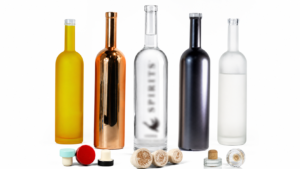
Methods can be combined. A frosted bottle with a screen-printed logo and a hot-stamped accent is a common premium specification; in that case the higher minimum applies to the whole run.
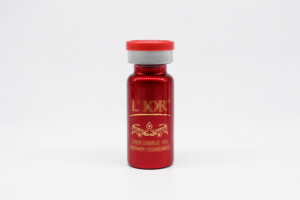
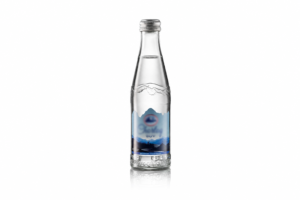
Screen Printing on Glass Bottles
Screen printing pushes ceramic ink through a fine mesh stencil directly onto the glass surface, then fires it on in a furnace. Because the ink is fused into the surface rather than stuck to it, printed decoration does not peel in ice buckets, wet coolers, refrigerated display, or condensation. This durability is why craft beverage and spirits brands consistently choose it over paper labels.
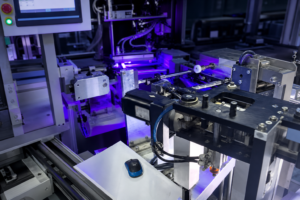
We print up to 6 colors. Each color requires its own screen and its own pass through the printing and firing cycle, which is why color count drives both sampling cost and minimum order quantity. Runs of up to 4 colors start at 2,000 pieces; 5- and 6-color work requires 10,000 pieces, since the additional set-up only becomes viable at higher volume.
For photographic images or artwork with continuous tonal gradients, a decal is usually the better method: the complete image is printed onto transfer film and fired on in a single application, with no limit on color count.
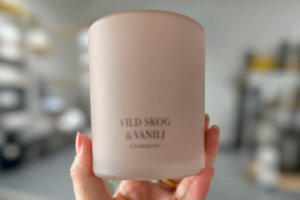
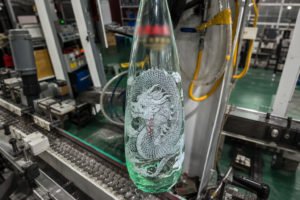
For the technical detail behind the process — ink adhesion, curing temperatures, and the defects that arise when either is wrong — see our article on screen printing on glass bottles.
Color Matching
We match to Pantone references. Send your Pantone codes with your artwork and we will produce a physical sample for your approval before any bulk production begins. Nothing goes into mass production until you have confirmed the sample in hand.
Two points worth knowing when you specify color. Ceramic inks are fired at high temperature, so the final shade can sit slightly off the printed Pantone chip — the approved physical sample, not the chip, is the production standard. And the same ink reads differently on amber, green, or cobalt glass than it does on flint, so specify the bottle color along with the Pantone code.
Artwork Requirements
- File format: vector artwork in AI or PDF. Vector files scale to the bottle without losing edge quality.
- Text: convert all text to outlines so fonts do not shift.
- Colors: specify each color as a Pantone reference rather than CMYK values.
- Placement: mark where the artwork sits on the bottle — front panel, shoulder, or wrap.
Very fine lines and small text can break up on a curved glass surface. When we review your artwork we will flag any detail unlikely to reproduce cleanly and propose an adjustment before sampling, so problems surface on screen rather than on 2,000 bottles.
Sampling and Costs
Sampling fees run $50–$100 per color. A single-color logo therefore samples at the lower end, while a four-color design costs more to prove out — another reason to consider a decal for complex artwork.
Sampling takes 7–10 days from artwork approval. Once you sign off on the physical sample, production runs 15–20 days, excluding ocean freight.
Common Decoration Defects and How We Prevent Them
- Poor ink adhesion. Caused by surface contamination or under-firing. Bottles are cleaned before printing and firing temperatures are monitored through the cycle.
- Color registration drift. In multi-color work, each pass must align with the last. Registration is checked at the start of every run and at intervals through production.
- Distortion on curved surfaces. Artwork wrapping a tight radius can stretch. We adjust the artwork geometry at sampling stage so the printed result reads correctly on the bottle.
- Inconsistent frosting depth. Frosting is run in batches under one standard so tone stays consistent across the order.
Every decorated order passes through the same inspection process as our undecorated production. See our quality control service for the full protocol.
Decoration by Product Category
We decorate across our full range. Screen printing is most common on beer bottles, liquor bottles, and beverage and soda bottles, where labels struggle with moisture. Frosting and electroplating are most requested on perfume and cologne bottles and candle jars. Color spray and small-format printing suit essential oil bottles and diffuser bottles, while decal work is common on honey and jam jars with detailed illustrated branding.
Frequently Asked Questions
What is the minimum order for screen printing on glass bottles?
2,000 pieces for up to 4 colors. Five- and six-color screen printing requires 10,000 pieces. Color spray and frosting also start at 2,000 pieces, while decal, hot stamping, and electroplating start at 6,000 pieces.
How many colors can you screen print?
Up to 6. Runs of up to 4 colors start at a 2,000-piece minimum; 5- and 6-color work requires 10,000 pieces. For photographic images or tonal gradients, a decal is the better method.
Can you match my brand's Pantone colors?
Yes. Send your Pantone references with your artwork and we will produce a physical sample for approval before bulk production. Note that the same ink appears different on amber, green, or cobalt glass than on flint, so specify your bottle color as well.
How much does sampling cost?
$50–$100 per color, depending on the artwork. A one-color logo sits at the lower end of that range.
How long does decoration take?
7–10 days for sampling and 15–20 days for production after you approve the sample, excluding ocean freight.
What artwork format do you need?
Vector AI or PDF, with text converted to outlines and colors specified as Pantone references.
Will screen printing survive ice buckets and refrigeration?
Yes. The ceramic ink is fired into the glass surface, so it does not peel or lift in wet or cold conditions the way paper labels do.
Do I need a custom mold to get a branded bottle?
No. Decoration on a stock bottle produces a fully branded product at a far lower minimum and a much shorter lead time. Custom molds are worth it only at sustained high volume — see our custom glass bottle design service if that is your situation.
Request a Decoration Quote
Send us your artwork, target bottle, quantity, and Pantone references, and we will come back with pricing, sampling cost, and a production schedule. Email sales@glassypack.com or use our contact form.