Featured Snippet Answer: Which is Better for Spice Storage?
The short answer is: For most home cooks and professional chefs, airtight glass jars are the superior choice for storing spices.
While stainless steel containers offer excellent light protection and durability, high-quality, dark-colored, or opaque glass jars with airtight seals provide the best balance of flavor preservation, non-reactivity, and convenience. The ability to see your spice inventory at a glance, combined with glass's non-porous nature, makes it the preferred material for maintaining the potency and aroma of your culinary treasures.
Introduction: The Secret to a Flavorful Kitchen
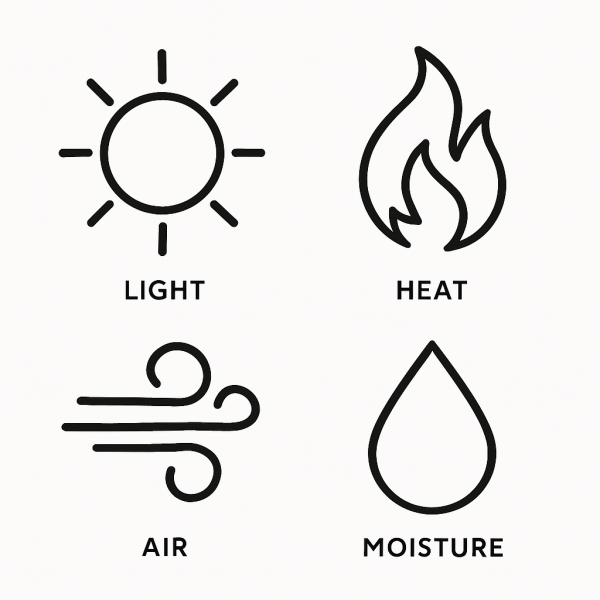
Have you ever opened a jar of your favorite spice, only to be met with a faint, dusty aroma instead of a vibrant burst of flavor? The secret to a truly flavorful dish isn't just the quality of your spices—it's how you store them. Spices are an investment in your cooking, and protecting that investment means shielding them from their four greatest enemies: light, heat, air, and moisture.
When it comes to choosing the perfect long-term home for your paprika, cumin, and cinnamon, the debate often boils down to two heavyweights: Glass or Stainless Steel? As experts in premium glass packaging, we're here to break down the science, the pros, and the cons of each material to help you make the best choice for your kitchen and your palate.
The Four Enemies of Spice Freshness
Before we compare the containers, it's crucial to understand what causes spices to lose their potency. The essential oils that give spices their flavor and aroma are volatile and degrade over time, a process accelerated by environmental factors.
1. Light (The Silent Killer)
Direct sunlight and even strong kitchen lighting can break down the chemical compounds in spices, leading to rapid flavor loss. This is why clear containers are often discouraged unless stored inside a dark cabinet.
2. Heat (The Evaporator)
Storing spices near the stove, oven, or dishwasher causes the volatile oils to evaporate faster. A cool, consistent temperature is key to longevity.
3. Air (The Oxidizer)
Oxygen exposure leads to oxidation, which is the primary cause of staleness. An airtight seal is the single most important feature of any spice container.
4. Moisture (The Clumper)
Moisture causes clumping, which can lead to mold and spoilage. Never sprinkle spices directly over a steaming pot, as the steam will introduce moisture into the jar.
The Case for Glass Spice Jars
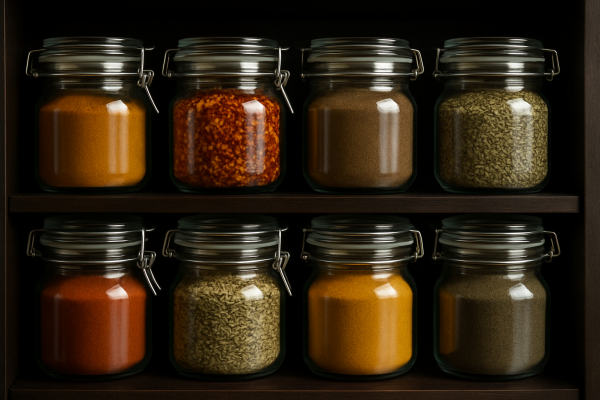
Glass has been the standard for spice storage for centuries, and for good reason. It offers a unique combination of properties that make it an excellent choice for preserving flavor.
Key Advantages of Glass
- Non-Reactive and Non-Porous: Glass is completely inert. It will not absorb odors, flavors, or colors from the spices, nor will it leach any chemicals into them. This means your turmeric won't make your cinnamon taste funny, and vice versa.
- Airtight Sealing Capability: High-quality glass jars, especially those with lug caps or swing-top lids, can create a superior, long-lasting airtight seal, effectively blocking out air and moisture.
- Visibility and Convenience: The ability to see the contents is a massive time-saver. You can quickly identify the spice you need without opening every jar, which also minimizes unnecessary air exposure.
- Easy to Clean and Sterilize: Glass can be easily washed and sterilized in high heat without fear of warping or retaining residual odors.
The Glass Caveat
The main drawback of clear glass is its vulnerability to light. However, this is easily mitigated by storing your glass jars in a dark pantry, a closed cabinet, or by using amber or opaque glass.
The Case for Stainless Steel Containers
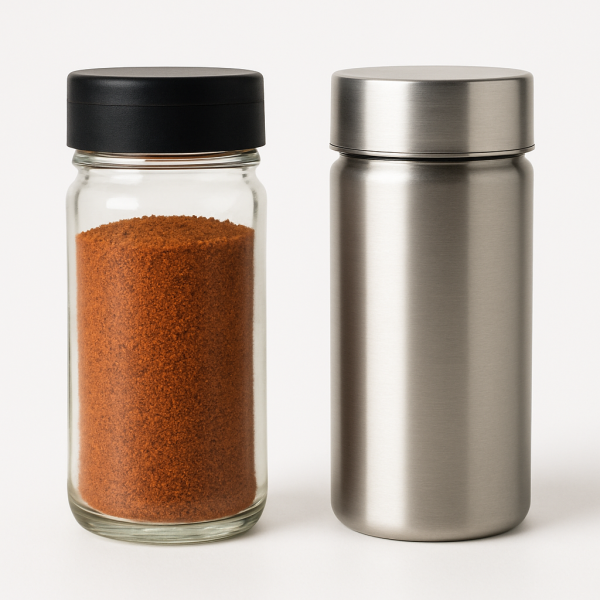
Stainless steel containers, often seen in commercial kitchens or as part of magnetic spice racks, also have compelling benefits.
Key Advantages of Stainless Steel
- Total Light Blockage: Stainless steel is completely opaque, offering 100% protection from light degradation—a significant advantage if your spices must be stored on an open counter or near a window.
- Exceptional Durability: These containers are virtually unbreakable, making them ideal for high-traffic kitchens or for transporting spices.
- Modern Aesthetics: For a sleek, uniform, and modern kitchen look, stainless steel provides a clean, industrial aesthetic that many prefer.
The Stainless Steel Caveat
The primary issue with stainless steel is the lack of visibility, which requires meticulous labeling. More importantly, while stainless steel is generally non-reactive, the quality of the seal can vary significantly. A poor seal is the fastest way to ruin a spice collection.
The Ultimate Comparison: Glass vs. Stainless Steel
To help you decide, here is a side-by-side comparison of the two materials across the most critical factors for spice storage.
| Feature | Glass Jars (Airtight) | Stainless Steel Containers | Winner |
|---|---|---|---|
| Flavor Preservation | Excellent (Non-reactive, excellent seal) | Very Good (Non-reactive, seal quality varies) | Glass |
| Light Protection | Poor (If clear) / Excellent (If opaque/dark) | Excellent (100% opaque) | Stainless Steel |
| Visibility | Excellent (See contents at a glance) | Poor (Requires meticulous labeling) | Glass |
| Durability | Good (Breakable if dropped) | Excellent (Virtually unbreakable) | Stainless Steel |
| Non-Porous/Odor Retention | Excellent (Will not retain odors) | Very Good (Can sometimes retain strong odors) | Glass |
| Airtight Seal Quality | Excellent (Easier to achieve a reliable seal) | Varies (Depends heavily on lid design) | Glass |
Best Practices for Maximizing Spice Shelf Life
Regardless of the container you choose, following these three simple rules will ensure your spices stay potent for as long as possible.
1. Location, Location, Location
The best place for your spices is a cool, dark, and dry cabinet or pantry, away from the direct heat of the stove or the humidity of the sink.
2. Buy Whole, Grind Fresh
Whole spices (like peppercorns or nutmeg) retain their essential oils much longer than ground spices. Consider investing in a small spice grinder and grinding small batches as needed.
3. The "Sniff Test"
Spices don't truly "go bad" in a way that makes them unsafe, but they do lose flavor. If you open a jar and the aroma is faint or dusty, it's time to replace it.
Watch: For more expert tips on maximizing the life of your spices, check out this video from America's Test Kitchen: Our Top Tips for Buying and Storing Spices
Final Conclusion: The Clear Winner for Your Kitchen
While stainless steel has its place in high-volume, high-traffic commercial settings where durability is paramount, glass jars remain the undisputed champion for the discerning home cook and for long-term flavor preservation.
The ability of glass to form a perfect, non-reactive seal, combined with the convenience of visual identification, outweighs the light-blocking benefit of steel—especially when glass jars are stored correctly in a dark cabinet.
As a leading exporter of premium glass packaging, we understand that the container is just as important as the contents. Choose quality, choose clarity, choose glass.
Ready to Upgrade Your Spice Storage? (Call to Action)
Whether you are a global distributor or a small business looking for the perfect packaging solution, we offer a wide range of high-quality, airtight glass jars and bottles designed to protect and showcase your products.
Contact us today to discuss your wholesale glass packaging needs!
- Email: sales@glassypack.com
- Contact Us Link: https://glassypack.com/index.php/contact-us/