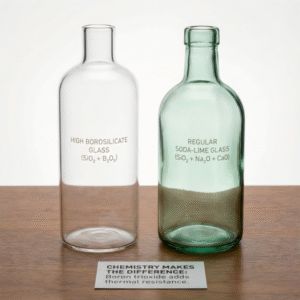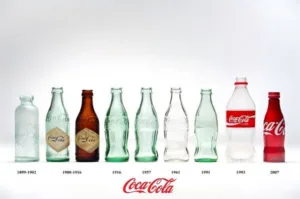
Choosing between glass and plastic for your juice is a tough call. The wrong packaging can undermine your premium brand image and make your sustainability claims1 feel hollow.
For juice companies targeting the premium, health-conscious market, glass bottles2 are the superior choice. Glass preserves the juice's true flavor, provides a high-end look, and is infinitely recyclable, justifying a higher price point for your product.
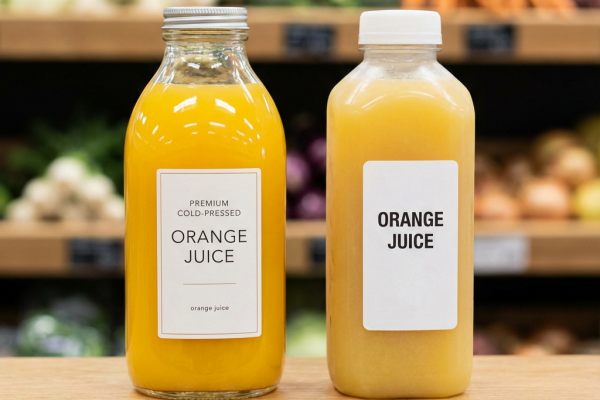
In my experience supplying packaging to brands worldwide, this decision goes far beyond initial cost. It’s about defining your brand's identity. A consumer's choice in the aisle is a vote for quality, health, and sustainability. Your packaging is your first and most direct promise to them. Let's look at how glass consistently delivers on that promise.
Your juice is made from the best ingredients, but your packaging might be sending a cheap message. Plastic can alter the taste of a great product and make it feel less valuable.
Glass looks more premium and protects the juice's pure flavor. Its clarity showcases the product's vibrant color, and its inert nature means it won't leach any chemicals or off-tastes into your juice.
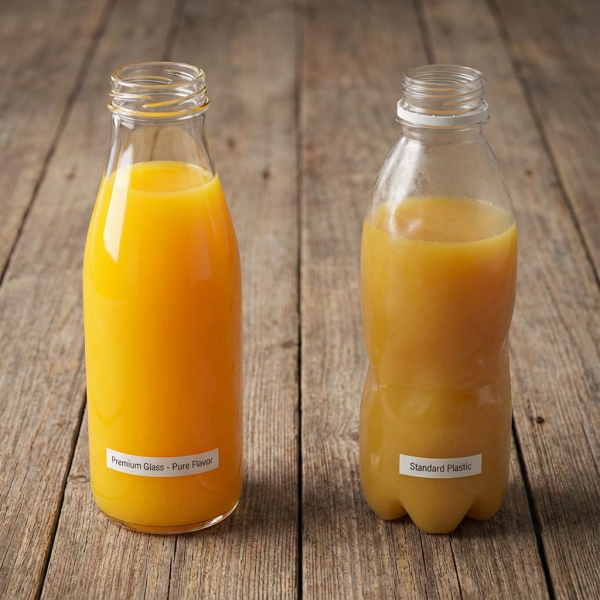
When a customer sees two identical juices on a shelf, one in glass and one in plastic, their perception of quality is immediately formed. Glass has a powerful, built-in advantage.
The Visual Appeal
Glass has a clarity and solid feel that consumers associate with high quality. It acts as a perfect, crystal-clear window, showcasing the natural, vibrant color of your juice. This isn't just packaging; it's a natural marketing tool that signals freshness and purity before the bottle is even opened.
The Taste Integrity
Glass is chemically inert and non-porous. In simple terms, it doesn't react with its contents or absorb odors. This is critical for delicate, cold-pressed juices where flavor integrity is everything. Plastic, on the other hand, can sometimes leach subtle flavors or chemicals, like acetaldehyde, which can alter the pure taste of your product over time.
The Trust Factor
Consumers instinctively trust glass. Studies show people link glass packaging directly to better quality and health. By choosing glass, you build immediate trust and give customers a clear reason to believe your product is worth a higher price.
Which bottle is truly better for the planet?
You claim your brand is sustainable, but "recyclable" plastic can be misleading. Consumers are smart and will quickly learn that most plastic isn't truly recycled, which can damage your brand's credibility.
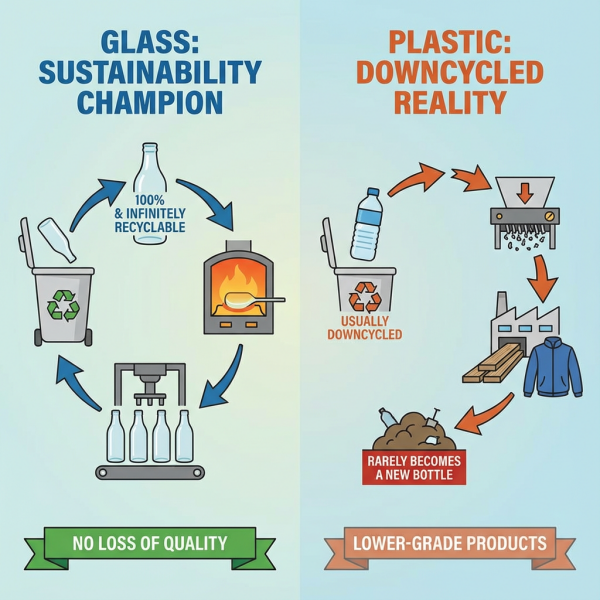
Glass is the sustainability champion because it's 100% and infinitely recyclable into new bottles without any loss of quality. In contrast, plastic is usually downcycled into lower-grade products and rarely becomes a new bottle.
Your packaging is your most visible sustainability statement. It's crucial to choose a material that aligns with a genuine circular economy.
The Glass Advantage: A True Closed Loop
When a glass bottle is recycled, it gets melted down and made into another high-quality glass bottle. This process can be repeated forever without any loss of purity. This is a true closed-loop system and the gold standard for a circular economy. It means the material from your bottle can have an endless life.
The Problem with Plastic
Plastic bottles are typically "downcycled." This means a recycled PET bottle doesn't usually become another bottle. Instead, it gets turned into a lower-quality product like carpet fiber or clothing, which will likely end up in a landfill later. With global plastic recycling rates struggling to reach 10%, most plastic packaging becomes waste.
What About Shipping Weight?
Yes, glass is heavier than plastic, which means it uses more energy to transport. That is its main environmental drawback. However, its perfect end-of-life profile—where it can be recycled infinitely—makes it the long-term champion for a brand that is serious about reducing waste and building a truly sustainable future.
How does packaging choice affect production and safety?
You need packaging that works with your production methods and guarantees safety. Some materials can't handle heat processing and raise concerns about chemical leaching, creating major operational and safety hurdles.
Glass is superior for both production and safety. Its excellent heat stability is perfect for hot-filling or pasteurization, and its inert nature guarantees it is free from chemicals like BPA, offering an undisputed promise of purity.
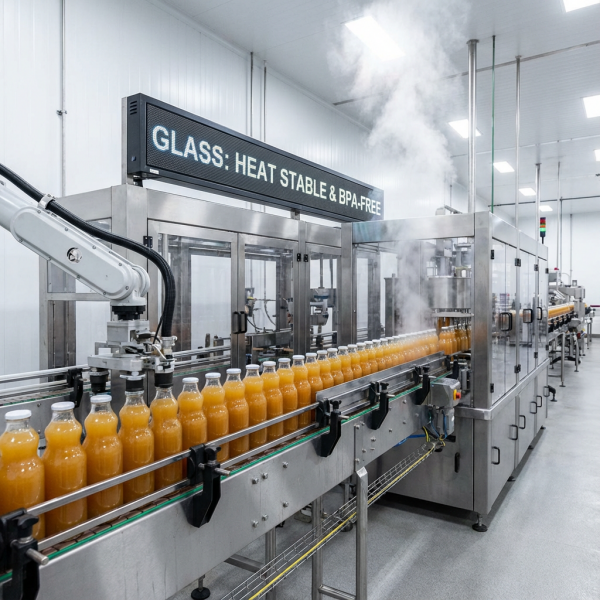
For a juice company, especially one producing shelf-stable products, the operational realities are critical. The wrong material can limit your production methods and compromise safety. Here is a clear breakdown of the differences.
| Feature | Glass Bottles | Plastic (PET) Bottles |
|---|---|---|
| Consumer Perception | Premium, High-Quality, Healthier | Cost-Effective, Convenient |
| Taste & Purity | Inert, preserves original flavor | Can affect taste over time |
| Recyclability | 100% infinitely recyclable | Downcycled, rarely reused as a bottle |
| Weight & Logistics | Heavy, higher transport costs | Lightweight, lower shipping costs |
| Hot-Filling | Excellent thermal stability, ideal for pasteurization | Can deform or leach at high temperatures |
| Chemical Safety | Naturally BPA-free, non-toxic | Concerns remain about other plasticizers |
As you can see, glass's ability to handle high temperatures is a game-changer. It allows you to use hot-filling or pasteurization to extend your juice's shelf life naturally, without needing chemical preservatives. For a brand built on purity and health, this is a massive advantage that plastic simply cannot offer.
Conclusion
For premium juice brands3 focused on quality, taste, and sustainability, glass is the only choice. It’s an investment that protects your product’s integrity and elevates your brand’s value.
Discover how to make credible sustainability claims that resonate with consumers. ↩
Explore the advantages of glass bottles for juice, including taste preservation and sustainability. ↩
Discover how leading juice brands package their products to inspire your own brand's strategy and see real-world examples of premium positioning. ↩