The Quick Answer: Why Bottle Height is a Strategic Masterpiece
Have you ever wondered why a 12 oz glass soda bottle feels "just right" in your hand, or why 2-liter bottles always seem to barely fit on your refrigerator shelf? It’s not a coincidence. The height of a soda bottle is a precision-engineered balance between consumer psychology, 100 years of history, and the cold, hard limits of global logistics.
If you’re looking for the "Golden Numbers," here they are:
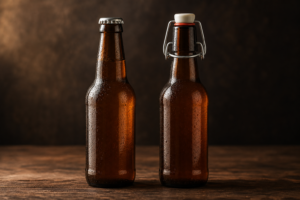
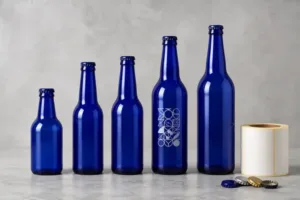
- 12 oz (355 ml) Glass Bottle: Stands approximately 9.0 to 9.4 inches (22.8 - 23.9 cm). This is the "Goldilocks" height—tall enough to look premium, but short enough to remain stable.
- 16.9 oz (500 ml) PET Bottle: Measures about 8.0 inches (20.3 cm). It’s designed to be "stout" for better stability in backpacks and cup holders.
- 20 oz (600 ml) PET Bottle: Usually 8.5 to 9.0 inches (21.6 - 22.8 cm). This height is strictly dictated by the internal dimensions of global vending machines.
- 2 Liter PET Bottle: The giant of the family, standing at 12.0 to 13.0 inches (30.5 - 33.0 cm).
1. The "9.5-Inch Rule": Why Vending Machines Rule the World
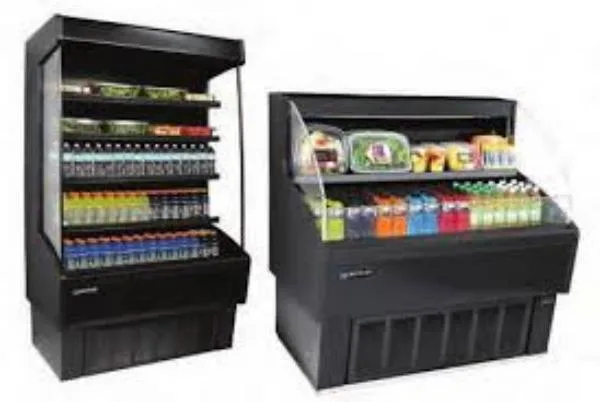
Why don't we see 15-inch tall soda bottles? The answer lies inside the metal box of a vending machine.
Most global vending machines (like those from Royal Vendors or Dixie-Narco) are designed with internal "stacks" or "spirals" that have a hard physical limit. A bottle taller than 9.5 inches (24.1 cm) simply won't fit. If a beverage brand designs a bottle even 0.1 inches too tall, they lose access to millions of vending machines worldwide.
This "invisible ceiling" has forced designers to get creative. When brands want to increase volume (like moving from 16 oz to 20 oz), they can't go up—they have to go out, which is why 20 oz bottles often look "thicker" rather than "taller."
2. Standard Dimensions: A Global Reference Guide
For wholesalers and manufacturers, these dimensions are the "Bible" of packaging. Even a 2mm deviation can cause a high-speed bottling line to jam, costing thousands of dollars in downtime.
| Capacity | Material | Avg. Height (Inches) | Avg. Height (cm) | The "Why" Behind the Height |
|---|---|---|---|---|
| 8 oz (237 ml) | Glass | 7.5" | 19.1 cm | Designed for "vintage" appeal and multi-packs. |
| 12 oz (355 ml) | Glass | 9.2" | 23.4 cm | The industry standard for premium glass sodas. |
| 16.9 oz (500 ml) | PET | 8.0" | 20.3 cm | Optimized for portability and "grab-and-go" stability. |
| 20 oz (600 ml) | PET | 8.9" | 22.6 cm | Maximizes volume while staying under the 9.5" vending limit. |
| 2 Liter | PET | 12.4" | 31.5 cm | Designed to maximize "shelf presence" in supermarkets. |
3. A Century of Height: The Evolution of the "Contour"
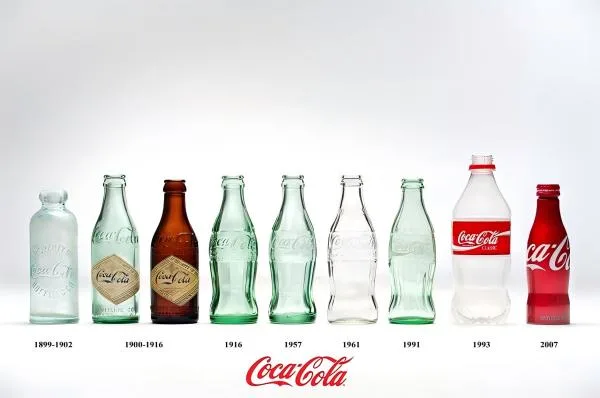
The height of soda bottles hasn't always been standard. In the late 1800s, "Hutchinson" bottles were short, straight-sided, and only about 6-7 inches tall.
The real revolution happened in 1915 with the birth of the Coca-Cola Contour bottle. The brief given to the Root Glass Company was famous: "Design a bottle so distinct that you could recognize it by feel in the dark, or even if it lay broken on the ground."
Over the decades, as refrigeration became common, bottles grew taller. In the 1950s, the "King Size" (10 oz and 12 oz) bottles were introduced to compete with Pepsi’s larger portions. This era established the 9-inch standard we still use for glass bottles today.
4. The Logistics of an Inch: Why Shorter is Sometimes Richer
In international trade, especially for companies exporting from China to Europe or South America, height is money.
The Pallet "Tetris"
Standard shipping pallets (like the Euro-pallet) have a height limit for safe stacking in containers. If your glass bottle is 9.5 inches tall instead of 9.2 inches, you might lose an entire "layer" of bottles on every pallet.
- Example: On a standard shipment, losing one layer per pallet could mean shipping 2,000 fewer bottles per 40ft container.
The Stability Factor
Glass is heavy. A taller, thinner glass bottle has a higher center of gravity. During the carbonation process, the internal pressure can reach 60 PSI. A bottle that is too tall and thin is more likely to "wobble" on the conveyor belt or shatter under pressure. This is why professional glass manufacturers always recommend a specific Height-to-Diameter ratio (usually around 3:1 or 4:1) for maximum safety.
5. Glass vs. PET: The Visual Illusion
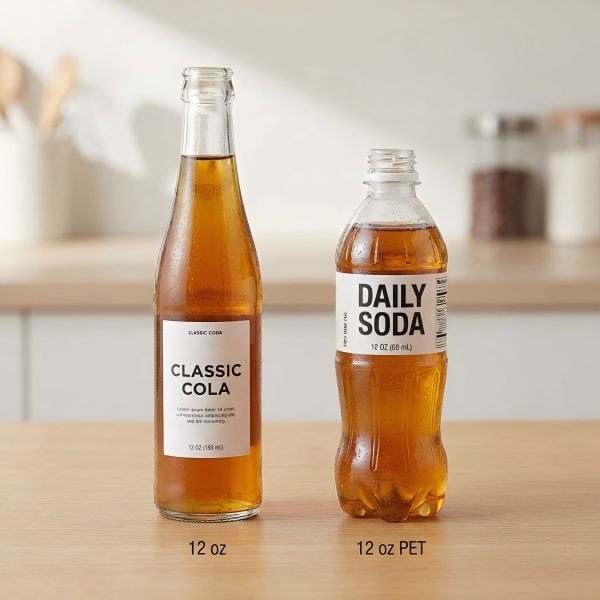
Have you noticed that a glass bottle often looks "taller" than a plastic bottle of the same volume? This is a visual illusion created by the neck design.
Glass bottles often have a longer, more tapered neck (the "longneck" style), which draws the eye upward. PET bottles, because they are molded differently, often have shorter necks and wider shoulders. For premium brands, that extra half-inch of "neck height" in a glass bottle is what justifies a higher price point in the consumer's mind.
Conclusion: Finding Your Perfect Height
Whether you are a craft soda startup or a global distributor, the height of your bottle is a silent partner in your success. It dictates your shipping costs, your vending compatibility, and your brand's "hand-feel."
At GlassyPack, we’ve spent years perfecting the dimensions of glass packaging for clients across Europe, the Middle East, and the Americas. We don't just manufacture bottles; we engineer them to survive the journey from our factory to your customer's hand.
Need a technical consultation on your next bottle design? We’re here to help you find the "Golden Ratio" for your brand.
- Expert Advice: sales@glassypack.com
- Explore Our Range: Contact GlassyPack
This guide was brought to you by the technical team at GlassyPack—Your partner in premium glass packaging solutions.