
Have a killer sauce recipe1 but feel completely lost on how to sell it? This guide gives you 11 clear steps to turn your kitchen dream into a successful brand.
To start a sauce business, you must validate your recipe and market, create a business plan2, handle legal registrations3, and secure licenses. Then, arrange funding, production, compliant packaging, and launch your sales channels. Following these steps turns your recipe into a viable, market-ready product.
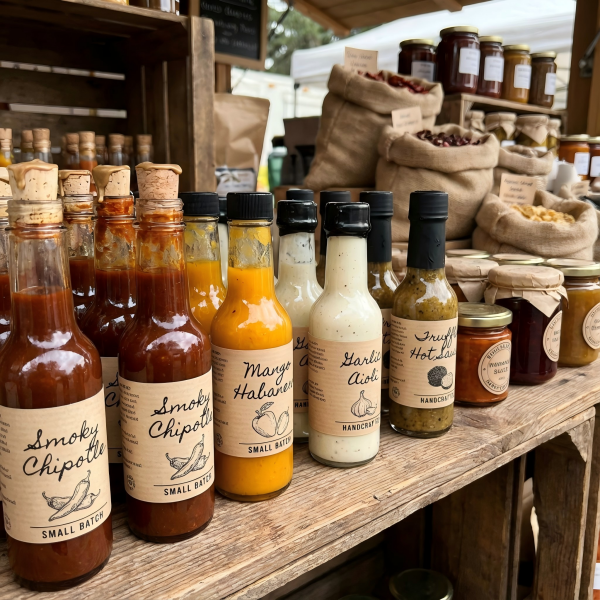
As someone who has worked with food startups for over a decade, I've seen brilliant recipes fail for one simple reason: a lack of a clear plan. The most successful entrepreneurs I know, the ones whose products are now on store shelves worldwide, are not just amazing cooks—they are meticulous planners. They understand that the journey from a home kitchen to a commercial product is a step-by-step process. In this guide, I'll walk you through the exact 11-step blueprint that I've seen work time and time again. Let’s build your sauce empire, one step at a time.
How Do You Know if Your Sauce Idea Is a Winner?
You love your sauce, and so do your friends and family. But will strangers pay for it? Investing time and money without knowing this is a huge risk.
You validate your sauce idea by researching competitors, identifying a unique niche4, and testing your recipe's scalability5 and shelf-stability6. This ensures there is real market demand7 and your product is commercially viable before you invest further.
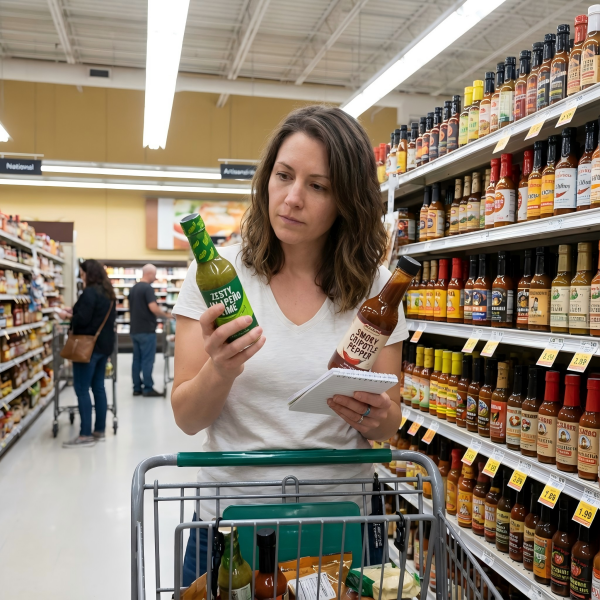
Before you do anything else, you must be brutally honest about your product and the market. Start by walking through grocery stores and farmers' markets8.
- Step 1: Validate the Business Idea. Who is selling a sauce like yours? What are their prices, flavors, and branding? Now, find your unique angle. Is your sauce keto-friendly, made with locally sourced ghost peppers, or inspired by a specific regional cuisine? This is your niche.
- Step 2: Develop and Standardize Your Recipe. A recipe that works for one small pot must be able to scale up to 50 gallons without changing the taste. Can you get your key ingredients year-round at a consistent price? You also need to ensure it's safe. For acidic sauces like hot sauce or many BBQ sauces, you must test and control the pH level to make it shelf-stable. This isn't optional; it's a fundamental food safety requirement.
What's the Plan for Turning Your Sauce into a Real Business?
An idea is not a business. Without a formal plan and brand, you won't be able to secure funding, guide your decisions, or attract customers. You'll just be guessing.
You need a formal business plan2 that outlines your costs, pricing, and marketing strategy. At the same time, you must develop a strong brand identity9—name, logo, and story—and register your business legally to protect it.
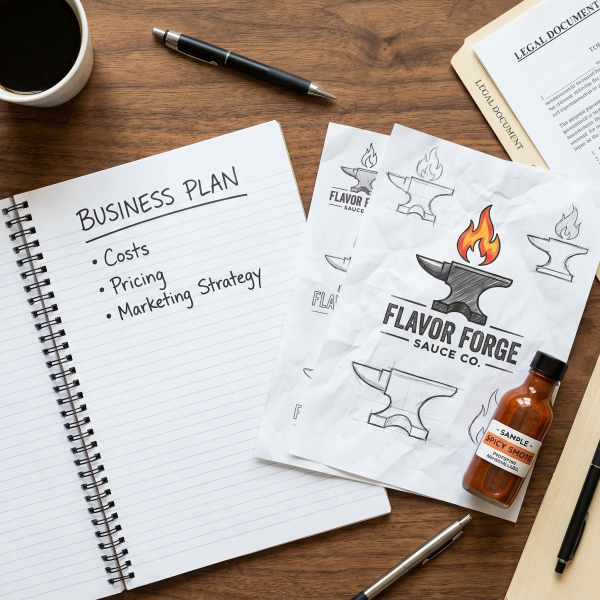
This is where your vision gets put on paper. It forces you to think through every detail.
- Step 3: Create Your Business Plan and Brand. Your business plan2 is your roadmap. It should detail your target customer, startup costs, how you'll price your sauce, and your marketing strategy. Simultaneously, build your brand. What’s your name? Your story? I remember a client who made a family-recipe marinara; their brand story was about Sunday dinners, and it resonated deeply. Your brand is the emotional connection you make with your customer.
- Step 4: Register the Business and Protect IP. Choose a legal structure, like an LLC, to protect your personal assets. Then, register your business with your local authorities. It's also critical to check if your chosen brand name is available as a trademark10. If it is, register it. This prevents someone else from launching a similar sauce with your name down the road.
How Do You Legally Produce and Sell Your Sauce?
You can't just bottle sauce in your kitchen and sell it. Doing so can lead to huge fines and shutdowns, and it puts consumers at risk. You need the right permissions.
You must obtain the necessary licenses, which often include a food factory or commercial kitchen11 license from your local health department. For example, in Hong Kong, this is the FEHD's Food Factory Licence, which has strict facility requirements.

This step is non-negotiable and often the most bureaucratic.
- Step 5: Obtain Licenses and Permits. Every city and country has its own rules. In many places, you need a specific license to manufacture food for off-site sale. For our clients in Hong Kong, this means getting a Food Factory Licence, which requires the production facility to meet stringent standards for hygiene, ventilation, and layout. The easiest way to handle this when starting out is not to build your own kitchen, but to rent time in a pre-licensed commercial kitchen11 or "commissary kitchen." This gets you into production faster and with far less upfront cost. You simply use their licensed space to make your product legally. It's the perfect way to start.
How Do You Fund Your Sauce Business and Manage the Money?
Running out of money is the top reason new businesses fail. You need to budget for everything and manage your finances professionally from the very first day.
You must create a detailed startup budget12, secure funding to cover expenses for at least 6-12 months, open a separate business bank account13, and get product liability insurance14 to protect your new venture from financial risks.

Let's talk about money. It's crucial to separate your business finances from your personal life immediately.
- Step 6: Plan Funding and Startup Budget. List every potential cost: ingredients, bottles, labels, kitchen rental, licensing fees, marketing. Now, where will the money come from? Savings, a small business loan, or even a crowdfunding campaign can work. Make sure you have enough cash to survive for at least six months before you expect to make a consistent profit.
- Step 7: Open a Business Bank Account. Open a separate bank account for your business. This makes accounting, tracking profits, and filing taxes infinitely simpler. Don't mix your grocery money with your business revenue.
- Step 8: Arrange Business Insurance. This is not a 'nice-to-have.' You absolutely must have product liability insurance14. It protects you if, for any reason, someone has an adverse reaction to your sauce. It’s a safety net that allows you to operate with peace of mind.
Where Do You Make Your Sauce and How Do You Package It?
Your home kitchen isn't an option for legal sales. You need a commercial-grade facility and packaging that is safe, compliant, and attractive to customers.
Find a licensed commercial kitchen11 for small-batch production or a co-packer15 for larger volumes. Then, choose packaging like glass bottles that preserves flavor and meets all legal labeling requirements16, including ingredients, allergens, and net weight.
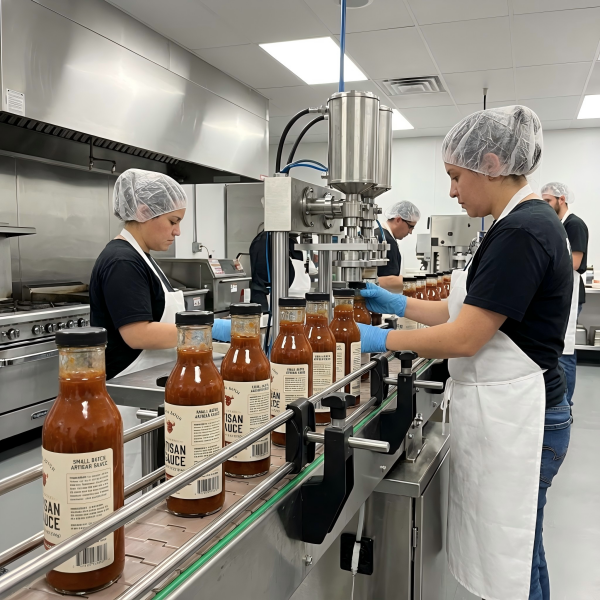
This is the phase where your sauce becomes a real, physical product. At GlassyPack, this is the step where we help brands shine.
- Step 9: Secure Production. As mentioned, start in a shared commercial kitchen11. As your order volume grows, you'll want to find a "co-packer" (contract manufacturer). A co-packer can produce, bottle, and label your sauce for you at scale. You provide the recipe and specifications, and they handle the manufacturing.
- Step 10: Choose Packaging and Labeling. Your packaging does more than hold the sauce—it sells it. For premium sauces, glass is the best choice. It’s inert, so it doesn't affect the flavor, it showcases the product, and it signals quality. Your label is just as important. It must comply with local food laws, clearly listing the product name, ingredients, net weight, allergens, and manufacturer details. A great design on a quality glass bottle is a powerful combination.
How Do You Actually Start Selling Your Sauce and Grow the Business?
You've made your sauce legally and it's bottled. Now what? Your product won't sell itself. You need a strategy to get it in front of paying customers.
Start selling at farmers' markets8 and online to build initial traction and get direct feedback. Then, use social media17 and local wholesale accounts to grow your brand awareness and expand into retail stores over time.

It's time to launch! Don't try to get into a national supermarket chain on day one. Start small and build momentum.
- Step 11: Launch and Grow Sales Channels. Farmers' markets are perfect for launching. You get immediate cash sales and, more importantly, direct feedback from customers tasting your product. Set up a simple online store for e-commerce. As you build a following, approach local independent grocery stores and restaurants. Use social media17 to share your story, show off your beautiful packaging, and announce where people can buy your sauce. Collect customer feedback18 relentlessly. It is the most valuable resource you have for improving your flavors and growing your business. Your first 100 customers will teach you everything you need to know.
Conclusion
Starting a sauce business is a marathon, not a sprint. By following these 11 steps methodically, you build a solid foundation for a brand that can last for generations.
Explore expert advice on crafting a winning sauce recipe that stands out in the market. ↩
Learn how to structure a business plan that guides your sauce venture to success. ↩
Understand the essential legal steps to ensure your sauce business is compliant and protected. ↩
Find insights on identifying a unique niche that can differentiate your sauce from competitors. ↩
Get tips on ensuring your sauce recipe can be produced at larger scales without losing quality. ↩
Learn about techniques to make your sauce shelf-stable and safe for consumers. ↩
Discover methods to evaluate if there's a real market for your sauce before launching. ↩
Find strategies for launching your sauce at farmers' markets and engaging with customers. ↩
Explore strategies for creating a memorable brand that resonates with your target audience. ↩
Understand the process of trademark registration to protect your brand name and identity. ↩
Discover tips for locating a commercial kitchen that meets your production needs legally. ↩
Get insights on creating a comprehensive startup budget to ensure financial stability. ↩
Learn the benefits of separating your business finances from personal accounts for better management. ↩
Understand the importance of product liability insurance in protecting your business from risks. ↩
Learn how partnering with a co-packer can streamline your production process. ↩
Get informed about the essential labeling regulations to ensure your sauce is compliant. ↩
Learn effective social media tactics to build brand awareness and connect with your audience. ↩
Understand how customer feedback can drive improvements and growth for your sauce brand. ↩