The Ultimate Answer: Choosing Your Perfect Bottle
How should craft brewers and beverage brands choose the right beer bottle?
> Choosing the right beer bottle hinges on three critical factors: color, size, and closure. Prioritize amber glass to block up to 99.9% of UV light and prevent the flavor-ruining phenomenon known as 'skunking,' select a size that matches your target market (e.g., 12oz longneck for the US), and ensure the closure (crown cap or swing top) maintains optimal carbonation and freshness.
Introduction: Why Your Bottle Choice is as Important as Your Brew
You’ve spent months perfecting your craft beer recipe—the ideal hop profile, the perfect malt balance, and a fermentation process that is nothing short of art. But then comes a decision that can make or break your product's shelf life and consumer appeal: the bottle.
It might seem like a simple container, but the glass bottle is the final guardian of your beer's quality. A poor choice can lead to light-struck flavors, premature staling, or a lack of presence on a crowded shelf. For craft brewers and beverage brands exporting to diverse markets like Europe, the Middle East, Southeast Asia, South America, and Australia/New Zealand, understanding the nuances of glass packaging is non-negotiable.
This guide breaks down the essential criteria for selecting the perfect glass beer bottle, ensuring your product arrives at the consumer's hand tasting exactly as you intended. We will focus on the three pillars of bottle selection: Protection, Presentation, and Practicality.
Key Takeaways (The Conclusion Up Front)
Before diving into the details, here are the core conclusions you need to know:
- Color is King: Always choose Amber (Brown) Glass for maximum UV protection (up to 99.9%).
- Size Matters: Standardize on market-specific sizes like the 12oz (355ml) Longneck for North America or the 330ml/500ml for European and Asian markets.
- Closure Reliability: The Crown Cap (Pry-Off) remains the industry standard for cost-effectiveness and reliable sealing.
Section 1: Protection – The Science of Glass Color and Skunking
1.1 The Enemy: UV Light and the "Skunking" Effect
Have you ever opened a beer that tasted strangely like a skunk? That unpleasant, off-flavor is not a brewing mistake; it's a chemical reaction caused by ultraviolet (UV) light exposure. When UV rays hit the hop compounds in your beer, they break down and react with sulfur compounds, creating a molecule chemically similar to the defense spray of a skunk. This process, known as "light-struck" or "skunking," can happen in minutes.
The critical question is: which bottle color offers the best defense? [3]
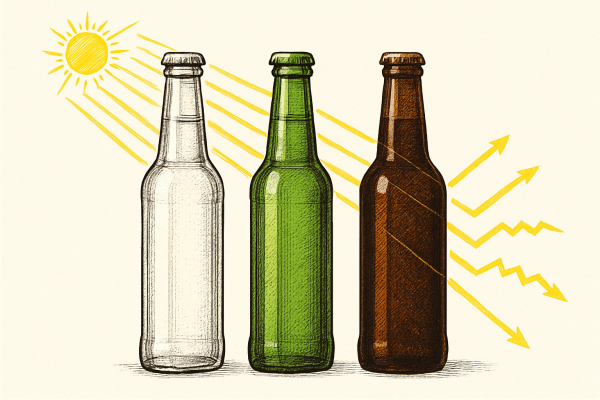
- Amber (Brown) Glass: This is the gold standard. Amber glass filters out nearly all UV and blue light wavelengths—the exact spectrum that causes skunking. Studies show that amber bottles block up to 99.9% of harmful UV rays [1], making them the safest choice for preserving flavor integrity over months of storage and transport.
- Green Glass: Green bottles offer only moderate protection, blocking about 20% of the damaging light spectrum. While aesthetically pleasing for certain European lagers, they are a risky choice for hop-forward beers like IPAs.
- Clear (Flint) Glass: Clear glass offers virtually zero UV protection. It is only suitable for beers that are consumed immediately or those that have been brewed with modified hop extracts to be light-stable (a rare and often costly process).
| Bottle Color | UV Light Blocked (Approx.) | Risk of Skunking | Best For |
|---|---|---|---|
| Amber (Brown) | 99.9% | Lowest | All standard beers, especially IPAs and hop-forward styles. |
| Green | 20% | Moderate to High | Light-stable lagers, or beers with short shelf lives. |
| Clear (Flint) | 0% | Highest | Beers with light-stable hop extracts, or immediate consumption. |
1.2 The Role of Glass Thickness and Quality
Beyond color, the quality of the glass itself is vital, especially for export. Your bottles must withstand:
- Internal Pressure: The carbonation in beer creates significant internal pressure, which increases with temperature. High-quality glass ensures structural integrity.
- Pasteurization/Sterilization: Bottles must endure rapid temperature changes during the filling and pasteurization process without cracking.
- Shipping Stress: Exporting to the Middle East or South America means enduring long transit times, vibrations, and potential handling shocks.
Choosing a reputable foreign trade supplier like GlassyPack ensures your bottles meet international standards for strength and consistency.
Section 2: Presentation – Shapes, Sizes, and Market Appeal
2.1 Standard Shapes and Their Global Presence
The shape of your bottle is a key part of your brand identity and market strategy.
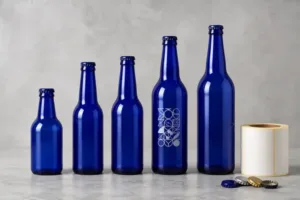
- The Longneck (North American Standard) [2]:
- Description: Tall, slender neck, and a uniform body.
- Common Sizes: 12 oz (355 ml) and 22 oz (650 ml).
- Market: Dominant in the US, Canada, and parts of South America. It's the standard for high-speed bottling lines.
- The Heritage/Stubby (European/Australian Standard):
- Description: Shorter, wider, and more squat than the longneck.
- Common Sizes: 330 ml and 500 ml.
- Market: Popular in Europe (especially Germany and the UK) and Australia/New Zealand. The shorter profile is often preferred for stability and stacking.
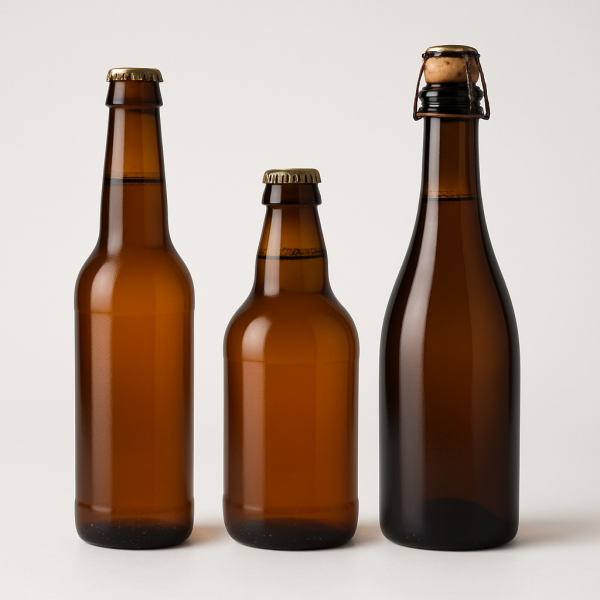
- The Belgian/Champagne Style:
- Description: Thicker glass, often with a punt (indentation) at the base, designed for high-pressure beers (like Saisons or Lambics) and secondary fermentation in the bottle.
- Market: Specialty and high-end craft beers globally.
2.2 Choosing the Right Volume for Export
When exporting, aligning your bottle volume with the destination market's expectations is crucial for sales success.
| Market Region | Preferred Volume (Metric/Imperial) | Standard Bottle Type |
|---|---|---|
| North America (US/Canada) | 12 oz (355 ml), 22 oz (650 ml) | Longneck |
| Europe (EU) | 330 ml, 500 ml | Heritage/Stubby |
| Australia/New Zealand | 330 ml, 375 ml, 500 ml | Stubby/Longneck |
| South America | 355 ml, 650 ml | Longneck |
| Southeast Asia | 330 ml, 640 ml (large format) | Longneck/Local Standard |
****[Video: Watch a Modern Beer Bottling Line in Action]
Section 3: Practicality – Closures and Customization
3.1 The Two Main Closure Types
The closure is the final seal of quality. The choice affects both the bottling process and the consumer experience.
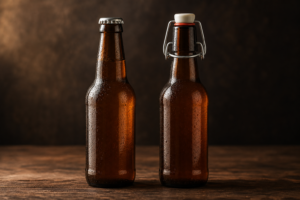
- Crown Cap (Pry-Off):
- Pros: Most cost-effective, highest sealing integrity for carbonation retention, and compatible with high-speed bottling equipment.
- Cons: Requires a bottle opener.
- Verdict: The industry standard for reliability and export.
- Twist-Off Cap:
- Pros: Convenient for the consumer, no opener required.
- Cons: Requires a specific bottle finish (thread) and often has a slightly higher risk of oxygen ingress or carbonation loss over long periods.
- Verdict: Suitable for domestic, fast-moving markets where convenience is prioritized.
3.2 Customization: Branding Beyond the Label
In competitive markets, the bottle itself can be a branding tool.
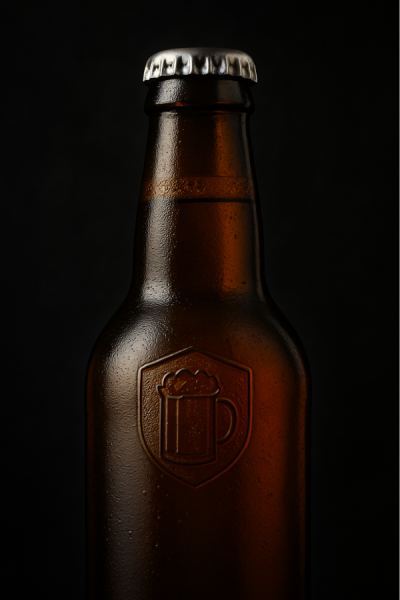
- Embossing/Debossing: Adding your logo or brand name directly into the glass mold provides a premium, permanent, and tactile branding element that labels cannot replicate.
- Custom Colors: While amber is recommended for protection, some brands opt for custom shades of brown or even matte finishes to stand out.
- Specialty Finishes: Bottles with ceramic swing tops (Grolsch style) or unique neck designs can justify a higher price point and convey a sense of tradition or craft.
Conclusion: Your Bottle is Your Brand's First Impression
Choosing the right beer bottle is a strategic decision that balances science, marketing, and logistics. By prioritizing amber glass for flavor protection, selecting a market-appropriate size for global appeal, and ensuring a reliable closure, you safeguard your product's quality from the brewery to the consumer's glass.
For international trade, consistency and quality are paramount. Your foreign trade partner must understand the specific requirements of your destination markets, from the high-speed lines of North America to the diverse standards of the Middle East and Asia.
Ready to Bottle Your Success? (Call to Action)
Don't let a poor packaging choice compromise your world-class brew. Whether you are a craft brewer launching a new IPA or a beverage brand expanding into new export territories, partnering with an experienced glass supplier is the key to seamless global distribution.
Contact us today to discuss your specific packaging needs and receive a quote for high-quality, export-ready glass beer bottles.
- Email: sales@glassypack.com
- Contact Us Link: https://glassypack.com/contact-us/
[References]
- [1] Friends of Glass. Why are beer bottles green, brown or clear? The science behind it. https://friendsofglass.com/stories/why-beer-bottles-green-brown/
- [2] Berlin Packaging. Beer Bottle Buying Guide. https://www.berlinpackaging.com/beer-bottle-buying-guide/
- [3] Wired. Physics and Green Beer Bottles. https://www.wired.com/2013/03/physics-and-green-beer-bottles/