You buy expensive, aromatic spices, but they quickly become dull and tasteless. Your food lacks that vibrant punch, and you're throwing away half-used jars of what is now flavorless dust.
Glass jars1 are better because they are chemically inert and non-porous. This prevents them from absorbing your spices' essential oils or leaching chemicals. Glass also provides a superior airtight seal, protecting spices from flavor-killing oxygen and light.

In my decade of manufacturing glass packaging, I've seen firsthand how the right container can make or break a product. This is especially true for spices. A chef once told me that switching to glass was the single best "non-food" decision he made for his kitchen. The reason is simple science. The container isn't just holding the spice; it's interacting with it every second. I want to walk you through exactly why glass is the only choice if you truly care about flavor.
Does Plastic Really Steal the Flavor from Your Spices?
You invest in fragrant spices like rosemary and cloves, but they taste flat within months. You might blame the spice quality, but the real culprit is sitting right on your kitchen shelf.
Yes, plastic actively absorbs the essential oils that give spices their flavor and aroma. Its porous structure can also leach harmful chemicals like BPA into your spices, while inert glass preserves the original taste perfectly.
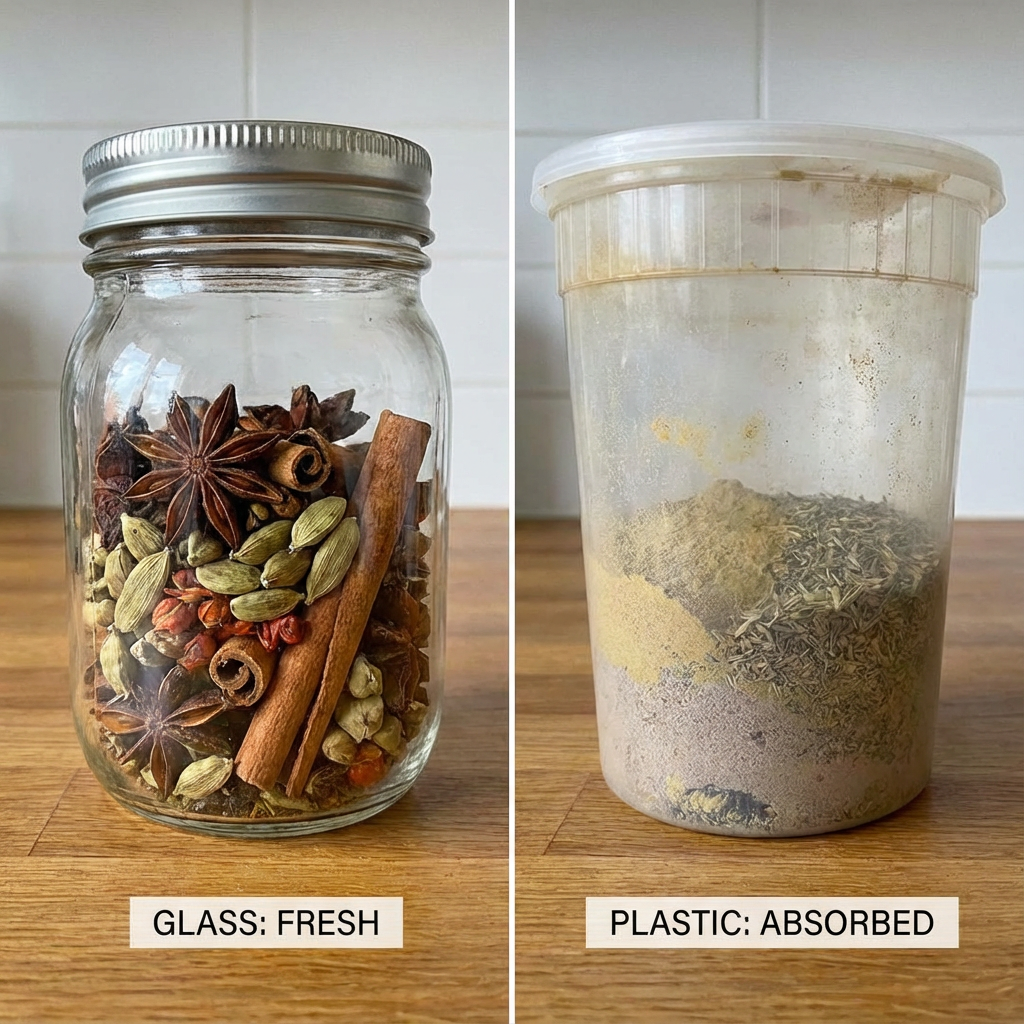
Spices are fundamentally oily and volatile. The powerful aroma of paprika, turmeric, or rosemary comes from their essential oils. The problem is that plastic is a porous material. On a microscopic level, it’s full of tiny gaps. These gaps act like a sponge, slowly soaking up those precious essential oils. A 2020 study in the Journal of Food Science found that after six months, rosemary stored in plastic lost 42% of its key antioxidant compounds, while rosemary in glass lost only 8%. Worse, as the oils seep into the plastic, they can draw out chemicals like plasticizers and BPA, which then contaminate your spice. As a manufacturer, I can tell you that glass is chemically inert. It's a non-porous, solid barrier. It doesn't absorb anything and it doesn't release anything, ensuring the flavor you bought is the flavor you taste.
How Does Air Turn Your Spices Stale?
Your spices smell amazing when you first open them, but soon they lose their kick. That once-potent black pepper now tastes like bland dust, ruining the finish on your dishes.
Oxygen is the main enemy of spice freshness, causing flavors to oxidize and go stale. Glass jars1 with airtight metal or silicone-sealed lids provide a near-perfect barrier, offering up to 100 times better protection against oxygen than plastic.
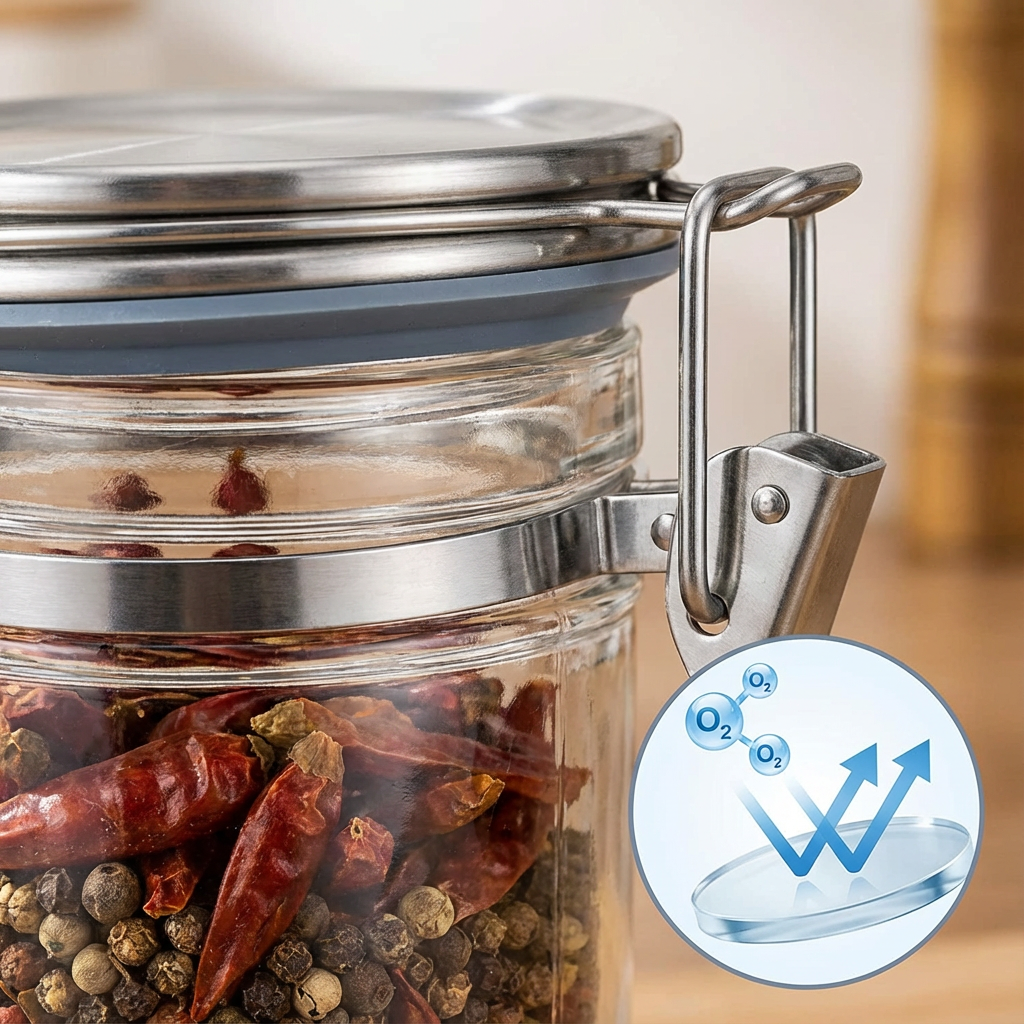
I often tell my clients to think of oxygen as the thief of flavor. When it comes into contact with the delicate compounds in your spices, it causes a chemical reaction called oxidation. This is what makes fats go rancid and fresh aromas disappear. Plastic containers are surprisingly permeable to oxygen. Air slowly passes right through the material itself. I've heard professional chefs say that peppercorns in a plastic shaker are "dead" in three months. In contrast, a quality glass jar with a proper airtight seal creates a fortress. The glass itself is impermeable, and a well-made lid with a silicone gasket stops any air from getting in. This is why spices stored in our glass jars can retain their powerful, fresh-ground impact for a year or even longer. It’s not magic; it’s just superior material science.
Why Does My Plastic Turmeric Jar Look Stained and Smell Weird?
You've noticed your plastic containers are permanently stained yellow from turmeric and red from paprika. Even after washing, they hold onto a strange, muddled "curry" smell, tainting the next spice you store.
Plastic absorbs both the color pigments and the flavor molecules from strong spices. This leads to permanent staining and "flavor ghosting." Glass is non-porous, so it will never stain or retain odors, ensuring pure flavor every time.
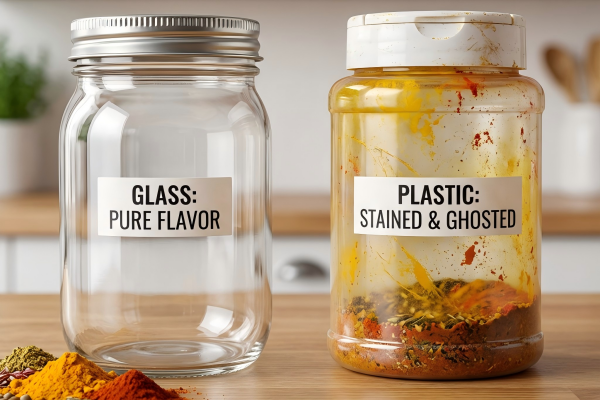
This is a classic problem I hear about. Spices like turmeric, paprika, and saffron are rich in powerful, oil-soluble pigments. Because plastic is porous and oil-friendly, it readily absorbs these pigments deep into its structure. Once they're in, no amount of scrubbing will get them out. The same process happens with the aroma molecules, which is why your cinnamon jar might end up smelling faintly of the cumin you stored in it last year. This is called flavor ghosting, and it’s a sign of a low-quality container. As a glass maker, one of the things I'm proudest of is the purity of our material. You can store the most potent turmeric in a GlassyPack jar for a year, wash it out, and it will be perfectly clear and completely odorless, as if it were brand new. It’s ready for your delicate vanilla beans or any other spice without any risk of cross-contamination.
Which Container Is Truly Better for the Planet?
You feel good about buying "recyclable" plastic, thinking it's an eco-friendly choice. But you find yourself throwing away stained, warped plastic jars every few years, which feels incredibly wasteful.
A single high-quality glass jar can last for decades, making it far more sustainable than a plastic jar that needs replacement every 2-3 years. True environmentalism is about long-term reuse, not just single-use recyclability.
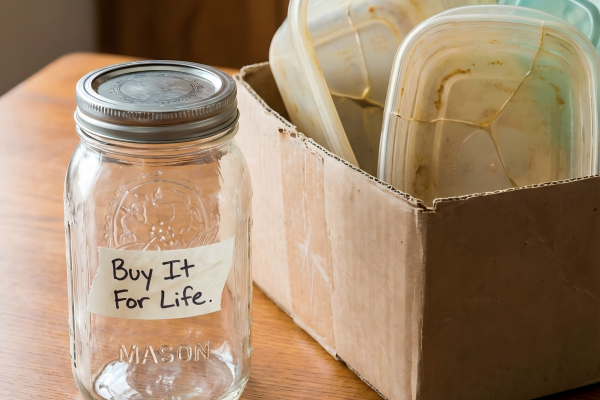
I often have to reframe the conversation around sustainability with my clients. The "recyclable" label on plastic can be misleading. The reality is that plastic degrades each time it's recycled, a process known as downcycling. A plastic spice jar will never become another food-grade jar2; it will become a lower-quality item. More importantly, its lifespan in your kitchen is short. It will stain, warp near the stove, and absorb odors. You'll be forced to throw it out. A well-made glass jar, however, is a "buy it for life" product. I have glass containers in my own kitchen that are older than my children. The energy used to make that one jar is offset by decades of reliable use. This philosophy of long-term value over short-term disposability is the core of true sustainability.
Conclusion
Your spices deserve to be protected, not diminished by poor storage. Glass is the only material that preserves their integrity, ensuring every meal you cook is as flavorful as it can be.