Frequently Asked Questions about Liquor Bottle Sizes
After understanding the classification and selection methods of different sizes of liquor bottles, you may still be curious about some common questions. This section will answer these questions to help you more comprehensively understand the knowledge and considerations behind bottle sizes.
Why are there so many different liquor bottle sizes?
The diversity of liquor bottle sizes is not accidental; it is the result of a combination of historical, traditional, market demand, and liquor characteristics. Understanding these reasons helps us better appreciate the evolution of liquor bottle sizes.
•Historical Reasons: The origins of many liquor bottle sizes can be traced back several centuries. For example, the 750ml standard bottle is said to have been determined by the maximum capacity that glassblowers could blow with their lung capacity at the time, or it was related to early European trade measurement units. The term “fifth” comes directly from the historical measurement habits of the United States (one-fifth of a gallon). These historical developments have given different sizes of liquor bottles a unique cultural imprint.
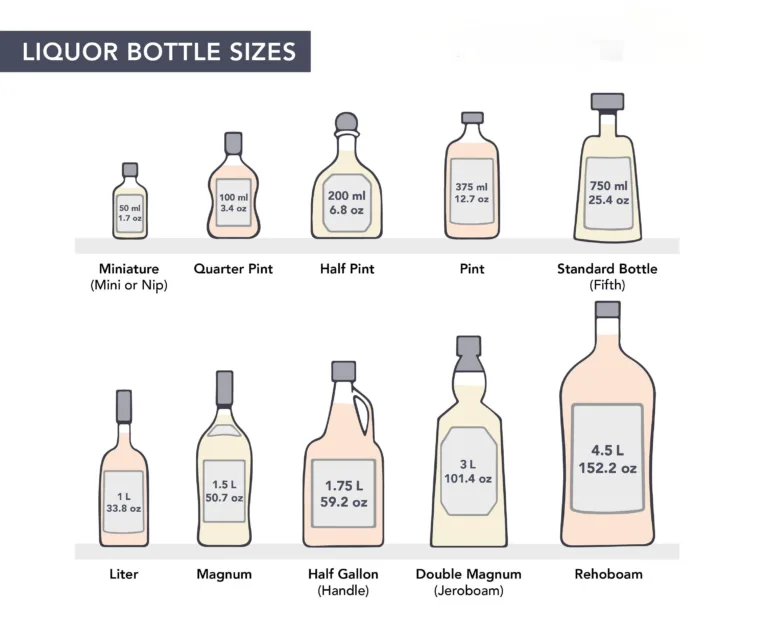
•Tradition: Certain types of alcohol, such as champagne and wine, have a long tradition of using specific-sized bottles. For example, large bottles of champagne such as Magnum (1.5 liters) and Jeroboam (3 liters) are not only symbols of capacity, but also manifestations of celebration and luxury. This tradition has greatly influenced consumers’ perception and expectations of these liquor sizes.
•Market Demand: Consumer demand for alcohol is diverse. Some people need small bottles for tasting or travel, some need standard bottles for daily drinking, and others need large bottles for parties or collections. In order to meet the needs of different consumer groups, wineries naturally produce various liquor bottle sizes. For example, the popularity of miniature bottles is precisely to meet the consumer demand for portability and low-cost trials.
•Storage Needs of Different Liquors: Certain types of alcohol, especially wine, have specific requirements for bottle size during storage and aging. Large bottles (such as Magnum) are generally considered more suitable for the long-term aging of wine because the ratio of the contact area between the liquor and the air in the bottle is smaller. Therefore, the oxidation rate of the liquor will be slower, which helps the wine to slowly develop more complex aromas and flavors over a longer period of time and avoid premature aging. For most spirits, because of their high alcohol content, the oxidation rate is slower, so the bottle size has a relatively small impact on the quality.
How many glasses of wine can you get from a 750ml bottle?
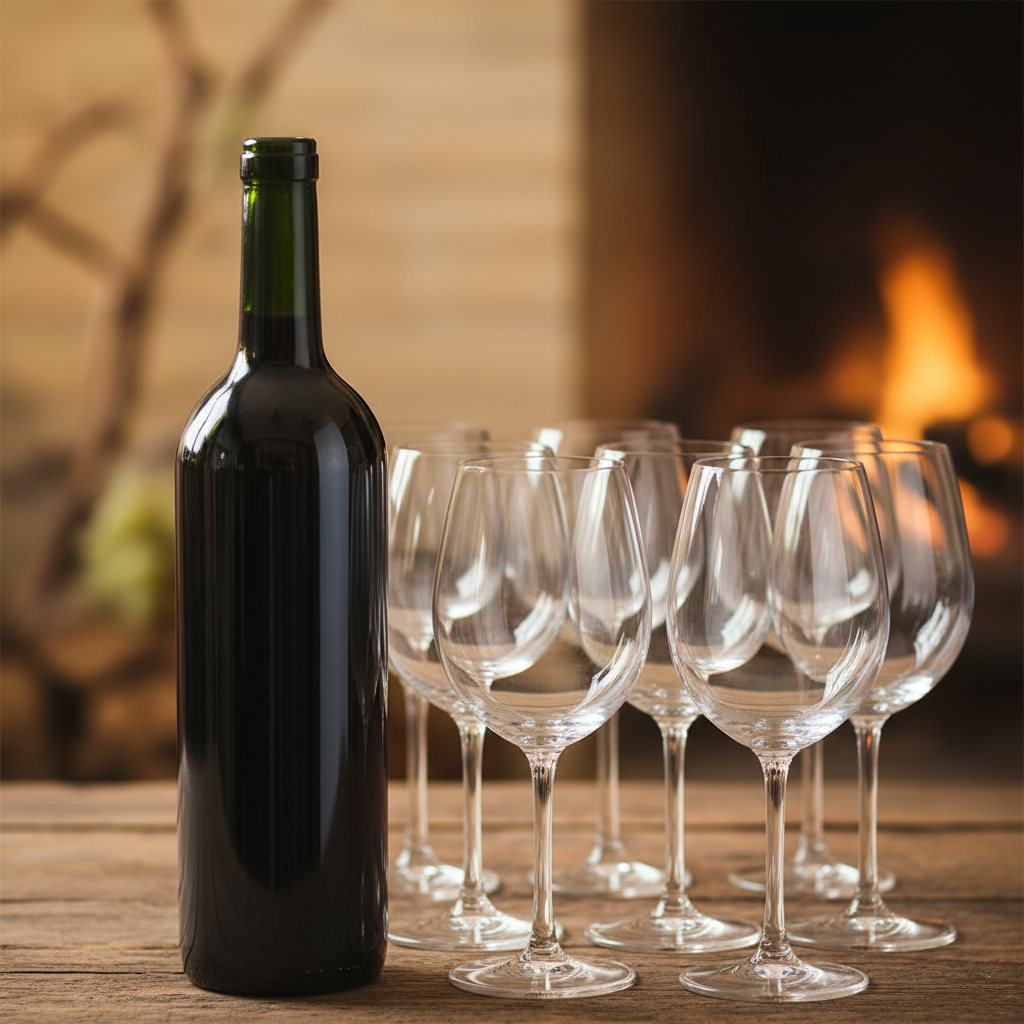
This is a very practical question, especially when you are planning a party. How many glasses of wine you can get from a 750ml bottle depends on your standard pour. Here are some common reference standards:
•Spirits: A standard single serving of spirits is usually 1.5 fluid ounces (about 45 ml). According to this standard, a 750ml bottle of spirits can pour: 750 ml ÷ 45 ml/glass = about 16.67 glasses This means that a standard bottle of spirits can provide about 16 to 17 servings.
•Wine: A standard single glass of wine is usually 5 fluid ounces (about 150 ml). According to this standard, a 750ml bottle of wine can pour: 750 ml ÷ 150 ml/glass = 5 glasses Therefore, a standard bottle of wine can usually provide one glass for each of 5 people, or a more ample amount for 2-3 people.
•Case Study: Suppose you are hosting a small party with 10 guests and plan to serve wine. If you provide 2 glasses of wine for each guest, you will need a total of 20 glasses. Based on the above calculation, you will need to buy 20 glasses ÷ 5 glasses/bottle = 4 bottles of 750ml wine. Understanding these calculation methods can help you more accurately estimate the amount of alcohol needed and avoid shortages or surpluses.
What is the difference between a “fifth” and 750ml?
A “fifth” and 750ml are two terms that are often used interchangeably, but they actually represent different measurement systems, although they are very close in capacity.
•“Fifth”: This is a traditional American unit of measurement, meaning “one-fifth of a gallon.” In American history, the gallon was a common unit of liquid measurement. A US gallon is approximately equal to 3.785 liters, so one-fifth of a gallon is approximately 3.785 liters ÷ 5 = 0.757 liters, or 757 ml. In the past, the capacity of many liquor bottles was produced according to this standard.
•750ml: This is the internationally accepted metric unit of measurement, which is 750 milliliters. With the unification of global trade and measurement standards, 750ml has become the most common standard bottle capacity in the world. It is widely used in Europe, Asia, and most other parts of the world.
•Difference and Connection: Although there is a slight numerical difference between a “fifth” and 750ml (757ml vs 750ml), in practice, they are usually considered equivalent. When you hear someone say “buy a fifth,” they are usually referring to a 750ml bottle of liquor. The retention of this name is a continuation of historical habits in modern society, and it also reflects the interesting phenomenon of different sizes of liquor bottles in cultural exchange.
Does bottle size affect the quality of the liquor?
For some types of alcohol, the bottle size can indeed affect the quality of the liquor, especially in terms of long-term storage and aging. However, this effect does not apply to all types of alcohol.
•Wine and Champagne: For wine and champagne, the effect of bottle size on quality is more significant. Large-sized bottles (such as Magnum, Jeroboam, etc.) are generally considered more suitable for the long-term aging of wine. The reasons are:
•Oxidation Rate: The total amount of liquor in a large bottle is larger, while the amount of air in the bottleneck is relatively fixed, which means that the ratio of the contact area between the liquor and the air is smaller. Therefore, the oxidation rate of the liquor will be slower, which helps the wine to slowly develop more complex aromas and flavors over a longer period of time and avoid premature aging.
•Temperature Stability: The large amount of liquor in a large bottle means that its temperature will change more slowly than in a small bottle, which helps to maintain the stability of the liquor temperature and reduce the impact of temperature fluctuations on the quality of the liquor.
•Quote: “In the world of wine, a large bottle is not just a symbol of capacity, but also a guarantee of quality and aging potential.” – Wine Spectator magazine
•Spirits: For most spirits (such as whiskey, vodka, rum, etc.), the effect of bottle size on quality is relatively small. The alcohol content of spirits is usually high, which makes them less likely to spoil after opening, and the oxidation rate is much lower than that of wine. Therefore, whether it is a miniature bottle or a half-gallon bottle, as long as it is stored properly, the quality of the spirits will generally not change significantly due to the bottle size. Of course, prolonged exposure to air will still cause flavor loss, so it is still recommended to drink it as soon as possible after opening.
How to identify the size of a liquor bottle?
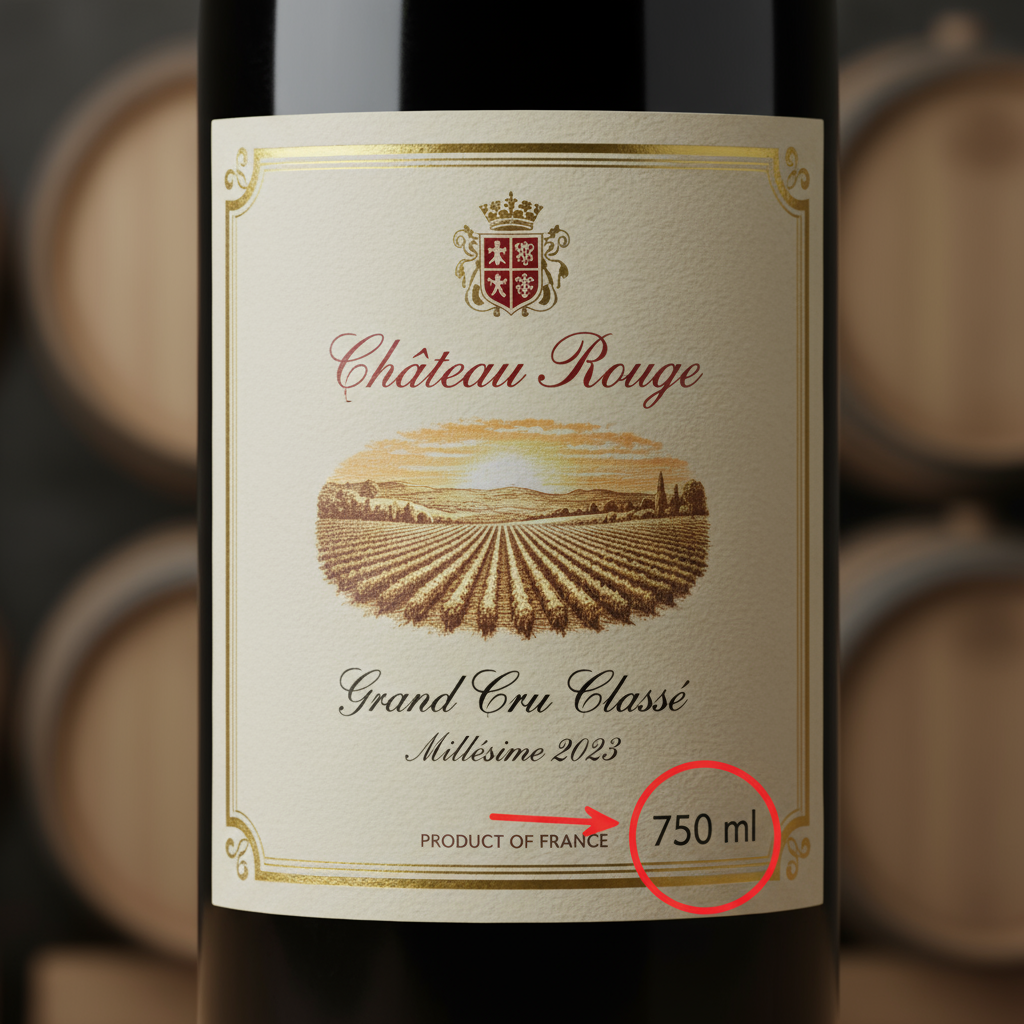
Identifying the liquor bottle size is usually very simple, as the law requires that the capacity be clearly marked on the bottle. You just need to check the bottle label.
•Check the Label: The capacity is clearly marked on the label of most liquor bottles, usually in milliliters (ml) or liters (L). For example, you will see “750ml”, “1L”, or “1.75L”. In some countries, especially the United States, you may also see the fluid ounce (fl oz) marking.
•Location: The capacity marking is usually located at the bottom of the front label, on the back label, or embossed on the glass of the bottle. Sometimes, it is also printed in small letters on the cap or the seal of the bottleneck.
•Note the Units: Make sure you distinguish between milliliters (ml) and liters (L), as 1 liter is equal to 1000 milliliters. For example, a 1.75L bottle is much larger than a 750ml bottle.
Through these frequently asked questions, we believe you have a deeper understanding of different sizes of liquor bottles. Mastering this knowledge will help you be more confident and professional in your alcohol consumption and choices.
Frequently Asked Questions about Liquor Bottle Sizes
After understanding the classification and selection methods of different sizes of liquor bottles, you may still be curious about some common questions. This section will answer these questions to help you more comprehensively understand the knowledge and considerations behind bottle sizes.
Why are there so many different liquor bottle sizes?
The diversity of liquor bottle sizes is not accidental; it is the result of a combination of historical, traditional, market demand, and liquor characteristics. Understanding these reasons helps us better appreciate the evolution of liquor bottle sizes.
•Historical Reasons: The origins of many liquor bottle sizes can be traced back several centuries. For example, the 750ml standard bottle is said to have been determined by the maximum capacity that glassblowers could blow with their lung capacity at the time, or it was related to early European trade measurement units. The term “fifth” comes directly from the historical measurement habits of the United States (one-fifth of a gallon). These historical developments have given different sizes of liquor bottles a unique cultural imprint.
•Tradition: Certain types of alcohol, such as champagne and wine, have a long tradition of using specific-sized bottles. For example, large bottles of champagne such as Magnum (1.5 liters) and Jeroboam (3 liters) are not only symbols of capacity, but also manifestations of celebration and luxury. This tradition has greatly influenced consumers’ perception and expectations of these liquor sizes.
•Market Demand: Consumer demand for alcohol is diverse. Some people need small bottles for tasting or travel, some need standard bottles for daily drinking, and others need large bottles for parties or collections. In order to meet the needs of different consumer groups, wineries naturally produce various liquor bottle sizes. For example, the popularity of miniature bottles is precisely to meet the consumer demand for portability and low-cost trials.
•Storage Needs of Different Liquors: Certain types of alcohol, especially wine, have specific requirements for bottle size during storage and aging. Large bottles (such as Magnum) are generally considered more suitable for the long-term aging of wine because the ratio of the contact area between the liquor and the air in the bottle is smaller. Therefore, the oxidation rate of the liquor will be slower, which helps the wine to slowly develop more complex aromas and flavors over a longer period of time and avoid premature aging. For most spirits, because of their high alcohol content, the oxidation rate is slower, so the bottle size has a relatively small impact on the quality.
How many glasses of wine can you get from a 750ml bottle?
This is a very practical question, especially when you are planning a party. How many glasses of wine you can get from a 750ml bottle depends on your standard pour. Here are some common reference standards:
•Spirits: A standard single serving of spirits is usually 1.5 fluid ounces (about 45 ml). According to this standard, a 750ml bottle of spirits can pour: 750 ml ÷ 45 ml/glass = about 16.67 glasses This means that a standard bottle of spirits can provide about 16 to 17 servings.
•Wine: A standard single glass of wine is usually 5 fluid ounces (about 150 ml). According to this standard, a 750ml bottle of wine can pour: 750 ml ÷ 150 ml/glass = 5 glasses Therefore, a standard bottle of wine can usually provide one glass for each of 5 people, or a more ample amount for 2-3 people.
•Case Study: Suppose you are hosting a small party with 10 guests and plan to serve wine. If you provide 2 glasses of wine for each guest, you will need a total of 20 glasses. Based on the above calculation, you will need to buy 20 glasses ÷ 5 glasses/bottle = 4 bottles of 750ml wine. Understanding these calculation methods can help you more accurately estimate the amount of alcohol needed and avoid shortages or surpluses.
What is the difference between a “fifth” and 750ml?
A “fifth” and 750ml are two terms that are often used interchangeably, but they actually represent different measurement systems, although they are very close in capacity.
•“Fifth”: This is a traditional American unit of measurement, meaning “one-fifth of a gallon.” In American history, the gallon was a common unit of liquid measurement. A US gallon is approximately equal to 3.785 liters, so one-fifth of a gallon is approximately 3.785 liters ÷ 5 = 0.757 liters, or 757 ml. In the past, the capacity of many liquor bottles was produced according to this standard.
•750ml: This is the internationally accepted metric unit of measurement, which is 750 milliliters. With the unification of global trade and measurement standards, 750ml has become the most common standard bottle capacity in the world. It is widely used in Europe, Asia, and most other parts of the world.
•Difference and Connection: Although there is a slight numerical difference between a “fifth” and 750ml (757ml vs 750ml), in practice, they are usually considered equivalent. When you hear someone say “buy a fifth,” they are usually referring to a 750ml bottle of liquor. The retention of this name is a continuation of historical habits in modern society, and it also reflects the interesting phenomenon of different sizes of liquor bottles in cultural exchange.
Does bottle size affect the quality of the liquor?
For some types of alcohol, the bottle size can indeed affect the quality of the liquor, especially in terms of long-term storage and aging. However, this effect does not apply to all types of alcohol.
•Wine and Champagne: For wine and champagne, the effect of bottle size on quality is more significant. Large-sized bottles (such as Magnum, Jeroboam, etc.) are generally considered more suitable for the long-term aging of wine. The reasons are:
•Oxidation Rate: The total amount of liquor in a large bottle is larger, while the amount of air in the bottleneck is relatively fixed, which means that the ratio of the contact area between the liquor and the air is smaller. Therefore, the oxidation rate of the liquor will be slower, which helps the wine to slowly develop more complex aromas and flavors over a longer period of time and avoid premature aging.
•Temperature Stability: The large amount of liquor in a large bottle means that its temperature will change more slowly than in a small bottle, which helps to maintain the stability of the liquor temperature and reduce the impact of temperature fluctuations on the quality of the liquor.
•Quote: “In the world of wine, a large bottle is not just a symbol of capacity, but also a guarantee of quality and aging potential.” – Wine Spectator magazine
•Spirits: For most spirits (such as whiskey, vodka, rum, etc.), the effect of bottle size on quality is relatively small. The alcohol content of spirits is usually high, which makes them less likely to spoil after opening, and the oxidation rate is much lower than that of wine. Therefore, whether it is a miniature bottle or a half-gallon bottle, as long as it is stored properly, the quality of the spirits will generally not change significantly due to the bottle size. Of course, prolonged exposure to air will still cause flavor loss, so it is still recommended to drink it as soon as possible after opening.
How to identify the size of a liquor bottle?
Identifying the liquor bottle size is usually very simple, as the law requires that the capacity be clearly marked on the bottle. You just need to check the bottle label.
•Check the Label: The capacity is clearly marked on the label of most liquor bottles, usually in milliliters (ml) or liters (L). For example, you will see “750ml”, “1L”, or “1.75L”. In some countries, especially the United States, you may also see the fluid ounce (fl oz) marking.
•Location: The capacity marking is usually located at the bottom of the front label, on the back label, or embossed on the glass of the bottle. Sometimes, it is also printed in small letters on the cap or the seal of the bottleneck.
•Note the Units: Make sure you distinguish between milliliters (ml) and liters (L), as 1 liter is equal to 1000 milliliters. For example, a 1.75L bottle is much larger than a 750ml bottle.
Through these frequently asked questions, we believe you have a deeper understanding of different sizes of liquor bottles. Mastering this knowledge will help you be more confident and professional in your alcohol consumption and choices.
After understanding the classification and selection methods of different sizes of liquor bottles, you may still be curious about some common questions. This section will answer these questions to help you more comprehensively understand the knowledge and considerations behind bottle sizes.
Why are there so many different liquor bottle sizes?
The diversity of liquor bottle sizes is not accidental; it is the result of a combination of historical, traditional, market demand, and liquor characteristics. Understanding these reasons helps us better appreciate the evolution of liquor bottle sizes.
•Historical Reasons: The origins of many liquor bottle sizes can be traced back several centuries. For example, the 750ml standard bottle is said to have been determined by the maximum capacity that glassblowers could blow with their lung capacity at the time, or it was related to early European trade measurement units. The term “fifth” comes directly from the historical measurement habits of the United States (one-fifth of a gallon). These historical developments have given different sizes of liquor bottles a unique cultural imprint.
•Tradition: Certain types of alcohol, such as champagne and wine, have a long tradition of using specific-sized bottles. For example, large bottles of champagne such as Magnum (1.5 liters) and Jeroboam (3 liters) are not only symbols of capacity, but also manifestations of celebration and luxury. This tradition has greatly influenced consumers’ perception and expectations of these liquor sizes.
•Market Demand: Consumer demand for alcohol is diverse. Some people need small bottles for tasting or travel, some need standard bottles for daily drinking, and others need large bottles for parties or collections. In order to meet the needs of different consumer groups, wineries naturally produce various liquor bottle sizes. For example, the popularity of miniature bottles is precisely to meet the consumer demand for portability and low-cost trials.
•Storage Needs of Different Liquors: Certain types of alcohol, especially wine, have specific requirements for bottle size during storage and aging. Large bottles (such as Magnum) are generally considered more suitable for the long-term aging of wine because the ratio of the contact area between the liquor and the air in the bottle is smaller. Therefore, the oxidation rate of the liquor will be slower, which helps the wine to slowly develop more complex aromas and flavors over a longer period of time and avoid premature aging. For most spirits, because of their high alcohol content, the oxidation rate is slower, so the bottle size has a relatively small impact on the quality.
How many glasses of wine can you get from a 750ml bottle?
This is a very practical question, especially when you are planning a party. How many glasses of wine you can get from a 750ml bottle depends on your standard pour. Here are some common reference standards:
•Spirits: A standard single serving of spirits is usually 1.5 fluid ounces (about 45 ml). According to this standard, a 750ml bottle of spirits can pour: 750 ml ÷ 45 ml/glass = about 16.67 glasses This means that a standard bottle of spirits can provide about 16 to 17 servings.
•Wine: A standard single glass of wine is usually 5 fluid ounces (about 150 ml). According to this standard, a 750ml bottle of wine can pour: 750 ml ÷ 150 ml/glass = 5 glasses Therefore, a standard bottle of wine can usually provide one glass for each of 5 people, or a more ample amount for 2-3 people.
•Case Study: Suppose you are hosting a small party with 10 guests and plan to serve wine. If you provide 2 glasses of wine for each guest, you will need a total of 20 glasses. Based on the above calculation, you will need to buy 20 glasses ÷ 5 glasses/bottle = 4 bottles of 750ml wine. Understanding these calculation methods can help you more accurately estimate the amount of alcohol needed and avoid shortages or surpluses.
What is the difference between a “fifth” and 750ml?
A “fifth” and 750ml are two terms that are often used interchangeably, but they actually represent different measurement systems, although they are very close in capacity.
•“Fifth”: This is a traditional American unit of measurement, meaning “one-fifth of a gallon.” In American history, the gallon was a common unit of liquid measurement. A US gallon is approximately equal to 3.785 liters, so one-fifth of a gallon is approximately 3.785 liters ÷ 5 = 0.757 liters, or 757 ml. In the past, the capacity of many liquor bottles was produced according to this standard.
•750ml: This is the internationally accepted metric unit of measurement, which is 750 milliliters. With the unification of global trade and measurement standards, 750ml has become the most common standard bottle capacity in the world. It is widely used in Europe, Asia, and most other parts of the world.
•Difference and Connection: Although there is a slight numerical difference between a “fifth” and 750ml (757ml vs 750ml), in practice, they are usually considered equivalent. When you hear someone say “buy a fifth,” they are usually referring to a 750ml bottle of liquor. The retention of this name is a continuation of historical habits in modern society, and it also reflects the interesting phenomenon of different sizes of liquor bottles in cultural exchange.
Does bottle size affect the quality of the liquor?
For some types of alcohol, the bottle size can indeed affect the quality of the liquor, especially in terms of long-term storage and aging. However, this effect does not apply to all types of alcohol.
•Wine and Champagne: For wine and champagne, the effect of bottle size on quality is more significant. Large-sized bottles (such as Magnum, Jeroboam, etc.) are generally considered more suitable for the long-term aging of wine. The reasons are:
•Oxidation Rate: The total amount of liquor in a large bottle is larger, while the amount of air in the bottleneck is relatively fixed, which means that the ratio of the contact area between the liquor and the air is smaller. Therefore, the oxidation rate of the liquor will be slower, which helps the wine to slowly develop more complex aromas and flavors over a longer period of time and avoid premature aging.
•Temperature Stability: The large amount of liquor in a large bottle means that its temperature will change more slowly than in a small bottle, which helps to maintain the stability of the liquor temperature and reduce the impact of temperature fluctuations on the quality of the liquor.
•Quote: “In the world of wine, a large bottle is not just a symbol of capacity, but also a guarantee of quality and aging potential.” – Wine Spectator magazine
•Spirits: For most spirits (such as whiskey, vodka, rum, etc.), the effect of bottle size on quality is relatively small. The alcohol content of spirits is usually high, which makes them less likely to spoil after opening, and the oxidation rate is much lower than that of wine. Therefore, whether it is a miniature bottle or a half-gallon bottle, as long as it is stored properly, the quality of the spirits will generally not change significantly due to the bottle size. Of course, prolonged exposure to air will still cause flavor loss, so it is still recommended to drink it as soon as possible after opening.
How to identify the size of a liquor bottle?
Identifying the liquor bottle size is usually very simple, as the law requires that the capacity be clearly marked on the bottle. You just need to check the bottle label.
•Check the Label: The capacity is clearly marked on the label of most liquor bottles, usually in milliliters (ml) or liters (L). For example, you will see “750ml”, “1L”, or “1.75L”. In some countries, especially the United States, you may also see the fluid ounce (fl oz) marking.
•Location: The capacity marking is usually located at the bottom of the front label, on the back label, or embossed on the glass of the bottle. Sometimes, it is also printed in small letters on the cap or the seal of the bottleneck.
•Note the Units: Make sure you distinguish between milliliters (ml) and liters (L), as 1 liter is equal to 1000 milliliters. For example, a 1.75L bottle is much larger than a 750ml bottle.
Through these frequently asked questions, we believe you have a deeper understanding of different sizes of liquor bottles. Mastering this knowledge will help you be more confident and professional in your alcohol consumption and choices.